
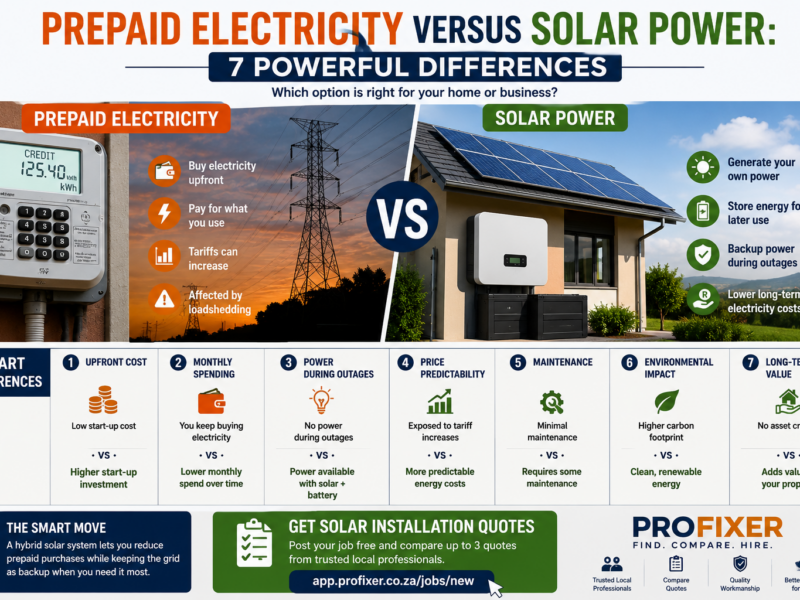
Prepaid Electricity Versus Solar Power: 7 Smart Differences
A prepaid meter makes every unit of electricity visible: buy power, watch the balance, top up before it runs out. Solar changes the equation by reducing the units you need to buy, but it comes with an upfront installation cost and decisions about batteries, backup and system size. For many property owners, prepaid electricity versus solar power is not a simple either-or choice. The practical answer is often a solar system that works alongside prepaid electricity.
Table of Contents
Prepaid electricity versus solar power: the key difference
Prepaid electricity is a payment method, not a power source. Your home remains supplied by the grid, and you buy electricity credit in advance through your municipality, utility or approved vendor. It can be useful for household budgeting because there is no surprise bill at the end of the month. When the credit runs low, however, you need to top up promptly.
Solar power is a generation system installed at your property. Panels produce electricity during daylight hours. An inverter converts that power for use in the building, while batteries can store energy for evenings, overcast conditions and power interruptions. A properly designed solar installation can lower how much prepaid electricity you buy, but it will not necessarily remove the need for the grid.
The distinction matters. A basic grid-tied solar system may reduce daytime consumption but switch off during an outage for safety reasons. A hybrid system with battery storage can keep selected circuits running when the grid fails. That difference has a major effect on price and on the day-to-day value you receive.
What prepaid electricity really costs
The price on a prepaid token is only part of the picture. Electricity tariffs can rise with usage, and some municipalities apply fixed network, service or capacity charges. The amount of power you receive for R500 may therefore vary depending on your tariff, consumption band and local supply arrangement.
Prepaid electricity has clear advantages for tenants, short-term occupants and owners who do not want a large capital expense. There is little maintenance to arrange, no equipment to insure and no installation disruption. It also gives landlords a straightforward way to separate a tenant’s electricity use from the rental account.
Its limitation is exposure to tariff increases and outages. You remain dependent on grid availability, and higher usage from geysers, electric heating, pool pumps, ovens or air conditioning can use credit quickly. Prepaid power is convenient, but it does not create resilience.
What solar costs beyond the panels
When comparing prepaid electricity versus solar power, include the full solar system cost rather than looking only at the price of the panels.
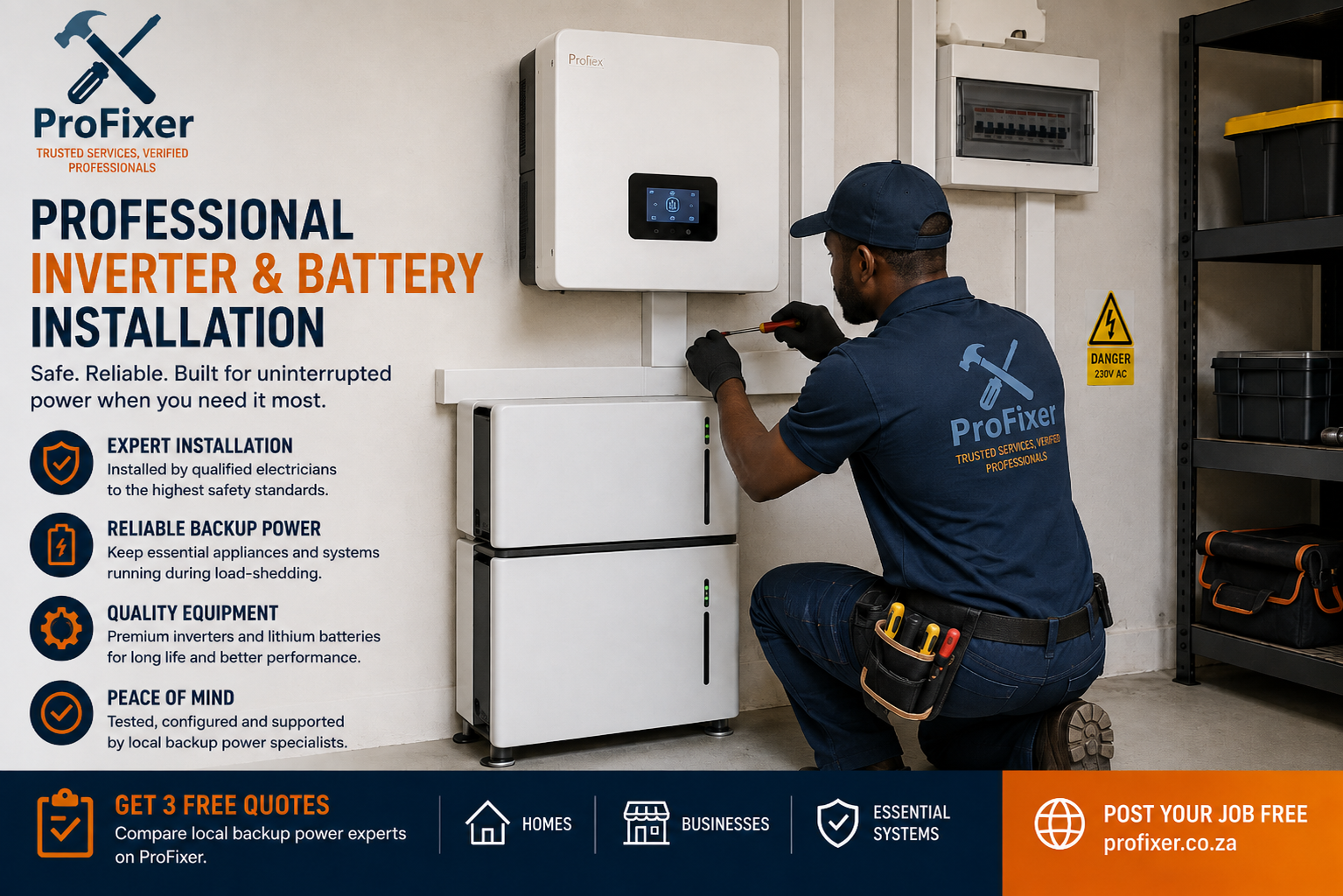
Solar prices vary because the panels are only one part of the system. The inverter, battery capacity, mounting structure, protection equipment, cabling, installation labour and compliance documentation all affect the final quote. A small backup setup for lights, Wi-Fi, a TV and a fridge costs far less than a system intended to support a large family home, office or retail site.
Battery storage is usually the biggest cost driver. It is also what makes solar useful after sunset and during a power failure. Without batteries, daytime solar can still offset some grid use, especially where people work from home or a business operates mainly during daylight hours. But it will not provide the same backup benefit.
Solar also has ongoing considerations. Panels need sensible positioning and occasional cleaning, batteries have a finite lifespan, and inverters should be installed by a qualified professional using approved components. Insurance providers may need to be informed, and local municipal rules can apply to grid-connected systems. Some areas allow approved customers to feed excess electricity back into the network, while others have different requirements or no practical feed-in option.
When prepaid electricity is the better fit
Prepaid electricity can be the sensible choice when a property has low, predictable use and the owner does not plan to stay long enough to recover the cost of a solar investment. It may also suit a tenant who cannot alter the property, or a landlord managing a unit where a permanent installation is not justified.
It is also worth considering if your main concern is cutting waste rather than adding backup. Before buying a solar system, reducing unnecessary consumption can make a real difference. Timers for geysers and pool pumps, LED lighting, efficient appliances and better insulation can lower the size and cost of any future system.
For a small flat or a home with limited roof space, a full solar installation may not offer the best return. A modest backup solution for essential devices may be more practical, while prepaid electricity continues to cover the rest.
When solar power makes more sense
Solar becomes more attractive when electricity use is high, outages disrupt work or security, and the property has a suitable roof with good sun exposure. A household that regularly buys large prepaid tokens may be able to reduce its daytime grid demand significantly. Businesses can benefit too, particularly if refrigeration, IT equipment, machinery or customer service is affected by interruptions.
Homeowners planning to remain in a property for several years often have more time to benefit from the investment. The value is not only measured in reduced prepaid purchases. A hybrid solar system can support security systems, gates, internet, lighting and selected plugs during an outage, which may be especially valuable for a home office, rental property or commercial premises.
Still, solar is not automatically a saving. A system that is too small will not meet expectations. One that is oversized for the property’s actual usage may take longer to justify. The best design starts with how and when electricity is used, not with the largest battery or panel package available.
The hybrid approach suits many South African properties
For many homeowners, prepaid electricity versus solar power is not an either-or decision because a hybrid system can reduce prepaid consumption while keeping the grid available as backup.
For most homes, prepaid electricity and solar power work best together. Solar can supply daytime loads and charge batteries when conditions allow, while prepaid grid power fills the gaps at night, during poor weather or when demand exceeds the system’s capacity.
This approach gives owners more control without requiring an off-grid lifestyle. Going fully off-grid can be costly because the system must reliably handle winter production, several cloudy days and high-demand appliances. Keeping the grid as a backup can allow for a smaller, more affordable system while still improving resilience.
A hybrid setup should be planned around essential circuits. Rather than trying to run every appliance during an outage, many owners prioritise the fridge, lights, Wi-Fi, security, gate motor, television and a few plug points. High-draw items such as electric geysers, stoves, heaters and pool pumps often need careful management or a larger system.
Compare the right details before deciding
A solar quote should be easy to understand. Ask each installer to explain the expected panel output, battery capacity, inverter rating, backup circuits, warranties and what happens during an outage. Check whether the price includes electrical certificates, mounting, protection devices, municipal application support where required, and any changes to the distribution board.
It also helps to provide your actual prepaid purchase history. A few months of token receipts can show typical consumption, but remember that seasonal changes matter. Winter heating, summer cooling and a growing household can all change the picture.
When comparing quotes, look beyond the total price. Consider these four practical questions:
- Which appliances will run during a power interruption, and for how long?
- How much of your normal daytime electricity use can the system cover?
- Are the components appropriate for the size and demands of your property?
- What after-sales support, workmanship guarantee and compliance documentation are included?
If answers differ between contractors, that does not always mean one quote is wrong. It may mean the systems have been designed for different outcomes. One may focus on lowering bills, while another is built primarily for backup power.
Get advice that matches the property
The right choice depends on your budget, roof space, electricity habits and need for backup. A qualified solar professional can assess the site, while an electrician can identify whether the existing wiring and distribution board need upgrades. For landlords and businesses, it is worth checking who will be responsible for maintenance, insurance and future battery replacement before work begins.
With Profixer, property owners can post a solar or backup-power job free and connect with local solar installers and electricians interested in quoting for the work. Compare the panel capacity, inverter size, usable battery storage, backup circuits, warranties, compliance work and total installation price before choosing a provider.
The choice between prepaid electricity versus solar power depends on your electricity use, budget, roof space and need for backup during outages. For many South African properties, keeping prepaid electricity while adding a correctly sized hybrid solar system offers a practical balance between lower grid consumption and reliable backup power.
GET SOLAR INSTALLATION QUOTES