
Find Trusted Bricklaying Contractors Near You
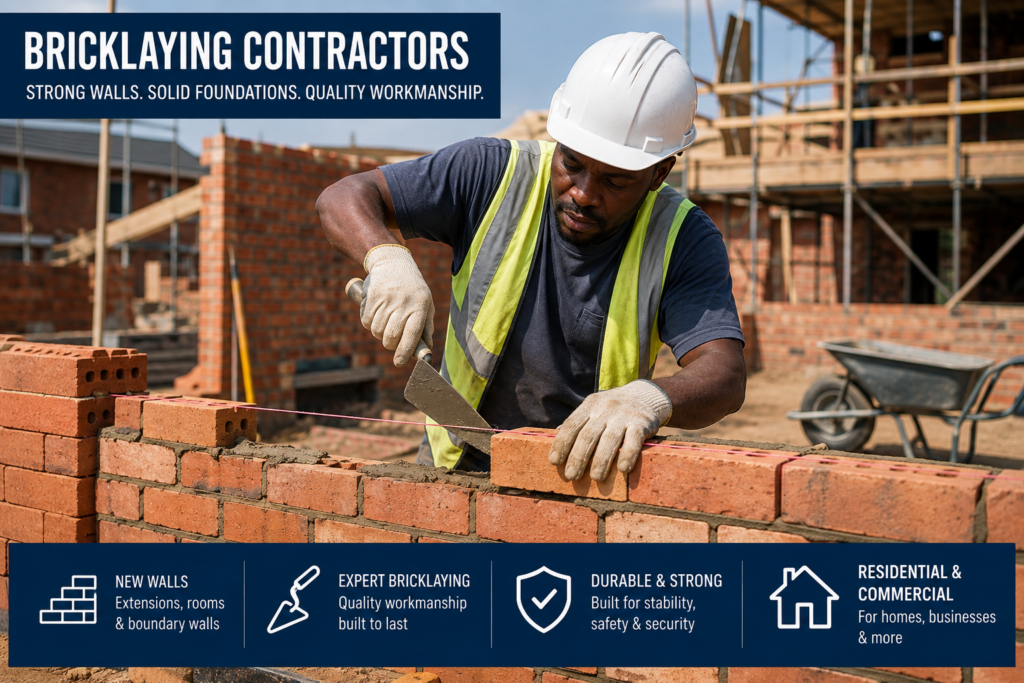
Strong, accurately built brickwork forms the backbone of many residential and commercial construction projects. Whether you are building a new wall, extending a house, repairing damaged masonry or creating boundary walls, the quality of the brickwork affects both the appearance and long-term stability of the finished structure.
Professional bricklaying contractors can help with new construction, alterations, repairs and detailed brickwork. Good workmanship involves more than placing bricks in mortar. Walls need to be straight, level, properly bonded and built to the correct dimensions, while openings, corners and junctions need careful planning.
ProFixer makes it easier to connect with suitable local specialists. Post your bricklaying job free, describe the work required, upload photographs or drawings where useful and compare up to three no-obligation quotes from contractors serving your area.
Table of Contents
Why Hire Professional Bricklaying Contractors?
Bricklaying requires accuracy, consistency and an understanding of how walls interact with foundations, openings, roofs and other parts of a building. Poorly built walls may lean, crack, develop uneven joints or create problems later when plastering, roofing, windows or doors are installed.
Professional bricklaying contractors can assess the site, interpret plans where required and build masonry to the appropriate dimensions and levels. They can also coordinate with other trades so that openings, service routes and structural details are positioned correctly.
Bricklaying contractors may assist with:
- New brick walls
- House extensions
- Boundary walls
- Internal walls
- External walls
- Brick piers
- Garden walls
- Retaining walls
- Brick repairs
- Repointing
- Face brickwork
- Door and window openings
- Alterations
- Commercial brickwork
The correct construction method will depend on the wall type, height, load, location and intended finish.
How to Find Bricklayers Near Me
Searching for bricklayers near me can produce many options, but contractors may specialise in different types of work. Some may focus on residential extensions and boundary walls, while others may have more experience with large-scale commercial masonry or face-brick finishes.
When requesting quotes, provide:
- Your suburb, town or city
- Photographs of the site
- Approximate wall dimensions
- Wall height
- Wall thickness
- Brick type if known
- Whether plastering is required
- Whether foundations already exist
- Number of door and window openings
- Whether old walls must be demolished
- Your preferred completion date
- Any access restrictions
For larger projects, a site inspection or building plans may be required before an accurate quotation can be prepared.
New Brick Wall Construction
New brick wall construction requires proper preparation before the first course of bricks is laid. The foundation or supporting structure must be suitable, correctly positioned and level enough for the wall to be built accurately.
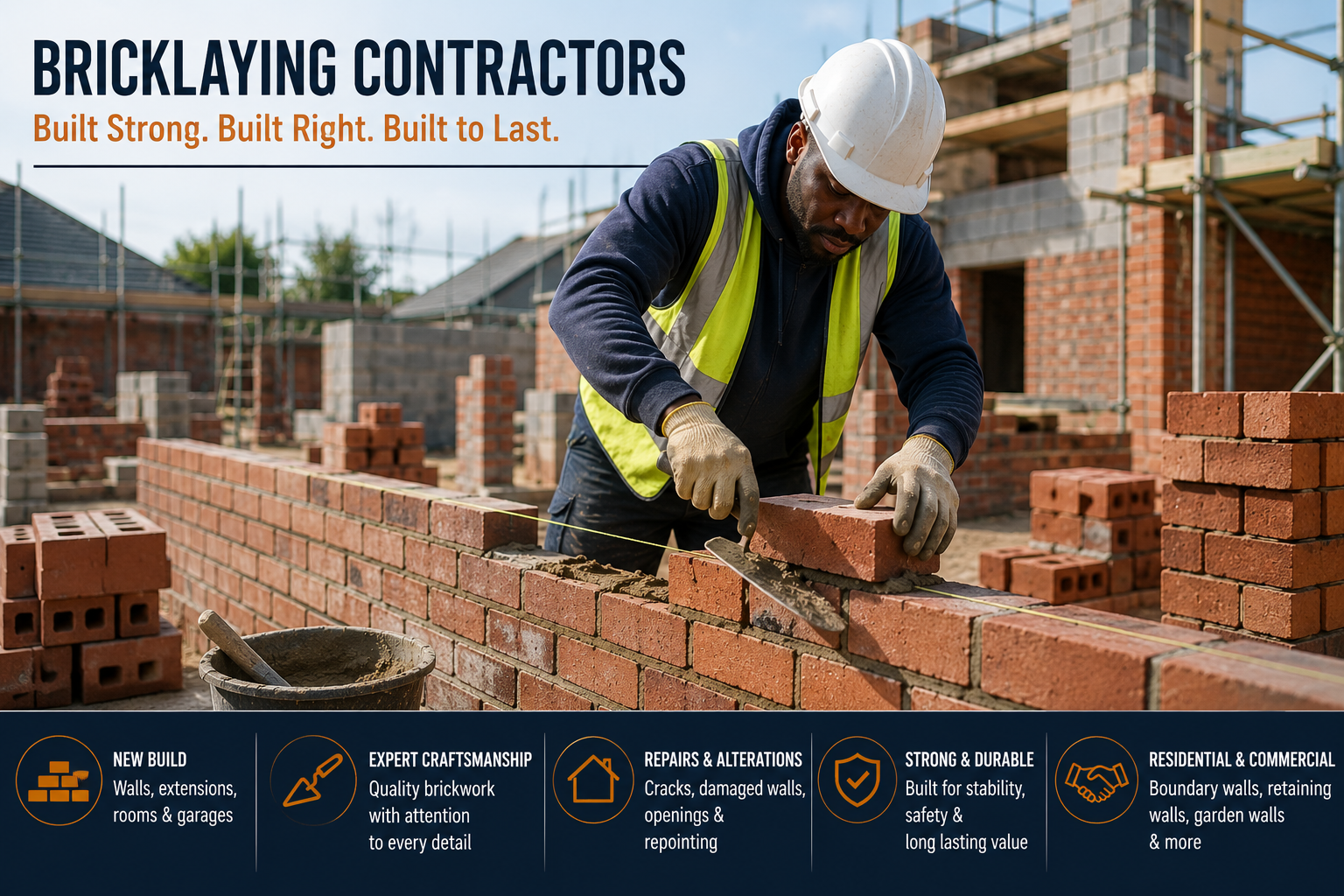
A typical brick wall project may involve:
- Setting out wall positions
- Checking dimensions
- Preparing foundations
- Mixing mortar
- Laying bricks or blocks
- Maintaining correct bond
- Building corners
- Checking level and plumb
- Forming openings
- Installing lintels where required
- Cleaning joints
- Preparing for plastering or finishing
The contractor should confirm the wall type and intended finish before work begins.
Internal Brick Walls
Internal brick walls may be used to divide rooms, create passages, form bathrooms or build other permanent internal spaces.
Before construction, the layout should consider:
- Door positions
- Room dimensions
- Electrical sockets
- Plumbing services
- Ceiling layout
- Floor levels
- Existing structural walls
- Future fittings
Accurate setting out at the beginning can prevent problems with room sizes, doors and finishes later.
External Brick Walls
External walls form part of the building envelope and may need to support roof structures, resist weather exposure and integrate with windows, doors and waterproofing details.
External brickwork may include:
- New house walls
- Extensions
- Garages
- Outbuildings
- Boundary structures
- External repairs
The contractor should ensure that wall thickness, reinforcement, openings and other details are suitable for the project.
Boundary Wall Bricklaying
Boundary walls are common residential and commercial projects and may be built for security, privacy or property separation.
Boundary wall work may include:
- New foundations
- Brick or block construction
- Brick piers
- Gate openings
- Coping
- Plastering
- Face-brick finishes
- Preparation for fencing or electric fencing
Tall boundary walls may require additional structural support depending on their design and location.
House Extension Brickwork
House extensions often involve joining new brickwork to an existing property. This requires careful setting out so that new walls align correctly with the existing building.
Extension brickwork may include:
- New external walls
- Internal walls
- Door openings
- Window openings
- Structural junctions
- New garage walls
- Additional rooms
- Kitchen extensions
- Bathroom extensions
The brickwork should be coordinated with foundations, roofing, plumbing, electrical work and plastering.
Brickwork for New Builds
New homes and commercial buildings may require large quantities of brickwork completed in planned stages.
Work may include:
- External walls
- Internal walls
- Garages
- Service walls
- Columns
- Openings
- Parapets
- Boundary walls
Consistent levels and dimensions are especially important because later trades rely on the brickwork being accurate.
Garden Walls
Garden walls can provide structure, privacy and separation within outdoor areas.
They may be used to:
- Divide garden spaces
- Create raised beds
- Form decorative features
- Support gates
- Define pathways
- Improve privacy
Garden walls should still have suitable foundations even when they are relatively low.
Retaining Walls
Retaining walls hold back soil and can be subjected to significant pressure. They should not be treated as ordinary decorative walls.
A retaining wall project may need to consider:
- Soil pressure
- Drainage
- Wall height
- Foundation design
- Reinforcement
- Waterproofing
- Backfill
- Site slope
Poor drainage behind a retaining wall can increase pressure and contribute to cracking or failure.
Brick Columns and Piers
Brick piers and columns may be used for structural support, boundary walls, gates or decorative features.
They may be built to support:
- Gates
- Fencing
- Roof structures
- Verandas
- Boundary walls
- Decorative entrances
The size and reinforcement requirements will depend on the load and intended use.
Brickwork Around Doors and Windows
Door and window openings require accurate brickwork because frame sizes, lintels and finished openings must align correctly.
The contractor may need to provide:
- Accurate opening dimensions
- Straight reveals
- Level sills
- Lintel support
- Neat brick edges
- Correct wall alignment
Poorly formed openings can make door and window installation more difficult and expensive.
Installing Lintels Over Openings
Lintels support masonry above doors, windows and other openings.
The correct lintel arrangement depends on:
- Opening width
- Wall thickness
- Load above
- Brick or block type
- Structural requirements
Lintels should be properly supported on both sides of the opening and installed before masonry continues above.
Brick Repair Services
Professional brick repair services can restore damaged sections without rebuilding an entire wall where the surrounding brickwork remains sound.
Repairs may be required because of:
- Impact damage
- Cracking
- Water damage
- Vehicle damage
- Removed fixtures
- Plumbing work
- Electrical alterations
- Gate installation
- Previous poor workmanship
The damaged area should be assessed before repairs begin so that underlying problems are not simply hidden.
Cracked Brickwork Repairs
Cracks in brickwork can have many causes. Some may be cosmetic, while others may indicate movement in foundations or the structure.
Possible causes include:
- Foundation movement
- Settlement
- Thermal movement
- Poor bonding
- Water damage
- Inadequate support
- Structural alterations
Small cracks may sometimes be repaired locally, but recurring or wider cracks should be investigated before cosmetic repairs are carried out.
Rebuilding Damaged Walls
Some walls become too unstable for patch repairs and may need partial or complete rebuilding.
Rebuilding may be required when:
- Walls are leaning
- Large sections are cracked
- Bricks are badly damaged
- Previous construction is unstable
- Vehicle impact has caused movement
- Foundations have failed
The contractor should explain whether the existing foundation can be reused or whether new foundation work is required.
Brickwork After Plumbing Work
Plumbing repairs sometimes require brick walls to be opened so that hidden pipes can be accessed.
After the plumbing repair has been tested, brickwork may need to be restored.
The work can include:
- Rebuilding removed masonry
- Closing pipe openings
- Filling service chases
- Preparing for plastering
- Matching wall thickness
The plumbing system should be confirmed as leak-free before the wall is closed.
Brickwork After Electrical Work
Electrical work can require channels, openings or larger sections of masonry to be altered.
Once electrical cables or conduits are correctly installed, brickwork repairs may be required before plastering.
Repair work should be coordinated with the electrician so that new masonry does not interfere with electrical services.
Repointing Brickwork
Repointing involves removing deteriorated mortar from joints and replacing it with new mortar.
It may be useful where:
- Mortar has crumbled
- Joints are weathered
- Water is entering the wall
- Face brickwork has aged
- Previous mortar repairs are failing
The new mortar should be appropriate for the existing masonry and should be finished neatly.
Face Brickwork
Face brickwork remains visible and therefore requires a high standard of workmanship.
Attention should be given to:
- Consistent joint thickness
- Straight courses
- Clean brick faces
- Neat corners
- Accurate alignment
- Consistent mortar colour
Because the brickwork is not hidden by plaster, mistakes are much more noticeable.
Plastered Brick Walls
Many brick walls are later plastered to create a smooth finish.
Before plastering, masonry should be:
- Stable
- Properly bonded
- Free from loose mortar
- Sufficiently cured
- Correctly aligned
- Prepared for plaster application
Good brickwork reduces the amount of plaster required to correct uneven surfaces.
Brickwork for Garages
Garages may require new brickwork as part of a house extension, standalone building or conversion.
Garage brickwork may include:
- External walls
- Internal walls
- Garage door openings
- Side doors
- Window openings
- Parapet walls
- Store rooms
Large garage door openings need suitable lintels or structural support above them.
Brickwork for Carports and Covered Areas
Brick piers or walls may be used to support carports, verandas or other covered structures.
The contractor should coordinate with the roof or steel structure installer so that supports are correctly positioned before the roof system is fitted.
Brickwork During Renovations
Renovation projects often involve a combination of new walls, removed walls and altered openings.
Bricklaying work may include:
- Closing old doorways
- Creating new openings
- Rebuilding wall sections
- Extending rooms
- Altering bathrooms
- Changing kitchen layouts
- Adding external walls
Before an existing wall is removed or significantly altered, it should be confirmed whether the wall is load-bearing.
Closing Old Door and Window Openings
When doors or windows are removed, the openings may be closed with brickwork.
The new brickwork should be tied into the existing wall appropriately and finished so that the repaired area can be plastered or otherwise decorated.
Where face brickwork is involved, matching the original bricks may be more difficult and should be discussed before work begins.
Creating New Door Openings
Creating a new doorway in an existing brick wall may require more than simply removing bricks.
The work may involve:
- Assessing the wall
- Supporting masonry above
- Installing a suitable lintel
- Cutting the opening
- Building neat reveals
- Removing rubble
- Preparing for the door frame
Structural walls may require professional assessment before alterations are made.
Commercial Bricklaying Contractors
Commercial bricklaying contractors may work on offices, schools, retail buildings, warehouses, apartment developments and other larger properties.
Commercial projects can involve:
- New walls
- Alterations
- Service rooms
- Boundary structures
- Repair work
- Extensions
- Plant rooms
- Internal partitions
Larger projects may require contractors to work according to drawings, specifications and construction programmes.
Bricklaying for Schools and Public Buildings
Schools, clinics and community facilities may require brickwork for additions, repairs or new facilities.
Projects may involve:
- Classrooms
- Offices
- Toilets
- Storerooms
- Boundary walls
- Access structures
Work may need to be planned around building occupancy and public safety.
Brickwork for Rental Properties
Landlords may require brick repairs or alterations when preparing properties for new tenants.
Typical jobs may include:
- Repairing damaged walls
- Closing openings
- Rebuilding boundary walls
- Repairing cracked brickwork
- Making good after plumbing work
- Preparing walls for plastering
Addressing structural or water-related causes before cosmetic repairs can reduce repeated maintenance.
Brickwork Before Plastering
The quality of brickwork has a direct impact on the amount of plaster required to achieve a smooth finished wall.
Before plastering begins, brick walls should be reasonably straight and free from excessive mortar protrusions or loose material.
Where plastering is required after the masonry is complete, you can compare suitable plastering contractors through ProFixer.
Brickwork and Concrete Foundations
Brick walls normally rely on suitable foundations to transfer their loads into the ground.
Foundation requirements vary depending on:
- Wall height
- Wall thickness
- Ground conditions
- Building type
- Structural loads
Bricklayers and concrete contractors may need to coordinate closely on new walls and extensions.
What Affects Bricklaying Costs?
The cost of hiring bricklaying contractors depends on the size and complexity of the project, materials, access and whether additional foundation or finishing work is required.
Costs may be affected by:
- Number of bricks or blocks
- Wall length
- Wall height
- Wall thickness
- Brick type
- Mortar
- Foundations
- Number of corners
- Door openings
- Window openings
- Lintels
- Reinforcement
- Scaffolding
- Demolition
- Rubble removal
- Site access
Straightforward walls with good access may be quicker to construct than walls with many openings, corners and height changes.
What Affects Brick Repair Costs?
Repair costs depend on how much of the existing wall needs to be removed and rebuilt.
Factors may include:
- Extent of cracking
- Number of damaged bricks
- Structural movement
- Access
- Matching bricks
- Mortar repairs
- Demolition
- Foundation repairs
- Plaster repairs
A small damaged area may require only local repair, while a leaning or badly cracked wall may require major rebuilding.
What Should a Bricklaying Quote Include?
A professional bricklaying quotation should clearly explain the scope of work.
The quote may include:
- Wall dimensions
- Brick or block type
- Number of bricks
- Mortar
- Foundations
- Reinforcement
- Lintels
- Labour
- Scaffolding
- Rubble removal
- Transport
- Estimated duration
- Plastering if included
- Whether VAT is included
Ask contractors to identify exclusions clearly so that competing quotations can be compared fairly.
Questions to Ask Bricklaying Contractors
Before choosing a contractor, ask:
- Have you completed similar brickwork before?
- Are foundations included?
- What brick or block type do you recommend?
- Is mortar included?
- Are lintels included?
- Is reinforcement required?
- Will old walls need to be demolished?
- Is rubble removal included?
- Will the wall be ready for plastering?
- How long will the work take?
- Is scaffolding required?
- What could increase the final cost?
Clear answers can help you understand the difference between quotations rather than comparing price alone.
Compare Bricklaying Contractors Through ProFixer
Finding suitable bricklaying contractors can take time, especially when different contractors propose different materials, construction methods or scopes of work.
ProFixer allows you to post one request and connect with local bricklayers interested in completing the project. Include photographs, approximate measurements and plans where available so that contractors have enough information to understand the job.
Compare contractors based on relevant experience, workmanship, materials, construction method, project duration and total quotation.
Post Your Bricklaying Job Free
Whether you need reliable bricklayers near me, experienced brickwork contractors, professional brick wall construction or specialist brick repair services, ProFixer can help you connect with suitable local professionals.
Post your bricklaying job free and compare up to three no-obligation quotes from local contractors.
POST MY BRICKLAYING JOB FREE