
Compare 3 Trusted Pool Maintenance Services Near You | Free Quotes
A clean swimming pool depends on much more than occasionally removing leaves from the surface. Water chemistry, circulation, filtration, cleanliness and equipment condition all work together to keep a pool clear, comfortable and easier to maintain. When any one of these areas is neglected, the water can quickly become cloudy or green, algae may develop, filters may block and pumps can be forced to work harder than necessary.
Professional pool maintenance services can help homeowners, landlords, estates, guest houses and businesses keep their swimming pools in good condition throughout the year. Regular servicing can also help identify smaller problems such as poor water flow, blocked baskets, leaking fittings or deteriorating equipment before they develop into larger and more expensive repairs.
ProFixer makes it easier to find local pool specialists. Post your pool maintenance job free, describe the condition of your swimming pool, upload photographs where useful and compare up to three no-obligation quotes from contractors serving your area
Table of Contents
Why Professional Pool Maintenance Matters
Regular swimming pool maintenance is important because the appearance of the water does not always tell the full story. A pool can look relatively clear while still having incorrect chemical levels, restricted circulation or a filter that is no longer operating efficiently. Over time, these problems can contribute to algae growth, staining, scale deposits, deterioration of pool surfaces and unnecessary strain on pumps and filtration equipment.
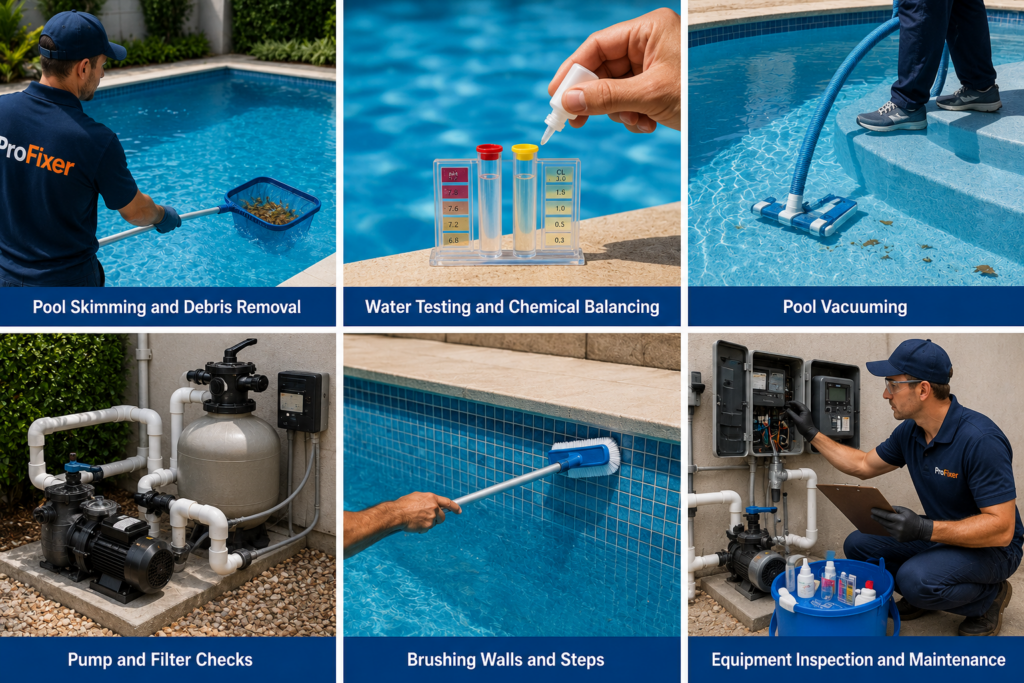
A professional pool service contractor can check the overall condition of the pool rather than focusing only on visible dirt. This may include testing water chemistry, checking circulation, emptying baskets, cleaning the filter, inspecting pumps and confirming that water is moving correctly through the system. Regular attention can make the pool easier to manage and may reduce the likelihood of sudden breakdowns during periods of heavy use.
Pool maintenance may include:
- Routine cleaning
- Water testing
- Chemical balancing
- Pool vacuuming
- Brushing walls and steps
- Skimming leaves and debris
- Pump checks
- Filter cleaning
- Backwashing
- Basket cleaning
- Algae treatment
- Equipment inspections
The exact service required will depend on the pool size, equipment, surrounding environment and how frequently the pool is used.
How to Find Pool Maintenance Near Me
Searching for pool maintenance near me can produce many local providers, but the services included in each maintenance package may vary considerably. Some contractors provide basic cleaning and chemical treatment, while others offer more comprehensive servicing that includes equipment checks, filter maintenance, minor fault finding and regular scheduled visits.
Before requesting a quote, explain what you need. If the pool has not been maintained for some time, include photographs showing the water condition and surrounding area. Mention whether the water is green or cloudy, whether the pump is operating normally and whether you have noticed leaks, unusual noises or poor water circulation.
When comparing local contractors, consider the frequency of service, what chemicals are included, whether equipment inspections are part of the service and how additional repairs are handled. A clear maintenance agreement can help avoid misunderstandings about what is included in the quoted price.
Regular Pool Cleaning Services
Professional pool cleaning services can help keep leaves, dust, insects and other debris from accumulating in the water and filtration system. Outdoor swimming pools are continuously exposed to wind, plants, weather and surrounding garden activity, so even a pool that is not used frequently still needs regular attention.
A routine cleaning visit may include skimming the water surface, emptying baskets, brushing pool walls, cleaning steps and ledges and vacuuming dirt that has settled on the pool floor. Contractors may also inspect the water level and check whether the circulation system is drawing and returning water properly.
Regular cleaning is particularly useful for properties with large trees, gardens, open surroundings or heavy pool use. Removing debris before it breaks down in the water can reduce the burden on the filtration system and make chemical treatment easier to manage.
Swimming Pool Water Testing and Treatment
Correct water chemistry helps protect both pool users and the swimming-pool structure. Water that is poorly balanced can become uncomfortable to swim in and may contribute to staining, scale formation or deterioration of equipment and finishes.
Professional pool maintenance contractors may test water for important factors such as pH, sanitiser levels and overall water balance. The results can then be used to determine what treatment is required rather than adding chemicals without checking the condition of the water first.
Water treatment may involve:
- Testing pH
- Checking chlorine or sanitiser levels
- Adjusting water balance
- Treating cloudy water
- Correcting excessive chemical levels
- Preventing algae
- Shock treatment where appropriate
The type and quantity of chemicals required will depend on pool volume, weather conditions, usage and the condition of the water.
Pool Chemical Balancing
Pool chemicals work most effectively when the water is properly balanced. Adding more chlorine does not necessarily solve every water-quality problem. If the pH or other water conditions are incorrect, sanitising chemicals may become less effective and swimmers may experience eye or skin irritation.
Regular chemical balancing can help maintain clearer water while protecting pool finishes and equipment. Contractors may also recommend adjustments after heavy rain, very hot weather or periods of increased pool use because these conditions can change water chemistry more quickly.
Homeowners who add their own chemicals should follow manufacturer instructions carefully and avoid mixing incompatible products. If water conditions remain unstable despite regular treatment, a pool specialist can investigate whether poor filtration, circulation or another underlying problem is contributing to the issue.
Green Pool Recovery
A green swimming pool usually indicates algae growth and may also be associated with poor circulation, low sanitiser levels or inadequate filtration. Simply adding chemicals without addressing the cause can result in the pool becoming green again shortly after treatment.
Professional green-pool recovery may involve removing debris, testing the water, treating algae, brushing surfaces, cleaning or backwashing the filter and running the circulation system for an appropriate period. Severely neglected pools may require several treatment stages before the water returns to a clear condition.
The contractor should also inspect the pump and filtration system because a pool with inadequate circulation may struggle to recover even when the correct chemicals are added.
Pool Vacuuming and Debris Removal
Dirt and fine debris often settle on the bottom of the pool where normal surface skimming cannot remove them. Regular vacuuming can help keep the floor clean and prevent sediment from building up in corners, steps and low-flow areas.
Depending on the pool system, contractors may use manual vacuum equipment, automatic cleaners or other suitable methods. The correct approach will depend on the amount of debris and the condition of the water.
Pools surrounded by trees or exposed to wind may require more frequent vacuuming than pools in enclosed entertainment areas.
Brushing Pool Walls, Steps and Corners
Algae and dirt can begin developing on pool surfaces before they become obvious from outside the water. Brushing walls, steps, corners and other low-circulation areas helps loosen contamination so that it can be captured by the filtration system.
Regular brushing is particularly useful around:
- Steps
- Ledges
- Corners
- Pool lights
- Skimmer openings
- Areas with poor circulation
- Textured pool surfaces
A pool that repeatedly develops algae in the same location may also have a circulation issue that should be investigated.
Skimmer and Pump Basket Cleaning
Skimmer and pump baskets collect leaves, insects and larger debris before these materials reach the pump or filter. When baskets become blocked, water flow can reduce significantly and the pump may struggle to circulate water effectively.
Regular basket cleaning is a simple but important part of swimming pool maintenance. Contractors should also inspect baskets for cracks or damage because broken baskets may allow debris to pass further into the system.
If a basket fills unusually quickly, surrounding trees, storms or landscaping conditions may be contributing to excessive debris entering the pool.
Pool Pump and Circulation Checks
The pool pump is responsible for moving water through the filtration system. Poor circulation can contribute to cloudy water, algae growth and uneven chemical distribution.
During routine maintenance, a contractor may check:
- Pump operation
- Unusual noises
- Water leaks
- Pump basket condition
- Water flow
- Air entering the system
- Valve positions
- Return flow into the pool
A pump that becomes noisy, overheats or loses prime should be investigated rather than repeatedly restarted without identifying the cause.
For more extensive pump or plumbing repairs, you can also compare contractors through the ProFixer pool installation and repair service.
Pool Filter Maintenance
The pool filter removes suspended dirt and particles from circulating water. As debris accumulates inside the filter, water flow can gradually become restricted and filtration efficiency may decrease.
Regular filter maintenance may involve cleaning, backwashing or replacing filter media depending on the system installed. The contractor may also inspect valves, seals and connections for leakage or deterioration.
A pool that remains cloudy despite correct chemical treatment may have a filtration problem that needs attention.
Sand Filter Backwashing
Sand filters collect dirt as water passes through the filter media. Over time, accumulated debris creates resistance and the filter must be backwashed to remove trapped contaminants.
Backwashing too frequently can waste water, while failing to backwash when required can restrict circulation. Pool contractors can use filter pressure and system performance to determine when maintenance is necessary.
The backwash process should also be completed correctly so that dirty water is discharged safely and the filter is returned to the correct operating position afterwards.
Pool Filter Media Replacement
Filter media does not necessarily last indefinitely. Over time, sand or other filtration material may become less effective because of contamination, channel formation or wear.
A contractor may recommend replacing filter media when cleaning and backwashing no longer restore satisfactory performance. Before replacing the media, however, the overall filter condition should also be checked to ensure that internal components and valves remain serviceable.
Algae Prevention and Treatment
Algae can develop quickly when sanitiser levels fall, circulation becomes poor or temperatures rise. Once established, algae may attach to pool walls, steps and other surfaces and can be difficult to remove through filtration alone.
Preventative maintenance focuses on maintaining correct water conditions before visible algae appears. Treatment of an existing algae problem may involve brushing surfaces, adjusting chemical levels, cleaning the filter and improving circulation.
Repeated algae growth may indicate that the pool needs more than additional chemicals. Equipment performance, circulation patterns and maintenance frequency should also be considered.
Pool Tile and Surface Cleaning
Pool tiles and surfaces may gradually develop scale, stains or waterline marks. Regular cleaning can help preserve the appearance of the pool and prevent deposits from becoming more difficult to remove.
Different pool finishes require different cleaning methods. Excessively aggressive cleaning products or tools can damage surfaces, so contractors should use methods appropriate for the installed material.
If staining returns frequently, the water chemistry should also be checked because some surface problems are related to mineral levels or poor water balance.
Pool Equipment Inspections
Routine maintenance provides an opportunity to inspect pool equipment before complete failure occurs. Small leaks, deteriorating seals and unusual noises can sometimes be identified during a normal service visit.
Equipment inspections may include:
- Pool pump
- Filter
- Valves
- Timers
- Chlorinators
- Pipe connections
- Pool lights
- Heating equipment
- Automatic cleaners
Maintenance contractors should explain when a problem can be corrected during a routine visit and when a separate repair quotation is required.
Seasonal Pool Maintenance

Pool maintenance requirements can change throughout the year. Hot weather, heavy rainfall, storms and periods of increased swimming can all affect water chemistry and debris levels.
During warmer months, pools may require more frequent chemical checks and cleaning because higher temperatures encourage algae growth and sanitising chemicals may be consumed more quickly.
During periods of lower use, maintenance should not simply stop. Keeping circulation, water quality and equipment in reasonable condition can make it easier and less expensive to prepare the pool for the next swimming season.
Pool Maintenance After Heavy Rain
Heavy rainfall can dilute pool chemicals, alter water balance and wash dirt, leaves and surrounding garden material into the pool.
After significant rain, maintenance may involve:
- Removing debris
- Checking water level
- Testing water chemistry
- Adjusting chemicals
- Cleaning baskets
- Checking filtration
- Vacuuming settled dirt
Properties with poor drainage around the pool may experience additional contamination when stormwater carries soil or garden debris into the swimming area.
Pool Maintenance After Storms
Strong wind and storms can introduce large quantities of leaves, branches and dust into a swimming pool within a short period. Debris should be removed before it blocks baskets or is drawn further into the filtration system.
The contractor may also inspect exposed equipment and surrounding structures if the storm caused physical damage.
If branches or trees have fallen around the pool area, ProFixer can also help you compare local tree-felling services.
Holiday and Rental Property Pool Care
Swimming pools at holiday homes and rental properties may remain unattended for extended periods. Regular scheduled maintenance can prevent owners from returning to a green or neglected pool.
A maintenance contractor may provide recurring visits to check water condition, remove debris, clean the pool and confirm that equipment is operating properly.
Landlords and property managers can also arrange regular services between tenants or before guests arrive.
Estate and Complex Pool Maintenance
Communal swimming pools in residential estates and apartment complexes often experience heavier use than private household pools. They may therefore require more frequent cleaning, water testing and equipment inspections.
Maintenance contractors may work with trustees, body corporates or property managers to establish scheduled visits that help keep the pool ready for residents.
Estate maintenance may include:
- Routine cleaning
- Water testing
- Chemical treatment
- Filter maintenance
- Pump inspections
- Equipment checks
- Reporting faults
- Seasonal preparation
Clear maintenance records can also help property managers monitor recurring equipment problems.
Commercial Pool Maintenance Services
Guest houses, hotels, lodges, schools and other commercial properties may require dependable pool maintenance services because the pool forms part of the facility offered to customers, residents or visitors.
Commercial pools may have higher usage levels and larger filtration systems than residential pools. Maintenance requirements may therefore be more demanding and may include more frequent testing, cleaning and equipment inspections.
When comparing commercial pool contractors, explain the approximate pool size, expected usage, operating hours and required service frequency.
Pool Maintenance for Guest Houses and Lodges
For accommodation businesses, a poorly maintained swimming pool can affect the guest experience and the overall appearance of the property.
Regular maintenance can help ensure that the pool is clean and presentable when guests arrive. Contractors may schedule visits around check-in periods or quieter operating times where practical.
Owners should also have a clear process for reporting equipment failures between scheduled maintenance visits.
Pool Maintenance Before Selling a Property
A neglected or green swimming pool can reduce the visual appeal of an otherwise attractive property. Before listing a home for sale, professional pool cleaning and maintenance can help improve presentation for photographs and viewings.
The work may include restoring water clarity, removing stains where possible, cleaning surrounding areas and checking visible equipment problems.
Where major repairs are required, owners can decide whether to complete them before marketing the property or disclose them to potential buyers.
Pool Maintenance After Renovation Work
Building, paving and landscaping projects near a swimming pool can introduce large quantities of dust and debris into the water.
After renovation work, the pool may require:
- Debris removal
- Vacuuming
- Filter cleaning
- Water testing
- Chemical adjustment
- Surface cleaning
Where possible, the pool should be protected while surrounding construction work is taking place.
What Affects Pool Maintenance Costs?
The cost of professional pool maintenance services depends on the size of the swimming pool, frequency of service, amount of cleaning required and whether chemicals are included in the quoted price.
Other factors may include:
- Pool size
- Pool condition
- Frequency of visits
- Amount of surrounding vegetation
- Water condition
- Chemical requirements
- Filter type
- Equipment condition
- Travel distance
- Commercial or residential use
- Additional repairs
A pool that receives regular maintenance is generally easier to service than one that has been neglected for several months.
Weekly, Fortnightly or Monthly Pool Maintenance?
The ideal maintenance frequency depends on the property and how the pool is used. Some residential pools may only need periodic professional servicing if the homeowner handles basic cleaning between visits. Other pools may benefit from weekly attention, particularly during hot weather or heavy use.
Commercial, rental and communal pools may require more frequent visits because the owner or property manager cannot always monitor conditions personally.
Ask contractors what service frequency they recommend and what the homeowner is expected to do between scheduled visits.
What Should a Pool Maintenance Quote Include?
A professional maintenance quotation should clearly explain what is included in each service visit.
The quotation may specify:
- Service frequency
- Pool cleaning
- Vacuuming
- Wall brushing
- Basket cleaning
- Water testing
- Chemical balancing
- Backwashing
- Filter inspections
- Pump inspections
- Chemicals included or excluded
- Call-out charges
- Additional repair charges
- Contract duration
- Cancellation terms
Comparing the actual scope of work is more useful than comparing price alone.
Questions to Ask Pool Service Contractors
Before choosing a contractor, ask:
- What is included in each maintenance visit?
- How often do you recommend servicing the pool?
- Are chemicals included in the price?
- Do you test the water at every visit?
- Is vacuuming included?
- Do you clean and backwash the filter?
- Do you inspect the pump and equipment?
- What happens if you find a fault?
- Are minor repairs included?
- How are additional repairs quoted?
- Can you provide regular scheduled visits?
- Do you service residential and commercial pools?
Clear answers will help you compare pool service contractors fairly and choose a service that matches your property.
Compare Pool Maintenance Services Through ProFixer
Finding reliable pool maintenance should not require contacting numerous businesses individually. ProFixer allows you to describe your pool and maintenance requirements once and connect with local contractors interested in doing the work.
When posting your job, explain whether you need a one-off clean, green-pool recovery or regular scheduled maintenance. Upload photographs if the pool is currently green, heavily contaminated or has visible equipment problems.
Compare contractors based on their proposed service frequency, work included, chemical arrangements, experience, availability and overall price rather than automatically selecting the lowest quote.
Post Your Pool Maintenance Job Free
Whether you need regular pool cleaning services, complete swimming pool maintenance, green-pool recovery or reliable pool maintenance near me, ProFixer can help you connect with suitable local service providers.
Post your pool maintenance job free and compare up to three no-obligation quotes from local contractors.
POST MY POOL MAINTENANCE JOB FREE
POST MY POOL MAINTENANCE JOB FREE