

Find Trusted Electric Fence Installers Near You
An electric fence can provide an important additional layer of security around a home, residential complex, office, warehouse or commercial property. Professional electric fence installers can assess your perimeter, recommend suitable equipment and install a system designed to provide reliable detection and deterrence.
Whether you need a completely new electric fence installation, repairs to an existing fence, an energiser replacement or help tracing an intermittent fault, ProFixer makes it easier to find local specialists. Post your electric fencing job for free and compare up to three no-obligation quotes before deciding which contractor to appoint.
Instead of calling several companies separately, you can describe your requirements once, upload photographs and compare the proposed system, materials, warranty, availability and price.
Table of Contents
Why Hire Professional Electric Fence Installers?
An electric fence system includes more than wires attached to a boundary wall. It may include an energiser, earth spikes, insulators, brackets, high-voltage cabling, warning signs, batteries, sirens and connections to an alarm or monitoring system.
Experienced electric fence installers should inspect the full perimeter before recommending a solution. They consider the wall or fence structure, total distance, corners, gates, vegetation, access points, power availability and the level of security required.
A professional installation can help you:
- strengthen the security of the property perimeter
- deter unauthorised access
- detect interference or damage to the fence
- receive an alert when the system is triggered
- protect homes, complexes and commercial premises
- integrate the fence with an intruder alarm system
- reduce recurring faults caused by poor installation
- maintain reliable backup operation during power failures
The contractor should explain how the system works, what equipment is included and what maintenance will be required after installation.
Electric Fence Installers for Homes
Residential electric fencing is commonly installed around houses, townhouses, estates and rental properties. It can be fitted above boundary walls, palisade fencing or other suitable perimeter structures.
Professional electric fence installers should inspect the condition of the existing wall or fence before mounting brackets and wires. Loose brickwork, damaged posts or unstable fencing may need repair before the electric fence is installed.
Residential systems may be used to protect:
- front and rear boundaries
- side passages
- driveway entrances
- pedestrian gates
- garden boundaries
- detached garages
- outbuildings
- rental and investment properties
The installer should also consider children, pets, trees and neighbouring properties when planning the fence layout.
Commercial Electric Fencing Contractors
Businesses often require a stronger perimeter system designed for longer distances and more demanding environments. Professional electric fencing contractors can design systems for offices, warehouses, factories, retail premises and industrial sites.
Commercial electric fencing may be required at:
- business parks
- warehouses and distribution centres
- factories and workshops
- retail properties
- schools and training centres
- construction sites
- storage facilities
- agricultural properties
- parking areas
- residential complexes and estates
Commercial systems may include multiple fence zones, alarm outputs, backup batteries, remote monitoring and integration with CCTV or existing security systems.
For properties requiring a complete security solution, you can also compare quotes through our CCTV installer service and intruder alarm installer service.
New Electric Fence Installation
A new electric fence installation should begin with a proper site assessment. The contractor must determine the perimeter length, number of corners, gate openings, bracket type, wire quantity and suitable energiser size.
A typical installation may include:
- measuring and planning the perimeter
- selecting suitable fence brackets
- installing insulators and tensioners
- fitting electric fence wires
- installing the energiser
- installing earth spikes and earth wiring
- fitting high-voltage lead-out cable
- connecting a backup battery
- installing warning signs
- testing the fence voltage and alarm response
- training the property owner or manager
Reliable electric fence installers should provide a written quotation showing the total fence length, number of strands, energiser type, bracket specification and any additional work required.
Wall-Top Electric Fencing
Wall-top electric fencing is installed above an existing boundary wall. It can increase the effective height of the perimeter and provide an active detection barrier.
The bracket design may depend on the security requirement and wall construction. Options may include straight brackets, angled brackets or combinations designed to discourage climbing.
Before fitting the system, security fence installers should check whether the wall is strong enough to support the brackets and wire tension. Cracked walls, loose coping or weakened brickwork may need attention before installation begins.
Ask the contractor how corners, gates, trees and changes in wall height will be handled. Poorly planned corners and gate crossings can create recurring faults.
Electric Fencing for Palisade and Mesh Fences
Electric fencing can also be added to suitable palisade, mesh and steel perimeter fencing. The mounting method must prevent the live wires from touching the metal structure.
Installers may use offset brackets and insulated supports to maintain a safe separation between the electrified wires and the existing fence.
The condition of the steel fence is important. Loose sections, rusted posts and damaged panels should be repaired before the electric fencing is tensioned.
If your existing perimeter needs structural repairs, you may also need a fencing, welding or steel fabrication contractor before the electric fence work begins.
Electric Fence Energiser Installation
The energiser is the main control unit of the electric fence. It supplies controlled electrical pulses to the fence wires and monitors the condition of the circuit.
The correct energiser depends on factors such as:
- the total fence length
- the number of wire strands
- the number of zones
- the property type
- vegetation near the fence
- integration with alarms or monitoring
- backup-power requirements
A professional contractor should install the energiser in a secure, dry and accessible location. It should be positioned where authorised users can operate and maintain it without exposing the unit to unnecessary weather or tampering.
The quotation should state whether the energiser, battery, transformer, key switch, siren and alarm connections are included.
Electric Fence Repairs and Fault Finding
Electric fences can develop faults because of broken wires, vegetation, damaged insulators, loose connections, poor earthing, battery failure or water entering electrical components.
Professional electric fence repairs should begin with proper fault finding rather than replacing parts without confirming the cause.
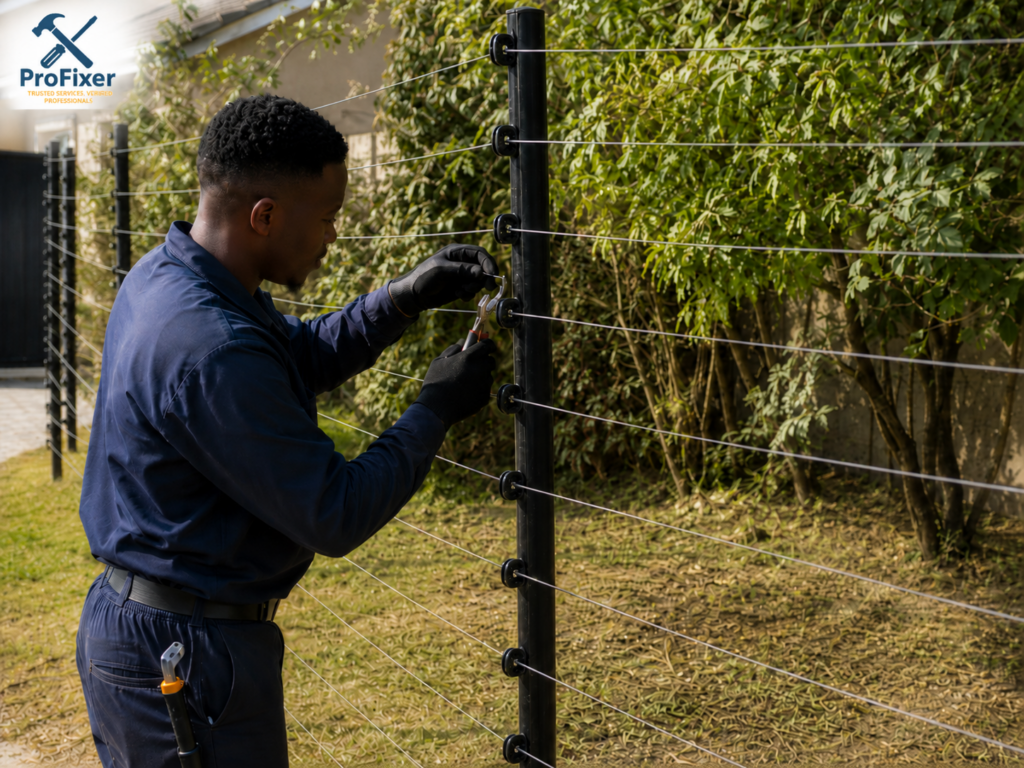
Common problems include:
- the energiser sounding continuously
- low voltage on the fence
- the fence failing to arm
- frequent false alarms
- broken or loose wires
- damaged brackets or insulators
- vegetation touching the fence
- the battery not holding charge
- no power at the energiser
- alarm or monitoring signals not working
- gate sections causing intermittent faults
Experienced electric fence installers should test the energiser, fence voltage, earth system, wires, insulators and connections before recommending repairs.
If several sections are damaged or the existing system is poorly installed, the contractor may recommend replacing part or all of the fence rather than continuing with repeated repairs.
Electric Fence Battery and Backup Power
A backup battery allows the electric fence system to continue operating during a power failure. The battery also helps the energiser remain stable when the mains supply is interrupted.
Over time, batteries lose capacity and may no longer support the system for an acceptable period. Signs of battery problems may include low-battery warnings, repeated system resets or the fence switching off shortly after a power failure.
A technician should check:
- the battery condition
- charger output
- battery terminals
- power supply wiring
- backup operating time
- energiser fault indicators
Replacing the battery without checking the charging circuit may not solve the problem if the energiser is failing to charge it correctly.
Electric Fence Earthing
A good earth system is essential for reliable electric fence performance. The earth system completes the electrical circuit when the fence is touched or interfered with.
Poor earthing can lead to weak fence performance, inconsistent voltage and unreliable alarm detection. Soil conditions, earth-spike placement and the quality of the connections can all affect performance.
Professional electric fencing contractors should test the earth system as part of the installation and during fault-finding visits.
The contractor should explain whether additional earth spikes or improved earth connections are required.
Gate Sections and Electric Fence Connections
Vehicle and pedestrian gates create breaks in the boundary and need careful planning. The electric fence may need insulated underground or protected cabling to carry the circuit across the gate opening.
Gate sections should not interfere with the operation of the gate motor, safety beams, access control equipment or intercom system.
A qualified installer should check:
- cable routes around the gate
- connections between fence sections
- the position of gate-motor equipment
- possible wire movement
- water protection for underground cables
- maintenance access
If the automatic gate also needs attention, you can find local specialists through our gate motor installer service.
Electric Fence Alarm and Security Integration
An electric fence can be connected to a siren, alarm panel, armed-response system or other monitoring equipment. When the fence is cut, shorted or interfered with, the energiser can provide an alarm output.
Integration may allow:
- local siren activation
- alarm-panel zone monitoring
- remote notifications
- control-room monitoring
- separate fence-zone identification
- CCTV verification of perimeter activity
The contractor should confirm what equipment is compatible and whether additional relays, communication devices or alarm programming are required.
Electric Fence Maintenance
Regular maintenance helps keep the fence reliable and reduces unnecessary alarms. Trees, bushes and climbing plants should not be allowed to touch the live wires.
Maintenance may include:
- checking wire tension
- removing vegetation
- replacing cracked insulators
- tightening loose brackets
- checking earth connections
- testing fence voltage
- testing alarm outputs
- checking the backup battery
- inspecting high-voltage cables
- confirming warning signs remain visible
Complexes, commercial properties and long perimeter systems may benefit from scheduled inspections by experienced electric fence installers.
Safety and Compliance
Electric fencing must be installed with proper attention to safety and all applicable legal, technical and property requirements.
The installer should explain:
- how the fence will be safely isolated
- where warning signs will be placed
- how gates and public access areas will be treated
- what documentation may be required
- how the system should be operated and maintained
- what responsibilities apply to the property owner
Avoid using unqualified individuals who cannot explain the system, testing process or safety requirements.
What Affects Electric Fence Installation Costs?
The cost of an electric fence installation depends on the size of the property, the perimeter structure and the equipment required.
Pricing may be affected by:
- the total perimeter length
- the number of wire strands
- the type and quantity of brackets
- the number of corners
- wall, palisade or mesh installation
- gate crossings
- energiser size and features
- earth-system requirements
- backup battery capacity
- alarm and monitoring integration
- repairs to walls or existing fencing
- access and installation difficulty
Comparing quotes helps you understand whether each contractor is pricing the same equipment and scope of work.
What Should an Electric Fence Quote Include?
A written quotation from professional electric fence installers should clearly describe:
- the measured fence length
- the number of electric wires
- the bracket type and quantity
- the energiser make and model
- insulators, tensioners and cabling
- earth spikes and earth wiring
- backup battery and power supply
- gate and corner arrangements
- alarm or monitoring connections
- testing and commissioning
- workmanship and equipment warranties
- whether VAT is included
Ask whether repairs to walls, steel fencing or electrical supplies are included or will be charged separately.
Questions to Ask Electric Fence Installers
Before choosing a contractor, ask:
- Which system is suitable for my property?
- How many wires and brackets are included?
- Which energiser will be installed?
- Is a backup battery included?
- How will the gate opening be handled?
- Will the fence connect to my alarm system?
- Does the quotation include testing?
- What maintenance is recommended?
- What warranty applies to equipment and workmanship?
- What documentation will be provided?
- How long will installation take?
- Are repairs to the existing boundary included?
The contractor should be able to explain the proposed system clearly and provide a complete written scope.
Compare Electric Fence Installers Through ProFixer
Finding reliable electric fence installers can take time, especially when you need to compare different energisers, bracket systems and installation methods.
ProFixer allows you to post one job and receive responses from local specialists. When posting your request, include:
- your town, suburb or area
- the type of property
- the approximate perimeter length
- the existing wall or fence type
- whether you need installation or repairs
- whether there is an existing energiser
- details of any alarm integration
- photographs of the perimeter and equipment
You can then compare the equipment offered, installation scope, warranty, availability and price before appointing one of the available electric fencing contractors.
Post Your Electric Fence Job Free
Whether you need a new electric fence installation, urgent electric fence repairs or assistance from experienced security fence installers, ProFixer can help you connect with local specialists.
Post your electric fence job free and compare up to three no-obligation quotes. You can also learn more about how ProFixer works or browse our full list of security and property services.
Find trusted electric fence installers near you and improve your perimeter security with a professionally assessed and clearly quoted solution.
POST MY ELECTRIC FENCE JOB FREE