
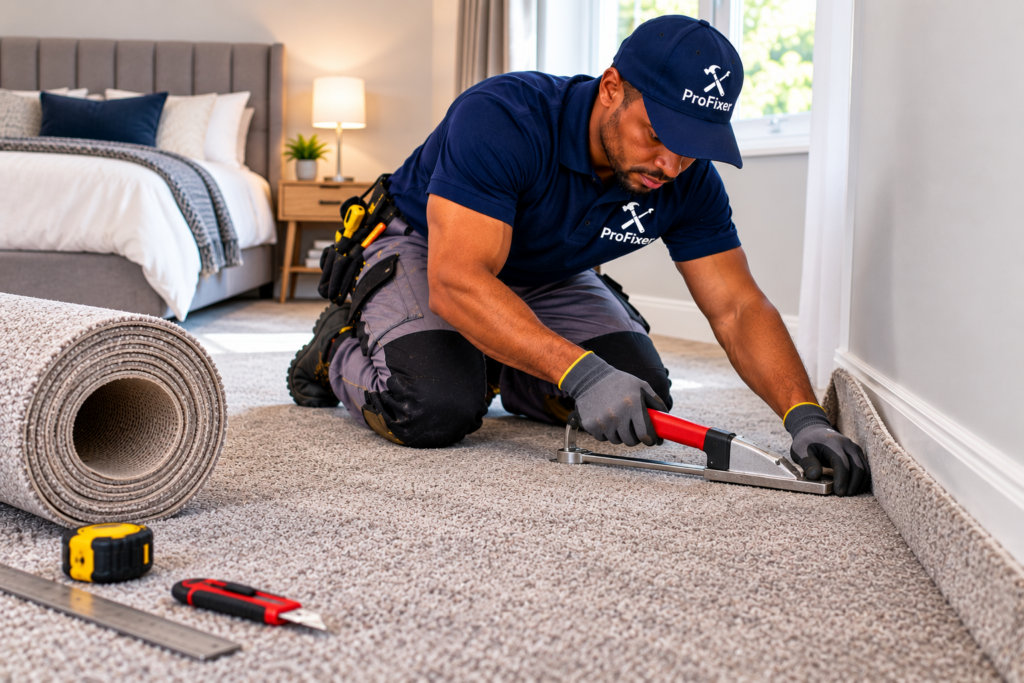
Find Trusted Carpet Installers Near You
New carpet can completely change the feel of a room. It adds warmth, comfort and sound insulation, making it a popular choice for bedrooms, lounges, passages, offices and rental properties.
Professional installers can help with measuring, carpet fitting, underlay, gripper installation, stretching, joins, stairs, replacement carpets and selected repairs. Good carpet installation is not only about cutting the material to size. The subfloor, underlay, room shape and finishing around doors and edges all influence the final result.
ProFixer makes it easier to connect with suitable local contractors. Post your carpet installation job free, upload photographs where possible and compare up to three no-obligation quotes from installers serving your area.
Table of Contents
Why Hire Professional Carpet Installers?
Carpet needs to be fitted under tension so that it sits flat and remains secure.
Poor installation can lead to wrinkles, loose edges, visible joins and sections that lift or move underfoot.
Experienced installers can assess the room, measure accurately, select the right fitting method and install the carpet with the correct tools.
They can also advise whether existing underlay can be reused or should be replaced.
How to Find Carpet Installers Near Me
When searching for installers near me, provide enough information for contractors to understand the job.
Useful details include:
- Number of rooms
- Approximate room sizes
- Existing floor type
- Whether old carpet must be removed
- Whether underlay is required
- Whether you already have the carpet
- Whether stairs are included
Photographs can help contractors identify unusual layouts, curved walls, doorways or stair configurations.
Final measurements should normally be confirmed before carpet is ordered.
Carpet Fitting Services
Professional carpet fitting services usually begin with checking the floor and confirming measurements.
The installer may then fit or replace gripper rods, lay the underlay and position the carpet.
Once the carpet is cut, it is stretched and secured around the edges.
The final stage includes trimming around door frames, thresholds and other fixed areas.
Measuring for Carpet Installation
Accurate measurement is important because carpet is normally supplied in fixed roll widths.
This means the installer may need to plan the layout carefully to reduce wastage and unnecessary joins.
The room shape, door positions and pattern direction should all be considered.
For large or irregular rooms, professional measurement can help avoid ordering too little or too much material.
Carpet Underlay
Underlay sits beneath the carpet and can improve comfort, sound insulation and the overall feel underfoot.
It can also help extend the life of the carpet by reducing direct wear against the subfloor.
Different underlays offer different levels of cushioning and performance.
A contractor should recommend an option that suits the room and the type of carpet being installed.
Carpet Gripper Installation
Gripper rods are commonly installed around the perimeter of the room.
They help hold the carpet securely once it has been stretched.
The grippers should be positioned correctly so the carpet remains tight without creating visible damage along the edges.
Carpet Stretching
Carpet needs to be stretched properly during installation.
If it is left too loose, it may wrinkle or move over time.
Professional installers use suitable stretching tools to create a firm, even finish across the room.
This is especially important in larger spaces.
Carpet Seams and Joins
Some rooms require more than one piece of carpet.
Where this happens, the join should be positioned carefully so it is as discreet as possible.
The installer should align the carpet direction and pattern where applicable.
Poor joins can become highly visible once the room is furnished and used.
Carpet Installation in Bedrooms
Carpet remains a popular choice for bedrooms because it provides warmth and comfort.
The installer should consider wardrobes, bed positions and door clearances before fitting begins.
A good underlay can also improve the feel of the carpet and reduce noise.
Carpet Installation in Living Rooms
Living rooms often receive more foot traffic than bedrooms.
The selected carpet and underlay should therefore suit the level of use.
Furniture layout may also affect where carpet joins are best positioned.
Carpet Installation in Hallways
Hallways experience repeated foot traffic and may show wear sooner than quieter rooms.
The installer should make sure the carpet is stretched correctly and secured neatly around corners and doorways.
Durability is especially important in busy passages.
Carpet Installation on Stairs
Stairs require more detailed fitting than flat rooms.
Each step needs accurate cutting and secure fixing.
The installer should ensure the carpet is firmly attached around the tread and riser.
Loose carpet on stairs can create a trip hazard.
Carpet Installation on Landings
Landings should normally be planned together with the staircase.
The direction of the carpet and the position of joins can affect the overall appearance.
Where possible, the installer should aim for a clean visual flow between the stairs and landing.
Carpet Installation in Home Offices
Carpet can help reduce noise in home offices.
The selected carpet should be suitable for office chairs and furniture.
A denser carpet or chair mat may help reduce wear where rolling chairs are used regularly.
Carpet Installation in Rental Properties
Landlords often choose carpets that balance cost, appearance and durability.
Neutral colours are commonly selected because they suit a wide range of tenants.
For rental properties, it can also be useful to choose materials that are easy to replace if damaged.
For broader work, compare property maintenance contractors through ProFixer.
Carpet Installation in Commercial Properties
Commercial carpet installation may involve different materials and fitting methods from residential work.
Offices, waiting areas and other business spaces usually require products suited to heavier foot traffic.
The installer should consider durability, maintenance and how the space is used.
Carpet Tiles
Carpet tiles are often used in offices and commercial spaces.
They can be practical because individual tiles may be easier to replace if damaged.
The subfloor needs to be clean, stable and appropriately prepared before installation.
Layout planning is also important because tile direction can affect the appearance of the finished floor.
Broadloom Carpet
Broadloom carpet is supplied in large rolls.
It is commonly used in homes and can create a soft, continuous finish across a room.
The installer needs to plan carefully where seams are required.
Patterned Carpet Installation
Patterned carpet requires extra care.
The installer must align the pattern correctly across joins and adjoining sections.
More material may be required because the pattern needs to match from one piece to another.
Carpet Installation Over Concrete
Concrete floors should be checked before carpet installation begins.
The surface needs to be reasonably smooth, clean and dry.
Any moisture problems should be addressed before the underlay and carpet are installed.
Carpet Installation Over Timber Floors
Timber floors can normally support carpet if they are stable.
Loose floorboards should be repaired first because movement can create noise or affect the final finish.
Gaps or damaged boards may also require attention.
Subfloor Preparation Before Carpet Installation
The floor beneath the carpet should be clean and stable.
Old staples, nails, loose material and damaged sections should be removed or repaired.
Major unevenness may need additional work before installation starts.
Good preparation helps the underlay and carpet sit properly.
Removing Old Carpet
Old carpet may need to be removed before new material is installed.
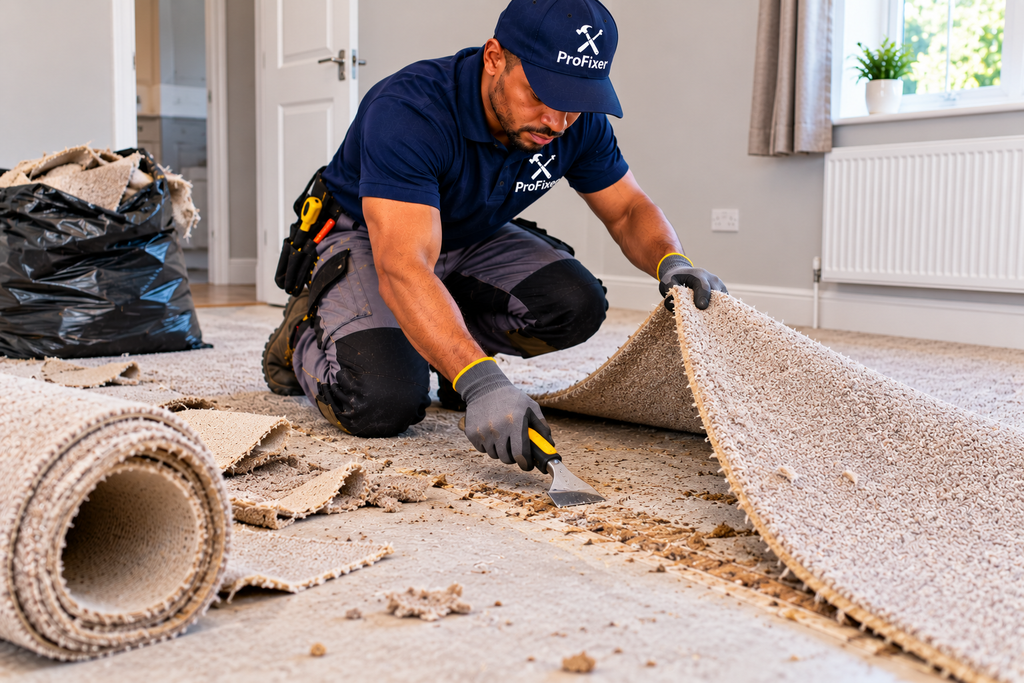
This can involve removing the old underlay, staples and damaged grippers.
Once the carpet has been lifted, the subfloor should be inspected.
Hidden problems such as dampness, loose boards or cracking may only become visible at this stage.
Removing Old Underlay
Underlay can deteriorate over time.
It may become compressed, brittle or uneven.
If the old underlay is no longer in good condition, replacing it can improve the performance of the new carpet.
Reusing Existing Underlay
Existing underlay can sometimes be reused if it is still clean, dry and in good condition.
However, fitting new carpet over badly worn underlay can reduce comfort and shorten the life of the installation.
The installer should assess it before making a recommendation.
Carpet Replacement
Carpet replacement may involve more than simply swapping the old floor covering.
The installer should inspect the condition of the underlay, grippers and subfloor.
If the existing carpet failed because of moisture, movement or damage below, the cause should be corrected first.
Carpet Installation and Skirting Boards
Carpet is normally fitted neatly against skirting boards.
The edges should sit securely without visible gaps.
Where skirting is being replaced as part of a renovation, the sequence of work should be coordinated carefully.
Carpet Installation and Door Frames
Carpet needs to be cut neatly around door frames and architraves.
Poor cuts can make the installation look unfinished.
The installer should also check how the carpet will meet adjacent flooring.
Carpet Installation and Doors
New carpet and underlay can increase the finished floor height.
This may affect door clearance.
Where doors need substantial adjustment, compare door installation and repairs contractors through ProFixer.
Carpet Thresholds
Threshold strips help create a secure transition between carpet and another floor finish.
They may be used where carpet meets:
- Tile
- Vinyl
- Laminate
- Timber
- Another carpet
The threshold should sit securely and create a neat transition.
Carpet and Laminate Transitions
Where carpet meets laminate, the correct transition strip should be fitted.
This protects both floor edges and creates a cleaner finish.
For laminate work, compare laminate flooring installers through ProFixer.
Carpet and Vinyl Transitions
Carpet may also meet vinyl in kitchens, bathrooms or passages.
The difference in floor height should be managed carefully.
For vinyl installations, compare vinyl flooring installers through ProFixer.
Carpet and Tiled Floor Transitions
Where carpet meets tile, the transition should not create a raised edge or trip hazard.
The carpet should remain securely held at the doorway.
For tiled areas, compare tiling contractors through ProFixer.
Carpet Installation During Renovations
Carpet should normally be installed after the majority of dusty, wet or heavy construction work has been completed.
This reduces the risk of damaging or staining new carpet.
For larger projects, compare renovation contractors through ProFixer.
Carpet Installation for Home Improvement Projects
Replacing old carpet can significantly change the appearance of a room.
It may be combined with:
- New paint
- New skirting
- Door replacements
- Built-in cupboards
- Lighting upgrades
For wider upgrades, compare home improvement contractors through ProFixer.
Carpet Installation Around Built-In Cupboards
Built-in cupboards can affect carpet cutting and installation.
The carpet should be finished neatly around fixed units.
If cupboards are being replaced at the same time, contractors should agree on the order of work.
Carpet Installation Around Fireplaces
Carpet around fireplaces requires careful planning.
The installer should maintain suitable clearances around hearths and other heat-sensitive areas.
The carpet should also be cut neatly around the shape of the fireplace.
Carpet Installation in Open-Plan Areas
Large open-plan spaces may require careful planning to reduce visible seams.
The installer should consider room shape, furniture layout and carpet roll width.
A good layout can help create a more continuous appearance.
Carpet Installation in Small Rooms
Small bedrooms and offices may be relatively straightforward to carpet.
However, alcoves, cupboards and unusual corners can still increase the amount of cutting required.
Accurate measurement helps minimise waste.
Carpet Installation in Large Rooms
Larger rooms may require joins because the room is wider than the carpet roll.
The position and direction of these joins should be planned before installation begins.
Where possible, they should be kept away from the most visible or heavily trafficked areas.
Carpet Installation in New Homes
New homes may have bare concrete or timber floors ready for finishing.
The installer should confirm that the surfaces are suitable before underlay and carpet are installed.
Moisture in newly completed concrete should also be considered.
Carpet Installation After Building Work
Building work can leave dust, debris and uneven surfaces.
The floor should be cleaned and inspected before the carpet is installed.
Any unfinished repairs should be completed first.
Carpet Repairs
Some installers also offer carpet repair services.
Repairs may be possible where the carpet has become loose, damaged or affected in a small area.
The most appropriate solution depends on the age, condition and type of carpet.
Loose Carpet Repairs
Carpet can become loose over time and develop ripples.
In some cases, it can be re-stretched and secured.
This may be more cost-effective than replacing the entire carpet.
Carpet Wrinkle Repairs
Wrinkles can appear if the carpet was not stretched correctly or has moved over time.
Re-stretching may improve the appearance and reduce the risk of tripping.
The grippers and underlay should also be checked.
Carpet Burn Repairs
Small burns may sometimes be repaired if matching carpet is available.
A damaged section can potentially be removed and replaced.
The visibility of the repair depends on the carpet pattern, colour and wear.
Carpet Patch Repairs
Carpet patches may be suitable for localised damage.
The replacement piece should match the existing carpet as closely as possible.
A spare offcut from the original installation can be useful for this type of repair.
Carpet Edge Repairs
Carpet edges can sometimes come loose near doorways or walls.
The cause may be damaged grippers or repeated movement.
A contractor can assess whether the edge can be re-secured.
Carpet Repairs on Stairs
Stair carpets receive concentrated wear.
Loose or damaged sections should be repaired promptly.
Where the damage is extensive, replacing the stair carpet may be safer.
Repair or Replace Carpet?
Repair can make sense where damage is localised and the rest of the carpet is in good condition.
Replacement may be more practical where the carpet is badly worn, stained or damaged across a large area.
The condition of the underlay should also be considered.
Choosing Carpet for Your Home
Carpets differ in texture, fibre, colour and durability.
The right choice depends on the room and how much use it receives.
A guest bedroom may not need the same specification as a busy hallway or family lounge.
Choosing Carpet for Bedrooms
Comfort is often the main priority in bedrooms.
Softer carpets can create a warm and comfortable feel.
The selected colour should work with the room furniture and wall finishes.
Choosing Carpet for Living Rooms
Living rooms usually require a balance between appearance and durability.
The carpet should suit regular foot traffic and furniture placement.
Underlay quality can also influence comfort.
Choosing Carpet for Hallways and Stairs
Hallways and stairs need durable carpet because they experience concentrated traffic.
A carpet with a suitable wear rating can help extend the life of the installation.
Choosing Carpet Colours
Carpet colour affects both appearance and maintenance.
Lighter colours can make a room feel brighter but may show marks more easily.
Mid-tone colours can be practical in busy family homes.
Choosing Carpet Texture
Carpet texture can range from smooth and dense to soft and deep pile.
The right option depends on comfort, appearance and maintenance requirements.
Carpet Installation and Final Checks
Once the installation is complete, the contractor should inspect the carpet carefully.
The surface should sit flat without ripples or loose sections.
Edges should be secure and joins should be neat.
Doors should also open freely over the finished carpet.
Checking Carpet Seams
Seams should sit flat and remain secure.
They may still be visible depending on the carpet type and room lighting, but they should not lift or separate.
Checking Carpet Edges
Edges around walls, doorways and thresholds should be properly secured.
Loose edges can become damaged quickly and may create a trip hazard.
Checking Stair Carpet
Stair carpet should be firmly fixed on every step.
There should be no loose sections around the tread or riser.
What Affects Carpet Installation Costs?
The cost of hiring carpet installers depends on the room size, carpet type and complexity of the installation.
Other factors can include:
- Underlay
- Grippers
- Stairs
- Carpet removal
- Waste disposal
- Floor repairs
- Door adjustments
- Pattern matching
Large or unusually shaped rooms can require more cutting and joining.
What Affects Carpet Repair Costs?
Repair costs depend on the damage.
Re-stretching a loose carpet may be relatively straightforward, while patch repairs or stair repairs can require more detailed work.
Matching replacement carpet can also affect the cost.
Supply and Installation or Installation Only?
Some carpet installers can supply the carpet and fitting as one service.
Others offer fitting only.
If you are purchasing the carpet yourself, confirm the required quantities and whether underlay, grippers and trims are included.
What Should a Carpet Installation Quote Include?
A clear quote should explain the scope of the work.
It may include:
- Carpet supply
- Underlay
- Gripper rods
- Installation
- Seaming
- Stair fitting
- Thresholds
- Existing-carpet removal
- Waste disposal
Ask contractors to identify anything that is not included.
Questions to Ask Carpet Installers
Before choosing an installer, ask whether the quote includes underlay, grippers and removal of the existing carpet.
Also confirm whether stairs, thresholds and door adjustments are included.
If the contractor is supplying the carpet, ask for the product specification and warranty information.
Compare Carpet Installers Through ProFixer
Choosing carpet installers is easier when you compare the full scope of work rather than the fitting price alone.
One installer may include underlay, removal and thresholds, while another may only quote for fitting.
ProFixer allows you to post your project once and connect with suitable local contractors. Upload photographs, provide approximate room sizes and explain whether you need new carpet installation, replacement or repairs.
Compare contractors based on preparation, materials, fitting method, finishing, warranty and total cost.
Get Free Carpet Installation Quotes
Whether you need carpet installers near me, professional carpet fitting services, carpet replacement or selected carpet repair contractors, ProFixer can help you connect with suitable local professionals.
Compare up to three no-obligation quotes from local carpet installers.
GET FREE CARPET INSTALLATION QUOTES