
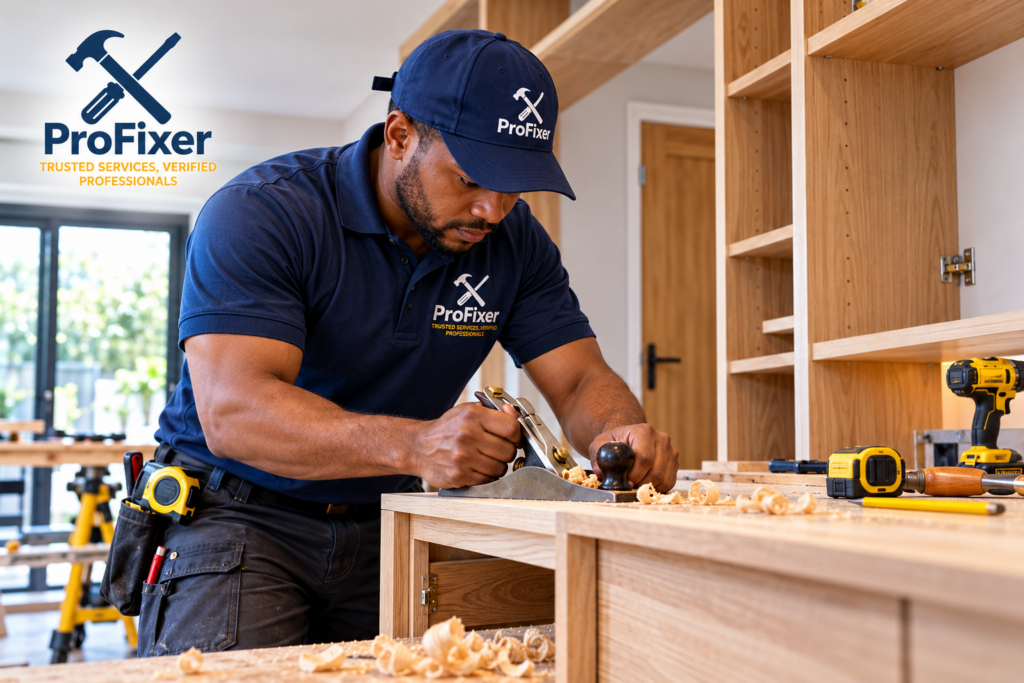
Find Trusted Carpentry Services Near You
Good carpentry can make a noticeable difference to the way a home or business looks, feels and functions. From fitting doors and repairing damaged timber to building shelving, cupboards, skirting, architraves and custom storage, professional carpentry services can help with both practical repairs and more detailed finishing work.
A skilled carpenter should be able to work accurately with different timber products, understand how wood behaves over time and produce a finish that looks neat while remaining durable. Whether the job is a small repair, part of a renovation or a completely custom piece of woodwork, correct measuring, cutting, fixing and finishing are essential.
ProFixer makes it easier to connect with suitable local carpenters. Post your job free, upload photographs where possible and explain what you need. You can then compare up to three no-obligation quotes from contractors serving your area.
Table of Contents
Why Hire Professional Carpentry Services?
Carpentry often involves more precision than it first appears. A door may only need a few millimetres of adjustment to close properly, while shelving needs to be level, correctly supported and fixed into the right part of the wall. Built-in furniture needs even more planning because walls, floors and ceilings are rarely perfectly straight.
Professional carpentry services can help with repairs, installations and custom work while taking these details into account. A carpenter should first assess the existing structure, choose suitable materials and explain whether the job can be repaired or whether replacement would provide better long-term value.
For larger projects, good carpentry should also coordinate well with flooring, painting, plastering and other finishing trades.
How to Find Carpenters Near Me
When looking for carpenters near me, provide enough information for contractors to understand the scale of the work before quoting.
Photographs are especially useful for repair work, fitted furniture and unusual spaces. If you are requesting custom carpentry, approximate measurements and reference images can help the carpenter understand the style you want.
It is also useful to explain whether materials are already available or whether you expect the carpenter to supply everything. Final measurements should normally be taken on site before custom items are manufactured.
Custom Carpentry Services
Professional custom carpentry services can be used where standard furniture or off-the-shelf products do not fit the available space.
Custom work may include wall-to-wall storage, fitted shelving, cupboards, benches, desks, entertainment units or specialised timber features. The carpenter can design the work around awkward corners, alcoves, sloping ceilings or unusual room dimensions.
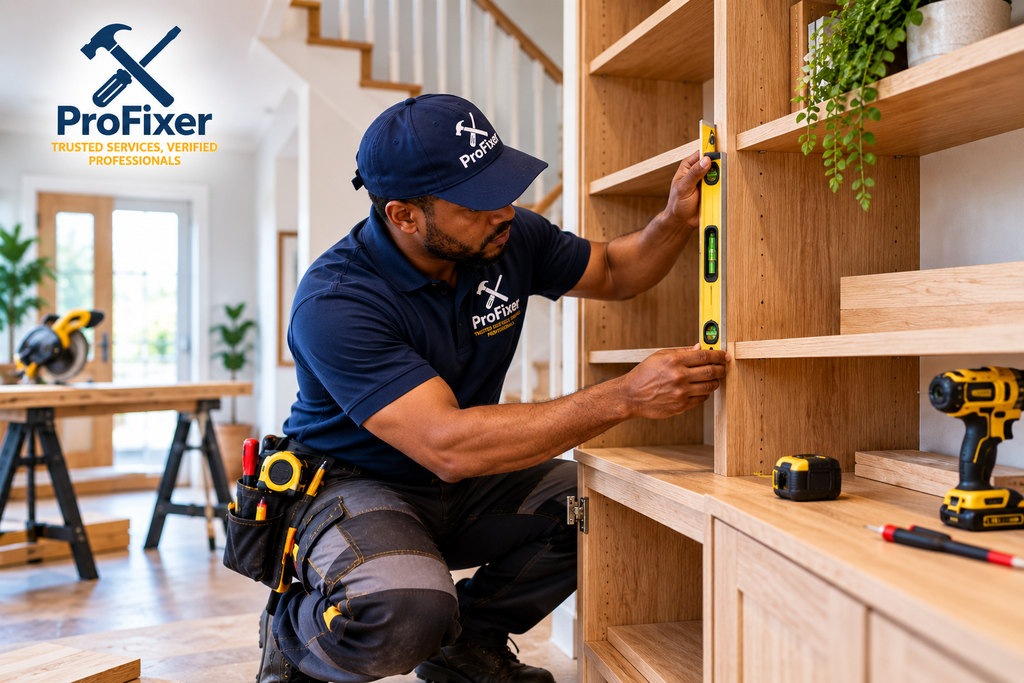
The advantage of custom carpentry is that the final piece can be designed around the exact space rather than forcing a standard product to fit.
Door Fitting and Adjustments
Doors are one of the most common carpentry jobs because timber doors can swell, warp or move slightly over time.
A carpenter may help with trimming, rehanging, adjusting hinges, fitting handles or correcting a door that catches on the floor or frame.
Where the problem involves locks, frames or complete door replacement, you can also compare door installation and repairs contractors through ProFixer.
Wooden Door Repairs
Wooden doors can develop cracks, loose joints, rot or damaged edges.
Minor problems may be repairable through filling, reinforcing, sanding or replacing a damaged section. More severe deterioration may require a new door.
The condition of the frame should also be checked because a new or repaired door will not operate properly if the frame itself is loose or distorted.
Door Frames and Timber Frames
Carpenters can repair or replace timber door frames that are damaged, split or rotten.
Frame work may involve removing affected sections, fitting replacement timber, checking alignment and preparing the surface for painting.
Accurate frame installation is important because even small errors can cause doors to bind or fail to latch properly.
Architraves
Architraves cover the joint between the door frame and the wall and provide a finished appearance around openings.
They may need replacing during door installations, renovations or after wall repairs.
The carpenter should cut corners neatly and ensure joints remain tight and consistent.
Skirting Boards
Skirting boards protect the lower edge of walls and help create a clean transition between walls and flooring.
New skirting may be installed during:
- Renovations
- Flooring replacement
- Room upgrades
- Extensions
Good fitting is especially important at corners and around door frames.
Skirting Board Repairs
Existing skirting can become damaged through moisture, impact or previous renovation work.
Small damaged sections can sometimes be replaced without removing the entire run.
Matching the profile and height of older skirting may require custom cutting or careful sourcing.
Timber Shelving
Custom shelves can provide practical storage in bedrooms, offices, kitchens, garages and living areas.
A carpenter should consider:
- Shelf span
- Expected weight
- Wall construction
- Timber thickness
- Support brackets
Long shelves carrying heavy items may require additional support to prevent sagging.
Floating Shelves
Floating shelves create a clean appearance because the support system is hidden.
The wall must be strong enough to support the brackets and expected load.
They should not be installed into weak drywall without suitable fixing arrangements.
Bookshelves
Built-in or freestanding bookshelves can be designed around the size of the room and the weight of books.
Deeper or wider shelves may need stronger materials and additional support.
Custom shelving can also incorporate display areas, cabinets or lighting.
Alcove Shelving
Alcoves are often ideal spaces for custom carpentry.
A carpenter can build shelves or cupboards to fit neatly between walls, fireplaces or structural features.
Because walls are not always perfectly square, each shelf may need to be individually measured.
Built-In Cupboards
Carpenters can build or modify fitted wardrobes and storage cupboards.
Projects may include:
- Bedroom cupboards
- Linen cupboards
- Hallway storage
- Utility cupboards
- Under-stair storage
For full fitted wardrobe projects, you can also compare built-in cupboard installers through ProFixer.
Kitchen Carpentry
Kitchen carpentry may involve cabinet repairs, replacement panels, shelves, doors, trims and custom storage.
Where the project involves a complete kitchen cabinet installation, compare kitchen cabinet contractors through ProFixer.
A carpenter may also assist with timber worktops, breakfast bars or custom shelves.
Kitchen Cupboard Repairs
Kitchen cupboards can be damaged by water, wear or heavy use.
Repairs may involve:
- Hinge fixing points
- Door edges
- Shelves
- Drawer boxes
- Panels
- Trims
Where board materials have swollen badly from water damage, replacement is usually more practical than repair.
Timber Worktops
Wooden worktops can be attractive but require correct installation and sealing.
Carpentry may include:
- Cutting to size
- Joining sections
- Creating sink cut-outs
- Sanding
- Sealing
Because timber responds to moisture, expansion gaps and surface protection are important.
Breakfast Bars
Carpenters can build or modify breakfast bars using timber, laminated board or other suitable materials.
The structure should provide enough support for the worktop and enough clearance for seating.
Custom Desks
Home offices often require desks that fit around walls, windows or storage.
Custom desks can include:
- Drawer units
- Cable holes
- Shelves
- Built-in storage
The design should allow access to sockets and data points.
Home Office Carpentry
Carpentry can help transform unused spaces into functional home offices.
This may include custom shelving, desks, cupboards and storage.
The carpenter should consider how the room will be used before finalising the layout.
Entertainment Units
Custom TV and entertainment units can be designed around screens, speakers and storage.
They may include:
- Shelving
- Cupboards
- Cable management
- Display areas
Electrical points and ventilation around equipment should be considered.
Timber Staircases
Carpenters may assist with staircase repairs, replacement treads, handrails, balustrades and timber finishing.
More complex structural staircase work may require specialist design or additional trades.
Loose or damaged stair components should be repaired promptly because they can become a safety issue.
Stair Treads
Timber stair treads can become worn, loose or damaged.
Repairs may involve reinforcement, partial replacement or complete tread replacement.
The carpenter should check the supporting structure before simply replacing the visible timber.
Handrails
Timber handrails need to be firmly fixed because they are safety-critical components.
A carpenter can install new rails or repair loose sections.
Fixings should be suitable for the wall or supporting structure.
Timber Balustrades
Balustrades may require repair where rails, posts or spindles become loose.
The carpenter should ensure repaired sections remain strong and consistent with the existing design.
Timber Repairs
Professional wood repair services can help extend the life of existing timber features.
Repairs may involve filling, reinforcing, replacing damaged sections or rebuilding joints.
The key is to determine whether the timber is still structurally sound before deciding how much can be retained.
Rotten Timber Repairs
Rot usually develops where wood remains exposed to moisture.
Common problem areas include:
- Exterior doors
- Window frames
- Decking
- Fascias
- Timber thresholds
Minor localised rot may be repairable, but widespread deterioration may require replacement.
Cracked Timber Repairs
Cracks can develop because of drying, movement or impact.
Some cracks can be repaired with fillers or reinforcement, while structural cracks may require replacement of the affected section.
Split Timber Repairs
Split timber around screws, hinges or joints can sometimes be repaired by reinforcing the area and replacing damaged fixings.
The cause should be addressed so the damage does not return.
Timber Joint Repairs
Furniture, doors and frames often rely on timber joints for strength.
Loose joints may be reglued, reinforced or rebuilt depending on the damage.
Carpenter Repairs After Water Damage
Water damage can affect skirting, cupboards, door frames and other timber components.
The leak should always be repaired before the carpentry work begins.
Replacing timber while moisture is still present can lead to the same problem returning.
Carpentry After Plumbing Leaks
Leaking pipes or appliances can damage nearby cabinetry, flooring and skirting.
A carpenter may need to repair or replace affected sections after the plumbing fault has been corrected.
Exterior Timber Repairs
Outdoor timber is exposed to weather and usually needs more maintenance than indoor woodwork.
Repairs may involve:
- Decking
- Gates
- Pergolas
- Fascias
- Timber frames
The replacement timber and finish should be suitable for exterior use.
Decking Repairs
Timber decking can become loose, rotten or damaged over time.
A carpenter may replace boards, reinforce framing or repair steps and handrails.
Where several boards have failed, the structure underneath should also be inspected.
Timber Pergolas
Pergolas may need repairs where posts, beams or decorative sections deteriorate.
Outdoor timber should be treated or finished appropriately to reduce weather damage.
Wooden Gates
Carpenters may repair or build timber gates for gardens and entrances.
The gate needs to remain square and should use hardware suitable for its weight.
External timber should also be protected against moisture.
Custom Benches
Custom benches can be built for:
- Patios
- Dining areas
- Entrances
- Gardens
- Commercial spaces
Storage can sometimes be built beneath the seating.
Timber Feature Walls
Decorative timber or slatted walls can add texture to interior spaces.
These installations require careful spacing and straight alignment to achieve a professional finish.
Timber Wall Panelling
Wall panelling can be used in bedrooms, lounges, hallways and offices.
Carpenters may create:
- Shaker-style panelling
- Slatted walls
- Decorative mouldings
- Feature panels
Accurate layout is important so that spacing remains consistent.
Decorative Timber Mouldings
Mouldings can be added around walls, ceilings, doors and cabinetry.
Small errors in joints and corners are highly visible, so detailed cutting is important.
Cornices and Timber Trim
Some interior finishing projects involve timber trims rather than plaster or synthetic cornices.
A carpenter can cut and fit these to suit the room.
Carpentry for Bedrooms
Bedroom carpentry may include:
- Wardrobes
- Shelving
- Headboards
- Dressing tables
- Bed bases
- Storage
Custom solutions can make better use of limited space.
Carpentry for Living Rooms
Living-room carpentry may involve TV units, bookshelves, display cabinets or feature walls.
The design should complement the room rather than making it feel overcrowded.
Carpentry for Dining Rooms
Dining-room projects may include benches, shelving, cabinets or custom tables.
Materials and finishes should be selected for regular household use.
Carpentry for Hallways
Hallways can benefit from practical storage such as:
- Shoe cupboards
- Coat storage
- Benches
- Narrow shelving
Because hallways are often tight spaces, accurate dimensions are important.
Under-Stair Carpentry
The area beneath a staircase can be converted into practical storage.
A carpenter can build:
- Drawers
- Cupboards
- Shelving
- Shoe storage
Because each staircase is different, these projects usually require custom measurements.
Carpentry for Garages
Garage carpentry may include workbenches, shelving and storage.
Materials should be selected with dust, moisture and heavier use in mind.
Carpentry for Rental Properties
Landlords often require practical repairs rather than highly decorative custom work.
Common jobs include damaged doors, broken cupboards, skirting and shelving.
For ongoing work across the property, compare property maintenance contractors through ProFixer.
Carpentry During Renovations
Carpentry is often required throughout a renovation.
Work may include new doors, skirting, cupboards, shelving and decorative finishes.
For larger projects, compare renovation contractors through ProFixer.
Carpentry for Home Improvement Projects
Smaller home-improvement projects may still benefit from custom carpentry.
A fitted shelf, improved storage or new interior doors can significantly change the appearance and usability of a room.
For broader upgrades, compare home improvement contractors through ProFixer.
Carpentry and Flooring
Skirting, thresholds and door clearances often need to be coordinated with new floors.
Installing skirting before flooring is complete can create unnecessary rework.
For larger flooring projects, compare flooring contractors through ProFixer.
Carpentry and Painting
Many timber projects need painting or staining after installation.
Preparation may involve filling nail holes, sanding joints and applying primer.
For larger finishing jobs, compare painting contractors through ProFixer.
Carpentry and Plastering
New fitted furniture or doors may expose damaged wall areas.
Plastering should normally be completed before final trim and finishing work.
Carpentry and Electrical Work
Custom units should be planned around sockets, light switches and data points.
If new electrical outlets or lighting are required, these should be positioned before final carpentry installation.
Timber Finishes
The finish applied to timber affects both appearance and durability.
Options may include:
- Paint
- Varnish
- Stain
- Oil
- Clear sealer
The correct finish depends on the timber and whether it is used indoors or outdoors.
Painted Timber
Painted woodwork can provide a clean, consistent appearance.
The timber should be prepared properly before painting to reduce visible imperfections.
Stained Timber
Stain enhances the natural grain while adding colour.
The final appearance varies depending on the timber species.
Varnished Timber
Varnish provides a protective clear or tinted coating.
It is commonly used on furniture, doors and decorative woodwork.
Repair or Replace Timber?
Repair may be worthwhile where most of the timber remains sound.
Localised damage, loose joints or minor rot can often be corrected.
Replacement may be more practical where timber is severely rotten, badly warped or structurally weakened.
What Affects Carpentry Costs?
The cost of carpentry services depends on the type of work, materials and complexity.
A simple shelf installation may be relatively straightforward, while custom fitted furniture can require design, manufacturing and several days of installation.
Costs may also be affected by:
- Timber type
- Hardware
- Finishing
- Site access
- Amount of custom cutting
- Removal of existing work
What Affects Custom Carpentry Costs?
Custom work usually costs more because each piece is measured and manufactured specifically for the property.
Detailed designs, premium timber, drawers and specialist hardware can increase both material and labour costs.
What Affects Wood Repair Costs?
Repair pricing depends on the extent of the damage.
Minor hinge repairs or small sections of rot may be relatively simple, while structural timber damage can require significant replacement.
What Should a Carpentry Quote Include?
A clear quotation should explain exactly what is being supplied and installed.
It should normally identify materials, dimensions, hardware, labour, finishing and whether old timber or furniture will be removed.
For custom work, ask whether final measurements and design drawings are included.
Questions to Ask Carpentry Contractors
Before choosing between carpentry contractors, ask what material will be used, whether finishing is included and how the work will be fixed or supported.
For fitted furniture, confirm whether shelves, drawers, hinges and handles are included.
It is also useful to ask how long manufacturing and installation will take and whether a workmanship warranty is provided.
Compare Carpentry Services Through ProFixer
Choosing the right carpenter is easier when you compare the full scope of work rather than price alone.
One quotation may use basic materials while another includes better hardware, finishing and more detailed installation.
ProFixer allows you to post your project once and connect with suitable local carpenters. Upload photographs, explain what needs to be built or repaired and provide approximate measurements where possible.
Compare contractors based on materials, workmanship, design, finishing, lead time, warranty and total cost.
Get Free Carpentry Quotes
Whether you need carpenters near me, professional custom carpentry services, reliable wood repair services or experienced carpentry contractors, ProFixer can help you connect with suitable local professionals.
Compare up to three no-obligation quotes from local contractors.
GET GATE AUTOMATION QUOTES