
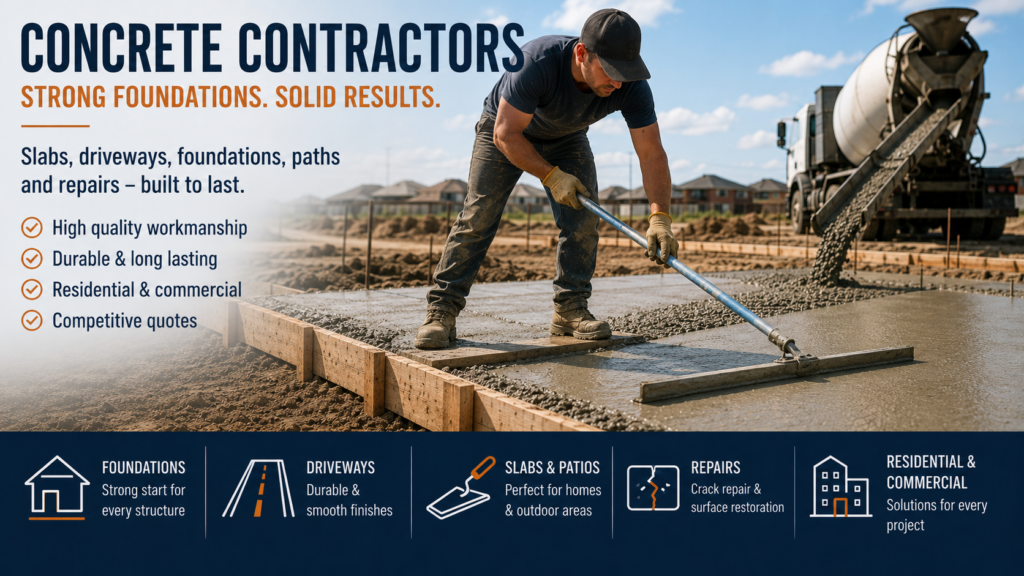
Find Trusted Concrete Contractors Near You
Concrete forms the base of many residential and commercial construction projects. From house foundations and garage slabs to driveways, patios and structural floors, the quality of the concrete work affects strength, durability and the long-term performance of the finished structure. Poor preparation, incorrect reinforcement or inadequate curing can lead to cracking, settlement, uneven surfaces and costly repairs later.
Professional concrete contractors can help with new installations, structural concrete, outdoor surfaces and repair work. They can assess ground conditions, prepare the site, install formwork and reinforcement, place the concrete correctly and finish the surface for the intended use.
ProFixer makes it easier to find suitable local specialists. Post your concrete job free, describe the work required, upload photographs, plans or measurements where useful and compare up to three no-obligation quotes from contractors serving your area.
Table of Contents
Why Hire Professional Concrete Contractors?
Concrete work requires proper planning before any material is poured. The ground needs to be prepared correctly, levels must be checked, formwork needs to be secure and reinforcement must be positioned where required. The concrete mix, thickness and curing process should also suit the intended load and use.
Professional concrete contractors can help reduce the risk of uneven surfaces, weak edges, poor drainage and premature cracking. They can also coordinate with builders, bricklayers, plumbers, electricians and other trades when concrete forms part of a larger construction project.
Concrete contractors may assist with:
- Concrete slabs
- House foundations
- Garage floors
- Carport slabs
- Driveways
- Paths and walkways
- Patios
- Outdoor entertainment areas
- Reinforced concrete
- Concrete repairs
- Concrete cutting
- Concrete removal
- Structural concrete
- Commercial concrete work
The correct construction method depends on the size of the project, expected loads, soil conditions and final finish required.
How to Find Concrete Contractors Near Me
Searching for concrete contractors near me can produce many options, but different contractors may specialise in different types of work. Some may focus on driveways and domestic slabs, while others may have more experience with reinforced structural concrete, foundations or larger commercial projects.
When requesting quotes, provide:
- Your suburb, town or city
- Photographs of the site
- Approximate dimensions
- Intended use of the concrete
- Required thickness if known
- Whether reinforcement is required
- Whether excavation is needed
- Whether old concrete must be removed
- Access for concrete delivery
- Desired finish
- Drainage requirements
- Your preferred completion date
For larger slabs or structural work, a site inspection and drawings may be necessary before an accurate quotation can be prepared.
Concrete Slab Installation
Concrete slabs are commonly used for floors, garages, extensions, patios, sheds and other permanent structures.
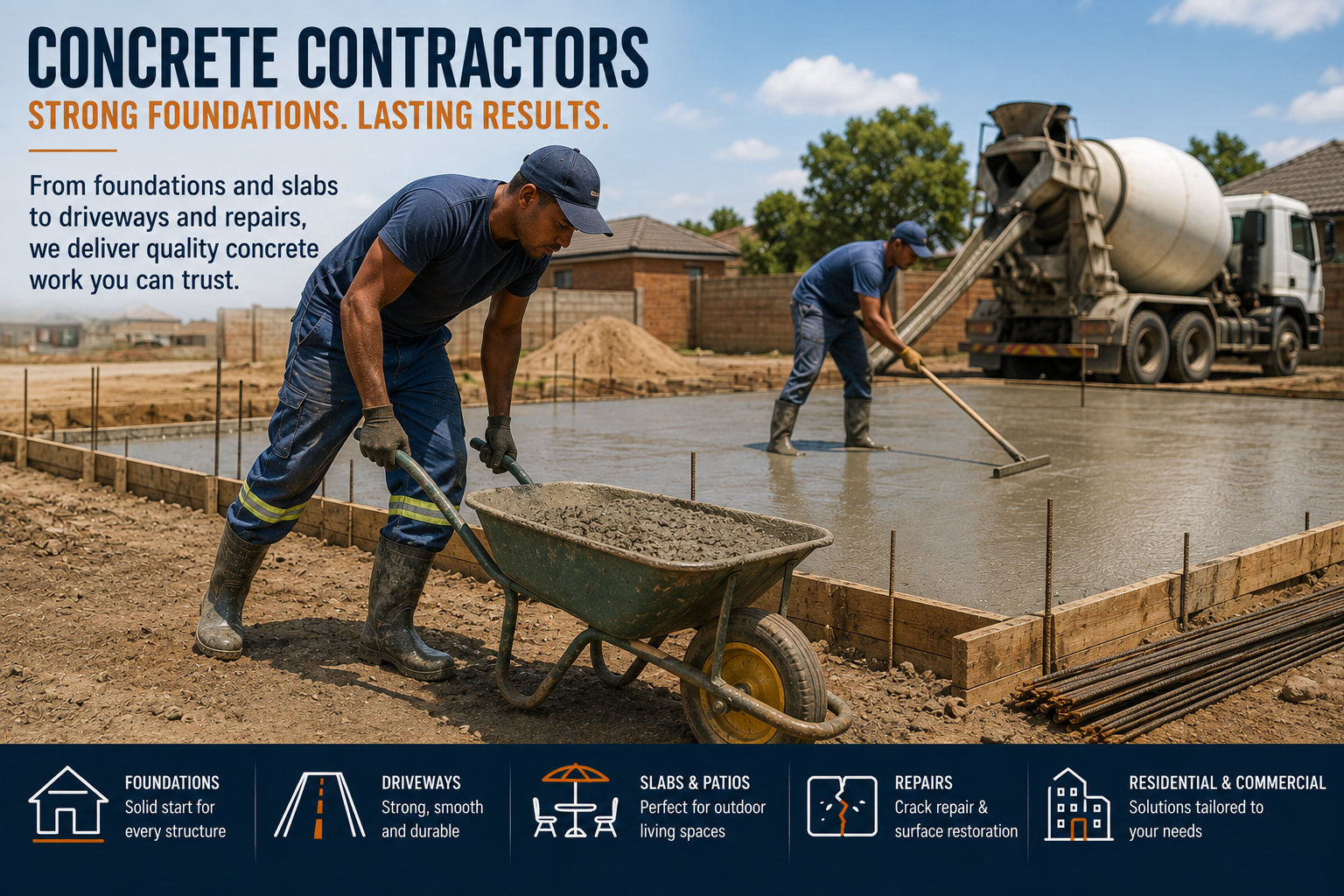
A typical slab project may involve:
- Site clearing
- Excavation
- Ground preparation
- Compaction
- Sub-base installation
- Formwork
- Damp-proofing where required
- Reinforcement
- Concrete placement
- Levelling
- Surface finishing
- Curing
The slab thickness and reinforcement should be suitable for the load it will carry.
House Foundations
Foundations transfer the weight of a building into the ground and are one of the most important stages of construction.
Foundation work may involve:
- Setting out
- Excavation
- Trench preparation
- Reinforcement
- Formwork
- Concrete placement
- Levelling
- Curing
Foundation dimensions should follow the structural or building requirements for the project rather than being estimated on site without proper planning.
Concrete for House Extensions
House extensions often require new concrete foundations and floor slabs before brickwork begins.
Concrete work for an extension may include:
- Strip foundations
- Reinforced footings
- Floor slabs
- Steps
- Porch slabs
- Structural bases
The concrete contractor should coordinate with the builder and bricklayer so that wall positions, finished floor levels and service openings are correct before pouring.
Garage Slabs
Garage floors need to support vehicles and repeated loads without excessive cracking or settlement.
A garage slab may require:
- Compacted sub-base
- Suitable concrete thickness
- Reinforcement
- Level formwork
- Correct falls where required
- Smooth or textured finishing
The finished floor should be level enough for vehicles and garage-door operation while still allowing any required drainage.
Carport Slabs
Concrete slabs under carports provide a durable parking surface and can also improve drainage and property appearance.
The design should consider:
- Vehicle loads
- Ground conditions
- Slab thickness
- Reinforcement
- Drainage
- Connection to existing paving or driveway
- Column or post positions
If the carport structure is being installed separately, post locations should be coordinated before the concrete work is completed.
Concrete Driveways
Professional concrete driveway contractors can create durable vehicle access areas for homes, estates and commercial properties.
Concrete driveways need to cope with vehicle loads, weather and repeated use. Poor ground preparation is one of the main reasons driveways crack or settle prematurely.
Driveway installation may include:
- Excavation
- Compaction
- Sub-base
- Formwork
- Reinforcement
- Concrete placement
- Control joints
- Surface finishing
- Drainage
The contractor should also consider how the driveway connects to the road, garage and surrounding landscape.
Concrete Paths and Walkways
Concrete paths can provide clean, durable access through gardens and around buildings.
They may be used for:
- Front entrances
- Side passages
- Garden paths
- Service areas
- Access to outbuildings
- Commercial walkways
The surface should be finished appropriately for pedestrian use and shaped to prevent water from collecting unnecessarily.
Concrete Patios and Outdoor Slabs
Concrete patios can form the base for outdoor entertainment areas, braai areas and seating spaces.
A patio slab should consider:
- Final surface level
- Drainage
- Connection to the house
- Future tiling or paving
- Expansion joints
- Furniture loads
- Roof or pergola supports
Where the slab will later be tiled, the concrete surface should be prepared to suit the next finishing stage.
Concrete Floors
Concrete floors may be used in garages, workshops, warehouses, stores and other areas where a strong surface is required.
The final finish may vary depending on the use of the floor.
Options may include:
- Smooth trowel finish
- Textured finish
- Power-floated finish
- Surface hardener
- Screed preparation
- Coatings applied later
The contractor should understand the intended use before choosing the finishing method.
Reinforced Concrete
Reinforced concrete combines concrete with steel reinforcement to improve structural performance.
Reinforcement may include:
- Welded mesh
- Reinforcing bars
- Reinforced beams
- Reinforced columns
- Structural slabs
- Footings
The reinforcement should be positioned correctly within the concrete rather than lying directly on the ground or against the formwork.
Concrete Foundations for Brick Walls
Brick walls usually require suitable foundations to prevent excessive settlement and cracking.
Foundation requirements depend on:
- Wall height
- Wall thickness
- Ground conditions
- Structural load
- Wall length
Concrete contractors and bricklaying contractors may need to coordinate closely to ensure the foundation dimensions and wall positions match.
Concrete for Boundary Walls
Boundary walls may require concrete strip foundations, reinforced bases or concrete columns depending on the wall design.
Before pouring, the contractor should confirm:
- Wall position
- Foundation width
- Foundation depth
- Reinforcement
- Gate openings
- Column positions
- Ground level
Poorly designed foundations can contribute to cracking and leaning later.
Concrete Columns and Bases
Concrete bases may be required for posts, structural columns, gates, carports and other installations.
They may be used to support:
- Steel columns
- Gate posts
- Carport posts
- Pergolas
- Roof supports
- Fencing structures
The size and reinforcement of the base should suit the load being supported.
Concrete Around Pools
Concrete may be used around swimming pools for slabs, coping support, equipment bases or surrounding entertainment areas.
Pool-related concrete work should consider:
- Drainage
- Slip resistance
- Movement
- Waterproofing
- Pool structure
- Final paving or tiling
- Equipment access
The slab should fall away from buildings where appropriate and should not create standing water around the pool.
Concrete Steps
Concrete steps may be constructed for entrances, garden level changes, patios and commercial access areas.
Good step construction requires:
- Consistent riser heights
- Equal tread depths
- Suitable reinforcement
- Secure formwork
- Proper finishing
Uneven step dimensions can create a trip hazard and make the finished work look unprofessional.
Concrete Ramps
Concrete ramps may be required for vehicle access, equipment movement or improved accessibility.
The design should consider:
- Gradient
- Surface grip
- Drainage
- Width
- Edge protection
- Load requirements
Commercial or accessibility ramps may need to meet specific dimensional requirements.
Concrete Repair Services
Professional concrete repair services can restore damaged slabs, edges and selected structural areas where complete replacement is not necessary.
Repairs may be needed because of:
- Cracking
- Impact damage
- Settlement
- Surface wear
- Water damage
- Broken edges
- Previous poor workmanship
The contractor should identify why the concrete failed before carrying out repairs.
Cracked Concrete Repairs
Concrete can crack for many reasons, including shrinkage, movement, poor ground preparation or excessive loading.
The contractor should assess:
- Crack width
- Crack depth
- Crack pattern
- Movement
- Settlement
- Water penetration
- Surrounding damage
Some cracks are mainly cosmetic, while others may indicate movement that needs further investigation.
Damaged Slab Repairs
Concrete slabs may become damaged by heavy loads, settlement, impact or water entering beneath the slab.
Repair options may include:
- Local patching
- Cutting out damaged sections
- Replacing sections
- Rebuilding edges
- Re-levelling selected areas
- Resurfacing
The most suitable repair depends on the severity and cause of the damage.
Uneven Concrete Surfaces
Uneven slabs can create drainage problems, trip hazards and difficulties with doors, gates or flooring.
The cause may include:
- Settlement
- Poor original levelling
- Inadequate compaction
- Erosion below the slab
- Root movement
The contractor should determine whether local repair, resurfacing or complete replacement is appropriate.
Concrete Resurfacing
Concrete resurfacing can improve worn or unattractive surfaces where the underlying slab remains reasonably sound.
Resurfacing may be considered for:
- Patios
- Walkways
- Driveways
- Garage floors
- Commercial floors
The existing concrete must be prepared properly so that the new surface bonds effectively.
Concrete Cutting
Concrete cutting may be required during renovations, service installation or demolition.
Cutting may be used to create:
- Service openings
- Drainage channels
- Door openings
- Expansion joints
- Removal sections
- Plumbing access
Contractors should check for hidden electrical or plumbing services before cutting begins.
Concrete Removal
Old or badly damaged concrete may need to be broken up and removed before replacement work begins.
Removal may involve:
- Cutting
- Breaking
- Loading rubble
- Disposal
- Excavation
- Site preparation
Access for machinery and rubble removal can affect the final cost significantly.
Concrete After Plumbing Work
Plumbing and drainage work may require concrete floors or paths to be opened.
Once the pipework has been installed and tested, the concrete may need to be reinstated.
The repair should restore:
- Slab thickness
- Reinforcement where required
- Surface level
- Drainage
- Final finish
The pipework should be confirmed as satisfactory before the concrete is replaced.
Concrete After Electrical Work
Electrical installations may require trenching or openings through concrete for conduits and cables.
After the electrical work is complete, the damaged concrete can be repaired and finished to match surrounding areas as closely as practical.
Concrete for Paving Bases
Concrete may sometimes form a base beneath tiles, paving or other finishes.
The slab needs to be:
- Properly levelled
- Correctly sloped
- Sufficiently cured
- Stable
- Suitable for the selected finish
The paving contractor should confirm the required base conditions before final finishes are installed.
Commercial Concrete Contractors
Commercial concrete contractors may work on offices, warehouses, retail properties, schools, apartment developments and industrial sites.
Commercial projects may include:
- Large floor slabs
- Parking areas
- Foundations
- Loading zones
- Walkways
- Structural concrete
- Equipment bases
- Repairs
Larger projects often require detailed scheduling, concrete delivery planning and coordination with other contractors.
Concrete for Warehouses and Workshops
Warehouses and workshops may require floors capable of supporting machinery, vehicles and heavy storage loads.
The slab design may need to consider:
- Load capacity
- Reinforcement
- Surface flatness
- Joint positions
- Floor finish
- Chemical exposure
- Future equipment
The contractor should understand the intended use before construction begins.
Concrete for Rental Properties
Landlords may require concrete work for driveways, paths, garages or repairs between tenants.
Typical jobs may include:
- Repairing broken paths
- Replacing cracked slabs
- Fixing damaged steps
- Improving parking areas
- Creating bin or service areas
Addressing the cause of repeated cracking can reduce future maintenance.
Concrete Before Building Work
Concrete foundations and slabs are often among the first major stages of a construction project.
Before concrete is poured, contractors should confirm that:
- Excavation is complete
- Ground is compacted
- Formwork is secure
- Reinforcement is positioned
- Service pipes are installed
- Levels are correct
- Openings are planned
Mistakes at this stage can affect several trades that follow.
Concrete Curing
Concrete continues gaining strength after it has been poured. Proper curing helps control moisture loss and supports strength development.
The contractor should explain when the surface can safely handle:
- Foot traffic
- Construction activity
- Vehicles
- Brickwork
- Floor finishes
Loading concrete too early can damage the surface or affect performance.
Concrete Expansion and Control Joints
Joints can help manage normal concrete movement and shrinkage.
They may be required in:
- Large slabs
- Driveways
- Patios
- Commercial floors
- Long walkways
Joint positions should be planned before or during placement rather than added randomly afterwards.
Concrete Drainage and Falls
Outdoor concrete surfaces should be shaped so that rainwater drains appropriately.
Poor falls may cause water to:
- Pool against buildings
- Collect on driveways
- Enter garages
- Damage landscaping
- Create slippery surfaces
Levels should therefore be checked carefully before concrete is placed.
What Affects Concrete Costs?
The cost of hiring concrete contractors depends on the size of the project, concrete volume, reinforcement, site conditions and access.
Costs may be affected by:
- Concrete volume
- Slab thickness
- Excavation
- Ground preparation
- Sub-base
- Reinforcement
- Formwork
- Concrete strength
- Pumping
- Access
- Surface finish
- Demolition
- Rubble removal
- Labour
- Curing requirements
Small projects may have higher costs per square metre because delivery and setup costs are spread across a smaller area.
What Affects Concrete Repair Costs?
Repair costs depend on the extent of the damage and whether the underlying cause also needs correction.
Factors may include:
- Crack size
- Settlement
- Area of damaged concrete
- Reinforcement damage
- Excavation
- Concrete cutting
- Removal
- Access
- Matching existing finishes
A simple surface repair is different from replacing a section of slab that has settled because of poor ground conditions.
What Should a Concrete Quote Include?
A professional concrete quotation should clearly explain the scope of work and materials included.
The quote may specify:
- Area and dimensions
- Concrete thickness
- Concrete grade or specification
- Excavation
- Sub-base preparation
- Compaction
- Formwork
- Reinforcement
- Concrete supply
- Pumping if required
- Surface finish
- Control joints
- Curing
- Rubble removal
- Labour
- Estimated duration
- Whether VAT is included
Ask contractors to identify exclusions clearly before accepting a quotation.
Questions to Ask Concrete Contractors
Before choosing a contractor, ask:
- What slab thickness do you recommend?
- What ground preparation is required?
- Is reinforcement included?
- What concrete specification will be used?
- Is excavation included?
- Is rubble removal included?
- Will a concrete pump be required?
- What finish will the surface receive?
- How will drainage be handled?
- Where will control joints be placed?
- How long should the concrete cure?
- When can vehicles use the slab?
- What could increase the final price?
Clear answers help you compare quotations based on the full scope rather than price alone.
Compare Concrete Contractors Through ProFixer
Finding suitable concrete contractors can take time because quotations may differ in slab thickness, reinforcement, ground preparation and finishing.
ProFixer allows you to post one request and connect with local contractors interested in completing the work. Include measurements, photographs and plans where possible and explain what the concrete will be used for.
Compare contractors based on relevant experience, preparation method, concrete specification, reinforcement, workmanship, completion time and total quotation.
Post Your Concrete Job Free
Whether you need reliable concrete contractors near me, professional concrete slab contractors, experienced concrete driveway contractors or specialist concrete repair services, ProFixer can help you connect with suitable local professionals.
Post your concrete job free and compare up to three no-obligation quotes from local contractors.
POST MY CONCRETE JOB FREE