
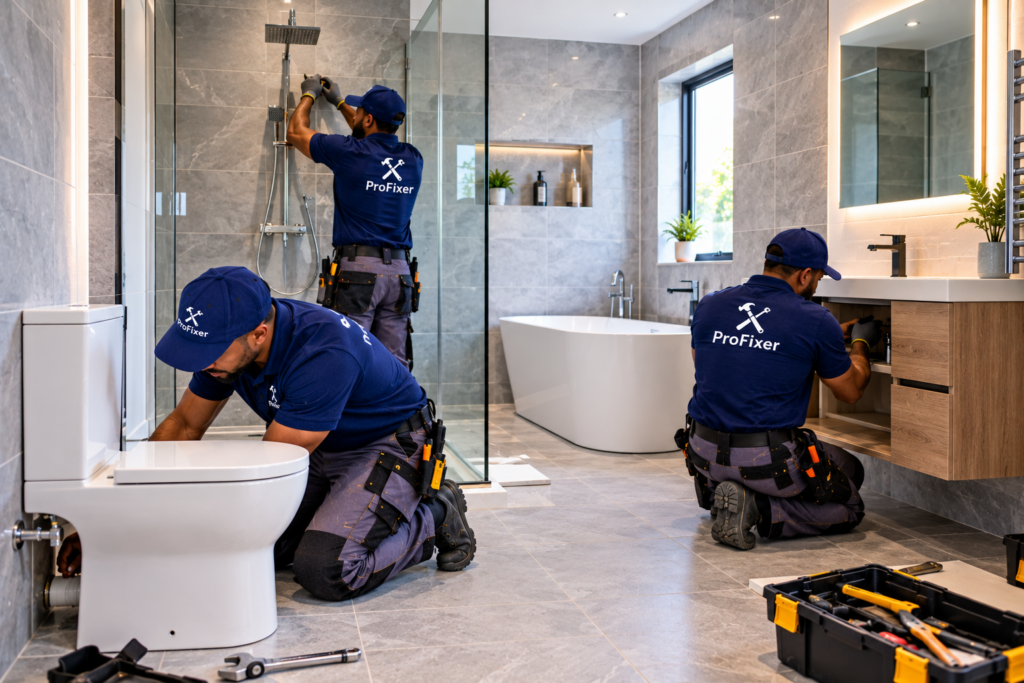
Find Trusted Bathroom Renovation Contractors Near You
A bathroom renovation can improve comfort, appearance, storage and everyday practicality while also helping modernise an older property. Whether you are replacing a tired bathroom suite, creating a walk-in shower, upgrading tiles or completely redesigning the room, careful planning is essential because plumbing, waterproofing, electrical work and finishes all need to work together.
Professional bathroom renovation contractors can coordinate the different stages of the project and help avoid problems such as poor drainage, water leaks, uneven tiling or badly positioned fittings. From small bathroom makeovers to full remodels, ProFixer can help you connect with suitable local contractors.
Post your bathroom renovation job free, upload photographs where possible and compare up to three no-obligation quotes from contractors serving your area.
Table of Contents
Why Hire Professional Bathroom Renovation Contractors?
Bathrooms combine water, electricity, plumbing and finished surfaces in a relatively small space. This means mistakes can become expensive very quickly.
Experienced bathroom renovation contractors can assess the existing room, identify problems with plumbing or waterproofing and plan the work in the correct order.
A well-managed renovation normally considers the position of the toilet, basin, shower, bath, lighting, ventilation, storage, floor levels and wall finishes before installation begins.
Good preparation helps ensure that the finished bathroom not only looks attractive but also performs properly.
Bathroom Renovations Near Me
When searching for bathroom renovations near me, provide contractors with as much information as possible.
Useful details include the size of the bathroom, whether you want a full renovation or partial upgrade, whether fixtures are moving and whether you already have tiles or sanitaryware.
Photographs of the existing bathroom can help contractors understand the condition and layout before arranging a site visit.
Complete Bathroom Renovations
A complete bathroom renovation may involve removing most or all of the existing fittings and starting again.
Typical work can include removing old tiles, disconnecting the bath or shower, replacing plumbing, repairing walls, waterproofing wet areas, installing new sanitaryware, fitting new flooring and completing final decorating.
A full renovation can also be an opportunity to improve the layout rather than simply replacing fittings in the same positions.
Partial Bathroom Renovations
Not every bathroom needs to be completely stripped out.
A partial renovation may include replacing the shower, changing the vanity, fitting new taps, installing a new toilet or retiling selected areas.
This can be a practical option where the existing layout works well and some fixtures are still in good condition.
Bathroom Layout Changes
Changing the layout can improve movement and make better use of limited space.
A contractor may reposition the basin, toilet, shower or bath to create a more practical arrangement.
However, moving sanitaryware usually affects water supplies and drainage, so these changes should be planned before tiling or flooring begins.
For specialist pipework and drainage changes, compare plumbing services through ProFixer.
Bathroom Design and Planning
Good bathroom planning starts with how the room will be used.
The design should consider storage, access, lighting, ventilation, cleaning and the amount of available floor space.
In a family bathroom, practical storage and durability may be priorities. In an ensuite, efficient use of space may matter more.
A successful design should combine appearance with everyday practicality.
Small Bathroom Renovations
Small bathrooms require careful planning because every part of the room competes for space.
Compact basins, wall-mounted furniture, shower enclosures and carefully positioned doors can help make the room feel less crowded.
Light-coloured tiles and good lighting can also help smaller bathrooms feel more open.
Ensuite Bathroom Renovations
Ensuite bathrooms often have restricted dimensions and may need careful planning around bedrooms, doors and existing drainage.
The contractor should consider noise, ventilation and access for future maintenance.
Compact showers and wall-mounted storage can help make better use of the available space.
Family Bathroom Renovations
Family bathrooms need durable finishes and practical layouts.
Storage for towels, toiletries and cleaning products can make a big difference to how the room functions.
Slip-resistant flooring and easy-to-clean surfaces may also be worth considering.
Guest Bathroom Renovations
Guest bathrooms and cloakrooms can often be updated with relatively small changes.
A new basin, toilet, mirror, lighting and wall finish can significantly improve the room without a complete rebuild.
Bathroom Suite Replacement
Replacing the bath, basin and toilet can refresh an older bathroom.
If the new suite uses similar positions to the existing one, plumbing changes may be more limited.
However, the condition of the existing pipework should still be checked before new fittings are installed.
Shower Installation
A new shower may form part of a larger bathroom renovation or be installed as a standalone upgrade.
The project can involve the shower valve, tray, enclosure, drainage, waterproofing and wall finish.
The installer should ensure that the shower drains correctly and that water does not escape into surrounding areas.
Walk-In Shower Installation
Walk-in showers are popular because they can create a more open and modern bathroom.
They may use a low-profile tray or a fully tiled shower area.
Good drainage and waterproofing are especially important because more of the floor may be exposed to water.
Shower Enclosure Installation
Shower enclosures need accurate installation so doors operate smoothly and seals sit correctly.
The tray and walls should be level before the glass is installed.
Poor alignment can cause leaks and make the enclosure difficult to use.
Shower Tray Installation
The tray should sit securely and drain correctly.
Movement beneath a shower tray can eventually damage seals or cause leaks.
The waste connection should also remain accessible where practical.
Wet Room Installation
Wet rooms require particularly careful waterproofing and floor preparation.
The floor must fall correctly toward the drain so water does not collect in low areas.
The waterproofing layer beneath the tiles is one of the most important parts of the installation.
Bath Installation
Bath replacement may involve more than fitting the new tub.
The contractor should check the waste, water supplies, support structure and surrounding wall finish.
The bath must be stable before sealing and tiling are completed.
Freestanding Bath Installation
Freestanding baths can create a strong visual feature.
They often require careful planning for floor-mounted or wall-mounted taps.
The weight of the bath and the floor structure may also need consideration.
Bath-to-Shower Conversions
Some homeowners replace an existing bath with a walk-in shower.
This can provide easier access and create a more open room.
The existing waste position may be reused or modified depending on the layout.
Shower-to-Bath Conversions
In family homes, the opposite conversion may sometimes be useful.
Adding a bath may require changes to plumbing, walls or floor space.
The contractor should check whether the room can comfortably accommodate the new layout.
Toilet Installation and Replacement
Replacing a toilet can be straightforward if the new unit connects to the existing plumbing.
Moving the toilet usually involves more work because the waste pipe position may need changing.
The toilet should sit securely and the flush should be tested before handover.
Wall-Hung Toilets
Wall-hung toilets conceal the cistern inside the wall or a purpose-built frame.
They can create a cleaner, more modern appearance.
However, access for future maintenance should be considered when the wall is constructed.
Basin Installation
A basin may be wall-mounted, pedestal-mounted or fitted into a vanity unit.
Water and waste connections should be positioned so they remain neat and accessible.
The height should also be suitable for the intended users.
Vanity Unit Installation
Vanity units combine storage with a basin and can help reduce clutter.
The unit should be securely installed and protected against water around the basin.
For custom storage or joinery, compare carpentry services through ProFixer.
Bathroom Storage
Storage should be planned early in the renovation.
Options can include vanity drawers, wall cabinets, recessed shelves and tall units.
Good storage helps keep worktops clear and makes the room easier to maintain.
Bathroom Plumbing Upgrades
Older bathrooms may have pipework that should be replaced or modified during the renovation.
This is particularly relevant if walls or floors are already open.
Water supplies, isolation valves and waste connections should be checked before they are concealed.
For this work, compare plumbing services through ProFixer.
Moving Bathroom Plumbing
Moving a basin or shower can require new water and waste connections.
Drainage falls need to be correct so water flows away properly.
The contractor should check whether the proposed layout is practical before work begins.
Bathroom Drainage
Poor drainage can cause standing water, slow-flowing basins or shower problems.
Waste pipes should be installed with appropriate falls and suitable connections.
Drainage should be tested before walls and floors are closed.
Bathroom Waterproofing
Waterproofing is one of the most important parts of a bathroom renovation.
Areas around showers and baths are regularly exposed to water and should be protected before tiles are installed.
Waterproofing systems may include membranes, sealing products and reinforced corner treatments.
For broader moisture-related work, compare waterproofing contractors through ProFixer.
Waterproofing Shower Areas
Shower walls and floors should be protected before tiling.
Corners, pipe penetrations and joints require careful attention.
Even a small failure behind the tiles can cause long-term damage that remains hidden for some time.
Bathroom Wall Tiling
Tiles protect bathroom walls and create the main visual finish.
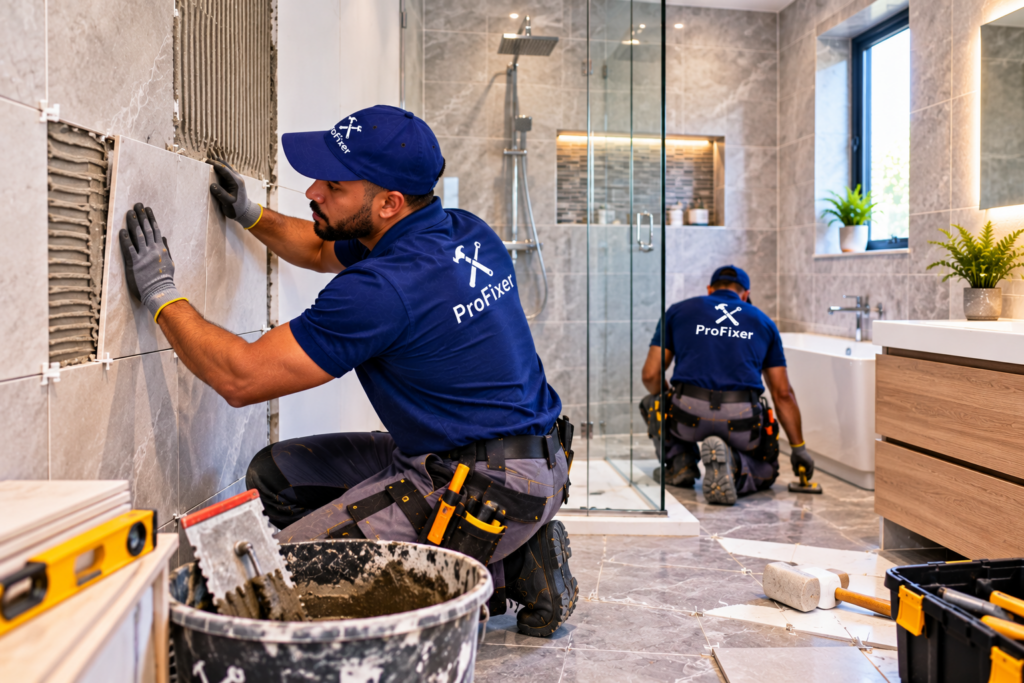
The wall surface should be flat and suitable before tiles are applied.
Straight setting-out is important because uneven joints become very noticeable around mirrors, basins and shower screens.
For specialist work, compare tiling contractors through ProFixer.
Bathroom Floor Tiling
Bathroom floor tiles should be suitable for wet conditions.
The subfloor needs to be stable and properly prepared before installation.
Slip resistance is also worth considering, especially in shower areas.
Large-Format Bathroom Tiles
Large-format tiles can create a clean modern appearance with fewer grout joints.
However, the walls and floors need to be particularly flat.
The installer may also need specialist cutting and handling equipment.
Mosaic Tiles
Mosaics are often used in shower areas, niches or decorative sections.
Because they contain many small pieces, alignment and adhesive coverage need careful attention.
Tile Grouting
Grout completes the joints between tiles.
It should be applied evenly and cleaned properly.
Poorly finished grout can affect both appearance and water resistance.
Silicone Sealing
Flexible silicone is commonly used around baths, showers, basins and corners.
It allows slight movement while helping prevent water from entering joints.
Old or failed silicone should be removed before new sealant is applied.
Bathroom Flooring
Bathroom flooring must cope with regular moisture and cleaning.
Common options include tiles and selected vinyl products.
The floor should be stable, easy to maintain and appropriate for wet environments.
For broader floor installation, compare flooring contractors through ProFixer.
Vinyl Bathroom Flooring
Suitable vinyl can provide a practical bathroom finish.
Correct fitting around toilets, basins and edges is important because water should not be allowed to travel beneath the flooring.
For specialist fitting, compare vinyl flooring installers through ProFixer.
Bathroom Floor Preparation
Before the finished floor is installed, the surface should be checked for damage, unevenness or moisture.
Loose timber, cracks or low areas may need repair.
Ignoring these problems can affect tiles or other flooring later.
Bathroom Electrical Work
Bathrooms have specific electrical requirements because electricity and water are close together.
Electrical work may include lighting, extractor fans, mirrors, shaver points or heated towel rails.
This work should be completed by appropriately qualified contractors.
Compare electrical services through ProFixer for bathroom electrical work.
Bathroom Lighting
Good lighting improves both appearance and practicality.
Bathrooms may combine ceiling lights, mirror lighting and feature lighting.
The position of fittings should be planned before ceilings and walls are completed.
Mirror Lighting
Lighting around mirrors can improve visibility for shaving, makeup and grooming.
It should be positioned to reduce harsh shadows.
Electrical requirements should be planned before wall finishes are completed.
Bathroom Extractor Fans
Ventilation helps remove moisture and reduce condensation.
An extractor fan should be sized appropriately for the room and installed so moist air is discharged effectively.
Poor ventilation can contribute to mould and peeling paint.
Heated Towel Rails
Heated towel rails can provide both warmth and a convenient place to dry towels.
They may be electric or connected to a heating system.
Position should be planned so they do not interfere with doors or fittings.
Bathroom Ceilings
Bathroom ceilings need finishes suited to humid conditions.
Old ceilings may require repair after lighting or ventilation work.
Any signs of dampness should be investigated before repainting.
Bathroom Painting
Painted bathroom surfaces should be prepared properly and finished with products suitable for moisture-prone areas.
Painting is normally completed after most installation work has finished.
For professional decorating, compare painting contractors through ProFixer.
Bathroom Wall Repairs
Removing old tiles can damage plaster or board beneath.
The wall may need patching, replastering or replacing before new tiles are installed.
The final surface should be flat enough for the chosen finish.
Bathroom Doors
Renovation work may affect door clearance, especially where new flooring raises the finished level.
Doors may also be replaced to match the updated room.
For this work, compare door installation and repairs contractors through ProFixer.
Bathroom Windows
Bathroom windows can improve natural light and ventilation.
Older windows may also contribute to condensation or draughts.
For replacement or repair, compare window installation and repairs contractors through ProFixer.
Bathroom Niches
Recessed shower niches provide convenient storage for soap and toiletries.
They need careful waterproofing because they create additional corners and joints within the shower area.
The niche should also be positioned to work with the tile layout.
Built-In Bathroom Shelving
Built-in shelves can add storage without using floor space.
Materials should be suitable for the humid environment.
Bathroom Mirrors
Mirrors can make small bathrooms feel larger.
They may be wall-mounted, recessed or integrated into cabinets.
Some designs include lighting, demisting or storage.
Bathroom Accessories
Accessories such as towel rails, toilet-roll holders, shelves and robe hooks are usually installed near the end of the renovation.
Their positions should still be considered during planning so they do not interfere with doors, showers or cupboards.
Accessibility Bathroom Renovations
Bathrooms can be adapted to improve accessibility.
Possible changes include walk-in showers, grab rails, shower seats and wider clearances.
The exact design should reflect the needs of the intended user.
Walk-In Showers for Accessibility
A low-threshold or level-access shower can make entry easier.
The floor, drainage and waterproofing must be designed correctly.
Grab rails may also be added where required.
Bathroom Grab Rails
Grab rails need secure fixing.
The wall structure behind them must be strong enough to support the intended load.
Their positions should be planned before walls are closed where possible.
Non-Slip Bathroom Flooring
Slip resistance can be particularly important in wet areas.
The flooring or tile chosen should suit the intended use.
Texture, maintenance and ease of cleaning should all be considered.
Bathroom Renovations for Rental Properties
Rental bathrooms often benefit from durable finishes and straightforward layouts.
Materials should be easy to maintain and replace if damaged.
For wider rental maintenance, compare property maintenance contractors through ProFixer.
Bathroom Renovations for New Homes
A new home may require complete bathroom installation rather than renovation.
This still involves the same coordination between plumbing, electrical work, waterproofing, tiling and sanitaryware.
Bathroom Renovations During House Extensions
New extensions often include bathrooms or ensuites.
Planning should take place early so drainage, ventilation and services are built into the project correctly.
Bathroom Renovation During Home Improvements
Bathroom work may form part of a wider property upgrade.
This can include flooring, painting, doors and general renovation work throughout the house.
For broader projects, compare home improvement contractors through ProFixer.
Removing an Old Bathroom
A full renovation normally starts with removing existing fittings and finishes.
This may include the bath, shower, basin, toilet, tiles and old flooring.
Plumbing and electrical supplies should be safely isolated before demolition begins.
Bathroom Demolition and Preparation
Once the old bathroom has been stripped out, hidden problems may become visible.
These can include water damage, rotten timber, leaking pipes or damaged plaster.
It is usually better to correct these problems before the new bathroom is installed.
Bathroom Plumbing First Fix
Plumbing changes should generally be completed before waterproofing and tiling.
Water and waste pipes are positioned for the new shower, bath, basin and toilet.
The layout should be confirmed carefully before walls are closed.
Bathroom Electrical First Fix
Cables for lights, fans, mirrors and other equipment should be installed before final wall finishes.
This reduces the need to damage completed tiling later.
Bathroom Wall Preparation
Walls may need plastering, boarding or repair before waterproofing begins.
A flat and stable surface improves tile installation.
Bathroom Floor Preparation
Floor preparation may involve replacing damaged boards, levelling the surface or strengthening areas beneath heavy fittings.
The floor must be stable before waterproofing or tiling.
Bathroom Renovation Work Sequence
The exact sequence depends on the project, but a typical bathroom renovation may follow this order:
- Remove the old bathroom
- Complete structural repairs
- Install plumbing changes
- Complete electrical first fix
- Repair walls and floors
- Waterproof wet areas
- Install shower trays or baths where required
- Tile walls and floors
- Install sanitaryware
- Complete electrical fittings
- Install shower screens and mirrors
- Seal joints
- Paint remaining surfaces
- Complete final testing and adjustments
Good sequencing helps protect finished work and reduces unnecessary rework.
Bathroom Renovation Project Coordination
Several trades may be involved in one renovation.
Plumbing, electrical work, waterproofing and tiling all need to happen in the correct order.
A contractor coordinating the project can help reduce delays between stages.
Bathroom Renovation Timelines
A straightforward bathroom replacement may take considerably less time than a project involving major layout changes.
The timeline can be affected by custom fittings, plumbing changes, tile availability and unexpected repair work.
Ask contractors to explain the expected sequence and duration before work starts.
Living Without a Bathroom During Renovation
A bathroom renovation can temporarily leave the room unusable.
Where a home has only one bathroom, the project schedule becomes especially important.
Ask the contractor when the toilet, shower and basin will be unavailable.
Bathroom Renovation Dust and Protection
Removing tiles and cutting materials can create dust and debris.
Adjacent floors and rooms should be protected where practical.
This is particularly important in occupied homes.
Bathroom Renovation Waste Removal
Old tiles, sanitaryware, packaging and building materials can create significant waste.
Confirm whether removal and disposal are included in the quotation.
Bathroom Renovation Final Checks
Before the job is considered complete, the bathroom should be inspected carefully.
Taps, showers and wastes should be tested.
The toilet should flush correctly, cabinet doors should align and shower screens should operate smoothly.
Silicone joints, grout and seals should also be checked.
Checking Bathroom Plumbing
Water connections should be tested for leaks.
Drainage should flow freely from basins, showers and baths.
Any slow drainage should be investigated before handover.
Checking Shower Drainage
Water should flow toward the drain without pooling in unwanted areas.
This is especially important in walk-in showers and wet rooms.
Checking Shower Seals
Shower screens and doors should close correctly.
Silicone and seals should remain continuous around wet areas.
Checking Bathroom Tiling
Tiles should sit securely and joints should appear consistent.
Cracked tiles, loose sections or incomplete grout should be corrected.
Checking Bathroom Electrical Work
Lighting, extractor fans and other electrical fittings should be tested appropriately.
Required electrical work should be completed by qualified contractors.
Checking Bathroom Ventilation
The extractor should operate correctly and remove moist air effectively.
Poor ventilation can quickly affect a newly renovated bathroom.
Bathroom Repairs Instead of Full Renovation
A complete renovation is not always necessary.
Repairs may be enough where most of the room is still in good condition.
This can include fixing leaks, replacing taps, repairing grout, resealing showers or replacing damaged tiles.
Bathroom Makeovers
A bathroom makeover can refresh the room without major structural changes.
Typical updates can include:
- New vanity
- New mirror
- New taps
- New shower screen
- Painting
- Lighting
- Accessories
This can provide a noticeable improvement at a lower cost than complete replacement.
Repair or Renovate the Bathroom?
Repair can make sense where the layout works and most fixtures remain in good condition.
A full renovation may be more worthwhile when plumbing is failing, waterproofing is damaged or the room no longer suits the household.
The age and condition of the existing bathroom should guide the decision.
What Affects Bathroom Renovation Costs?
The cost of hiring bathroom renovation contractors depends on the size of the bathroom and the amount of work required.
Major factors can include:
- Sanitaryware
- Plumbing changes
- Waterproofing
- Tiling
- Electrical work
- Flooring
- Shower enclosures
- Vanities
- Building repairs
Changing the layout generally costs more than replacing fittings in their existing positions.
Bathroom Tiling Costs
Tile costs vary according to size, material and installation complexity.
Large-format tiles, mosaics and detailed patterns may require more specialist labour.
Preparation and waterproofing should also be included when comparing quotes.
Bathroom Plumbing Costs
Plumbing costs depend heavily on whether fittings remain in the same positions.
Moving toilets, showers or basins can increase the work significantly.
Bathroom Electrical Costs
Additional lighting, extractor fans, heated towel rails and illuminated mirrors can increase the electrical scope.
Bathroom Fixtures and Fittings Costs
Sanitaryware varies widely in price.
Premium taps, vanities, shower screens and baths can increase the overall renovation budget substantially.
Bathroom Renovation Budget Planning
It is useful to divide the budget into separate categories.
Consider allowances for:
- Sanitaryware
- Plumbing
- Electrical work
- Waterproofing
- Tiles
- Flooring
- Cabinetry
- Shower glass
- Painting
- Waste disposal
- Contingency
A contingency can help cover hidden issues discovered after demolition.
What Should a Bathroom Renovation Quote Include?
A clear quotation should explain exactly what is included.
It may cover demolition, plumbing, electrical work, waterproofing, tiling, sanitaryware installation, painting and waste removal.
Ask contractors to identify whether fixtures and tiles are supplied by them or by the homeowner.
Supply and Installation or Labour Only?
Some bathroom renovation contractors provide a complete supply-and-install service.
Others provide labour only while you purchase the tiles, taps and sanitaryware.
Either approach can work, but responsibilities should be agreed before the project begins.
Questions to Ask Bathroom Renovation Contractors
Before choosing a contractor, ask who will manage the plumbing, electrical work, waterproofing and tiling.
Also ask how long the project is expected to take, whether waste removal is included, who supplies materials and whether workmanship is guaranteed.
It is particularly important to understand exactly what preparation and waterproofing are included behind the finished tiles.
Compare Bathroom Renovation Contractors Through ProFixer
Choosing bathroom renovation contractors is easier when you compare the full scope of work rather than only the final price.
One contractor may include demolition, waterproofing, plumbing and electrical work, while another may quote mainly for tiling and fitting sanitaryware.
ProFixer allows you to post your project once and connect with suitable local professionals.
Upload photographs of your existing bathroom, provide approximate dimensions and explain whether you want a full renovation, new shower, new bathroom suite or smaller makeover.
Compare contractors based on preparation, waterproofing, materials, project coordination, workmanship, expected timeline and total cost.
Get Free Bathroom Renovation Quotes
Whether you need bathroom renovations near me, experienced bathroom remodeling contractors, complete bathroom renovation services or a smaller bathroom makeover, ProFixer can help you connect with suitable local professionals.
Compare up to three no-obligation quotes from local bathroom renovation contractors.