
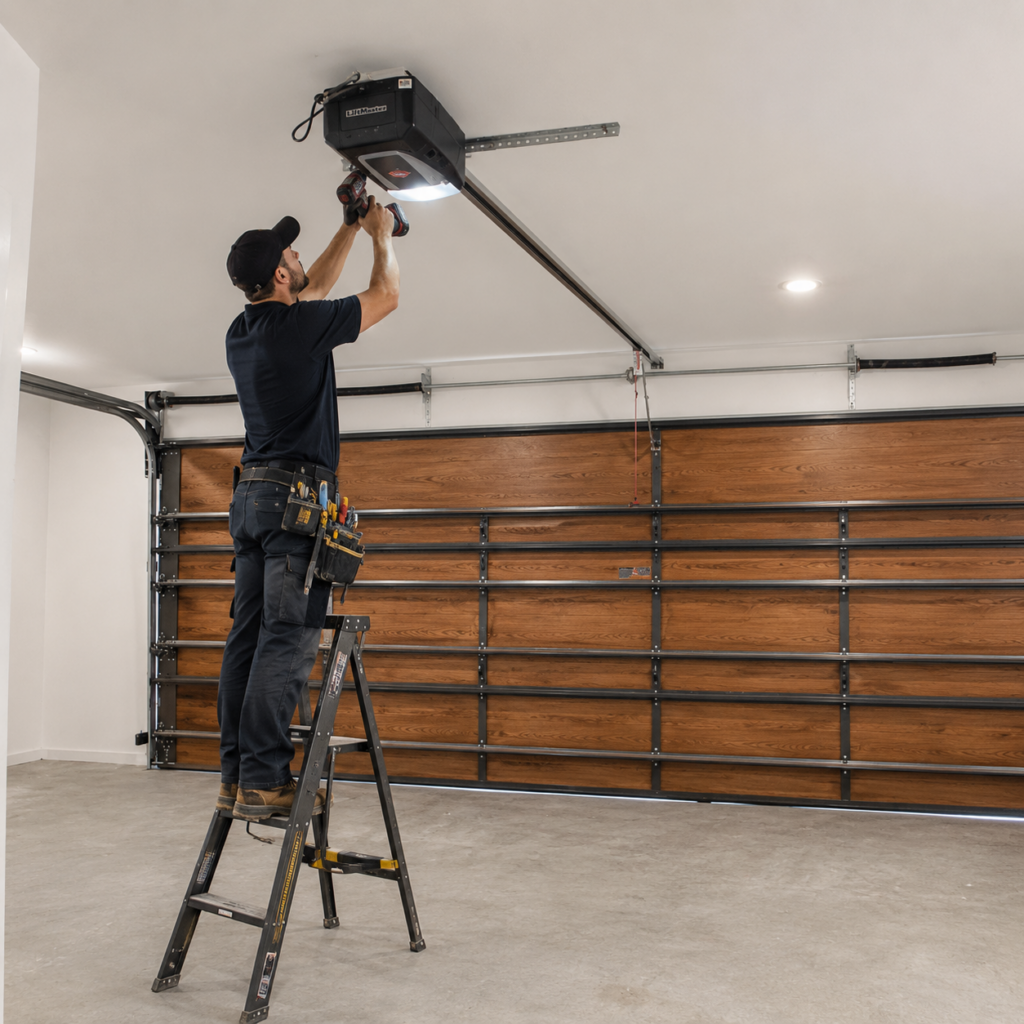
Find Trusted Garage Door Installers Near You
A garage door protects your vehicles, tools and stored belongings while also contributing to the security and appearance of your property. Professional garage door installers can help you choose, fit, automate and maintain a garage door that suits the opening, the building and your daily access requirements.
Whether you need a new garage door installation, a replacement door, a faulty motor repaired or help with broken springs, cables and rollers, ProFixer makes it easier to find local specialists. Post your garage door job for free and compare up to three no-obligation quotes before choosing a contractor.
Instead of calling several companies separately, describe the job once, add photographs and compare the proposed door, motor, installation method, warranty, timeframe and price.
Table of Contents
Why Hire Professional Garage Door Installers?
A garage door is a large moving structure that relies on correctly fitted tracks, springs, cables, hinges, rollers and safety components. Poor installation can cause the door to move unevenly, become noisy, place unnecessary strain on the motor or create a serious safety risk.
Experienced garage door installers assess the opening before recommending equipment. They consider the width and height of the garage, available headroom, ceiling space, wall construction, power supply and whether the door will be operated manually or automatically.
A professional installation can help you:
- choose a suitable garage door type and material
- ensure the tracks and door are correctly aligned
- reduce strain on springs, cables and motors
- improve security and weather protection
- fit safety devices and manual-release systems
- program remotes and access controls
- reduce noise and uneven movement
- receive clear warranty and maintenance information
The installer should explain the complete scope of work, including the door, frame, tracks, springs, motor, remotes, electrical connection and removal of the old door where applicable.
Garage Door Installers for Homes
Residential garage door installers work on single and double garages, freestanding garages, townhouse developments, estates and rental properties. They can assist with new construction, renovations, replacement doors and automation upgrades.
You may need a garage door specialist if:
- the existing door is damaged or badly rusted
- the door is difficult to open manually
- the door closes unevenly
- the garage motor no longer operates reliably
- the door does not match a renovated property
- you want to change from manual to automatic operation
- the tracks, cables or springs are worn
- the door no longer closes securely
Professional garage door installers should inspect the condition of the opening and surrounding structure before fitting a replacement. An uneven floor, damaged lintel or limited ceiling clearance may affect which door system can be installed.
New Garage Door Installation
A new garage door installation begins with accurate measurements and an assessment of the available space. The contractor should confirm the opening size, headroom, side clearance and ceiling depth before ordering or manufacturing the door.
A typical installation may include:
- removing an existing garage door
- preparing and measuring the opening
- installing the frame and tracks
- fitting door panels or the complete door curtain
- installing springs, cables, rollers and hinges
- balancing and aligning the door
- installing a garage door motor
- fitting safety devices
- programming remotes
- testing manual and automatic operation
- removing old materials and cleaning the work area
Reliable garage door installers should provide a written quote that identifies the door type, dimensions, finish, motor, number of remotes and warranty.
Sectional Garage Door Installation
Sectional garage doors are made from horizontal panels connected by hinges. The panels move vertically and then travel along tracks beneath the garage ceiling.
They are popular because they do not swing outward into the driveway and can provide a neat, modern finish. Depending on the product selected, sectional doors may be manufactured from steel, aluminium, timber or insulated composite panels.
Sectional doors may offer:
- smooth vertical opening
- good use of driveway space
- insulated panel options
- a wide choice of finishes
- automatic operation
- weather seals around the opening
- single and double-garage sizes
The installer should confirm that there is sufficient ceiling and side clearance for the tracks, springs and motor.
Roll-Up Garage Doors
Roll-up garage doors use a flexible curtain made from interlocking steel slats. The curtain rolls around a drum above the opening when the door is raised.
These doors are often used for homes, storerooms, workshops and smaller garage openings because they require less ceiling track space than sectional doors.
Common roll-up door work includes:
- new roll-up door installation
- replacement of damaged door curtains
- track repairs
- spring adjustment
- lock replacement
- manual-to-automatic conversion
- motor and remote installation
A contractor should check the door weight and construction before recommending a motor. Not every manual roll-up door is suitable for automation without modification.
Tip-Up Garage Doors
A tip-up garage door consists of one solid panel that tilts outward and then moves into the garage. These doors are commonly made from steel, timber or another rigid material.
Tip-up doors need clear space in front of the garage while opening. The springs, arms and pivot points must be adjusted correctly so that the door remains balanced and safe to operate.
Professional garage door installers can assist with:
- new tip-up door installation
- spring replacement and adjustment
- hinge and pivot repairs
- panel repairs
- track alignment
- motor installation
- remote programming
If a tip-up door is badly damaged or repeatedly requires repairs, the contractor may suggest replacing it with a sectional or roll-up system.
Garage Door Motor Installation
Automatic garage doors provide convenient access without requiring you to leave your vehicle. A suitable motor should be selected according to the door type, weight, size and frequency of use.
A garage door motor installation may include:
- a ceiling-mounted or side-mounted motor
- drive rails or operating arms
- remote controls
- wall-mounted control buttons
- safety beams or obstruction detection
- manual emergency release
- backup battery options
- courtesy lighting
- smartphone or access-control integration
Professional automatic garage door installers should test the balance of the door before fitting a motor. A motor should not be used to compensate for a heavy, jammed or badly aligned door.
If a new electrical supply is required, you can also compare quotes through our electrical services page.
Garage Door Motor Repairs
Professional garage door motor repairs should begin with fault finding. A door that refuses to open may have a motor fault, but it may also be caused by a flat remote battery, failed safety beam, power problem or mechanical issue with the door.
Common garage door motor problems include:
- the motor not responding
- the door opening but not closing
- the motor running while the door does not move
- the door stopping halfway
- the door reversing unexpectedly
- remote controls losing range
- the motor making unusual noises
- the courtesy light or control panel not working
- the backup battery failing
- the manual-release mechanism not reconnecting
Experienced contractors carrying out garage door motor repairs should test the power supply, motor, drive mechanism, remotes, safety devices and door movement before recommending replacement parts.
If the motor is old, repeatedly failing or no longer supported, the technician may recommend replacement rather than another temporary repair.
Garage Door Repairs and Fault Finding
Garage doors contain moving parts that wear over time. Professional garage door repairs can restore safe operation and help prevent further damage to the door or motor.
Common repairs include:
- replacing broken springs
- repairing or replacing cables
- realigning tracks
- replacing damaged rollers
- repairing hinges and brackets
- straightening or replacing damaged panels
- repairing locks and handles
- adjusting door balance
- fixing noisy or uneven movement
- replacing weather seals
Do not continue operating a door with a broken spring, loose cable or damaged track. The door may fall, jam or place excessive strain on the motor.
Broken Garage Door Springs
Garage door springs counterbalance the weight of the door. When a spring breaks, the door may suddenly become extremely heavy or fail to open at all.
Signs of a broken or failing spring include:
- a loud snapping noise from the garage
- the door becoming difficult to lift
- the motor struggling or stopping
- the door opening unevenly
- a visible gap in a spring
- the door falling quickly when released
Garage door springs are under significant tension and should not be repaired or adjusted without suitable knowledge and equipment. A qualified technician should replace the correct spring and rebalance the door.
Garage Door Cables, Rollers and Tracks
Cables, rollers and tracks guide and support the movement of the garage door. If any of these parts are damaged, the door may become noisy, uneven or unsafe.
A contractor should check:
- frayed or loose cables
- rollers that are worn or seized
- bent or loose tracks
- damaged mounting brackets
- missing fasteners
- poor lubrication
- incorrect door alignment
Replacing one damaged part may not solve the problem if the door is out of balance or the tracks are incorrectly positioned. The complete system should be inspected.
Garage Door Remote Controls and Safety Sensors
Remote-control problems may be caused by flat batteries, damaged transmitters, receiver faults or programming issues. A technician can test the remote and receiver before recommending replacement.
Some automatic garage doors also use safety beams or obstruction detection to stop the door from closing on a vehicle, person or object.

Common safety-device faults include:
- dirty or blocked beam lenses
- misaligned sensors
- damaged wiring
- water ingress
- incorrect programming
- a door reversing without an obstruction
Safety features should not be bypassed simply to keep the door operating. The cause of the fault should be repaired.
Garage Door Maintenance
Regular maintenance can reduce noise, improve reliability and identify worn components before they fail.
Maintenance may include:
- checking springs and cables
- tightening loose brackets and fasteners
- cleaning and inspecting tracks
- checking rollers and hinges
- testing door balance
- lubricating suitable moving parts
- testing motor limits
- testing remotes and safety devices
- checking the manual release
- inspecting weather seals
Do not apply heavy grease to tracks unless recommended by the manufacturer. Dirt can collect in excessive lubricant and interfere with smooth movement.
Commercial Garage Door Installers
Commercial properties may require larger, stronger garage doors designed for frequent operation. These may be used at warehouses, workshops, loading areas, vehicle dealerships, storage facilities and industrial premises.
Commercial garage door installers may work with:
- industrial roller shutters
- sectional overhead doors
- high-cycle motors
- loading-bay doors
- security shutters
- remote and access-control systems
- safety edges and sensors
- manual emergency operation
The contractor should consider door usage, opening size, wind exposure, security requirements and maintenance access when recommending equipment.
Garage Door Security and Access Control
A garage door can sometimes provide direct access into the home or building, making reliable locking and control important.
Security improvements may include:
- automatic locking systems
- rolling-code remote controls
- smartphone access
- restricted remote programming
- alarm integration
- CCTV coverage of the garage entrance
- access-control integration
- manual-release protection
For wider entrance security, you can also compare specialists through our gate motor installer page and access control installer page.
What Affects Garage Door Installation Costs?
The price of a garage door installation depends on the door size, design, material and automation requirements.
Costs may be affected by:
- single or double-garage size
- sectional, roll-up or tip-up design
- steel, aluminium, timber or insulated panels
- standard or custom dimensions
- manual or automatic operation
- motor type and power
- number of remote controls
- safety sensors and backup batteries
- removal of the existing door
- repairs to the garage opening
- electrical work
- access and installation difficulty
Compare the complete scope rather than the total price alone. One quotation may include a motor, remotes and disposal of the old door, while another may cover only the door itself.
What Should a Garage Door Quote Include?
A written quotation from professional garage door installers should clearly state:
- the door type and dimensions
- the material, finish and colour
- the frame, tracks and operating hardware
- the motor make and model
- the number of remote controls
- safety sensors and backup power
- electrical requirements
- removal of the old garage door
- installation and programming
- expected delivery and installation time
- workmanship and product warranties
- whether VAT is included
For repair work, the quotation should identify the fault, replacement parts and whether additional problems may become visible after dismantling.
Questions to Ask Garage Door Installers
Before choosing a contractor, ask:
- Which garage door type suits my property?
- Does the quotation include the complete door and tracks?
- Which motor is being supplied?
- How many remotes are included?
- Are safety beams or obstruction detection included?
- Can the door be opened manually during a power failure?
- Is a backup battery available?
- Will the old door be removed?
- Are repairs to the opening included?
- How long will manufacturing and installation take?
- What warranty applies?
- Do you provide future repairs and maintenance?
The contractor should explain the proposed solution clearly and provide a detailed written scope.
Compare Garage Door Installers Through ProFixer
Finding reliable garage door installers can take time, especially when comparing different door types, finishes and motors. ProFixer allows you to post one job and receive responses from local specialists.
When posting your request, include:
- your suburb, town or city
- the number of garage openings
- the approximate opening dimensions
- the current garage door type
- whether you need installation or repairs
- whether you want manual or automatic operation
- details of any motor fault
- photographs of the door and opening
You can then compare the proposed door, motor, installation scope, warranty, availability and price before choosing one of the available contractors.
Post Your Garage Door Job Free
Whether you need a new garage door installation, urgent garage door repairs, reliable garage door motor repairs or experienced automatic garage door installers, ProFixer can help you connect with local specialists.
Post your garage door job free and compare up to three no-obligation quotes. You can also learn more about how ProFixer works or browse our complete range of security and property services.
Find trusted garage door installers near you and get a safe, reliable and clearly quoted solution for your home or business.
POST MY GARAGE DOOR JOB FREE