
Compare 3 Trusted Solar Installation Contractors | Free Quotes
Solar power can reduce dependence on the grid, provide backup during outages and help homeowners and businesses manage electricity costs more effectively. A properly designed system needs more than just panels on a roof. Experienced solar installation contractors can assess your electricity use, roof space, backup requirements and budget before recommending a suitable system.
ProFixer makes it easier to connect with local solar specialists. Post your solar job free and compare up to three no-obligation quotes from solar installation contractors serving your area.
Describe your property, upload photographs and explain whether your main goal is backup power, reducing electricity bills or installing a complete solar system. You can then compare system size, equipment, warranties, installation standards and total price before choosing a contractor.
Table of Contents
Why Hire Professional Solar Installation Contractors?
A solar system combines electrical equipment, roof mounting, battery storage, protection devices and system programming. Poor design or installation can reduce performance, shorten equipment life or create safety risks.
Professional solar installation contractors may assist with:
- site surveys and load assessments
- solar-system design
- panel layout planning
- roof inspections
- inverter selection
- battery sizing
- electrical protection
- panel mounting
- system configuration
- testing and commissioning
- monitoring setup
- maintenance and fault finding
A reliable installer should explain why a particular system size and equipment combination is suitable for your property.
How to Find Solar Installers Near Me
Searching for solar installers near me can produce many options, but solar quotations can be difficult to compare when installers propose different equipment and system sizes.
When requesting quotes, provide:
- your suburb, town or city
- the type of property
- your average electricity usage
- recent electricity bills where available
- the appliances you want backed up
- photographs of the roof
- photographs of the distribution board
- whether you already have an inverter or batteries
- your preferred system size
- your approximate budget
Detailed information helps local solar installation contractors prepare a more suitable proposal and determine whether a site inspection is required.
Home Solar Installation
A professional home solar installation can be designed for backup power, energy savings or a combination of both.
Residential solar systems may power:
- lights
- refrigerators
- televisions
- internet equipment
- security systems
- computers
- selected plug circuits
- washing machines
- pool pumps
- selected kitchen appliances
High-consumption appliances such as electric geysers, ovens, heaters and air conditioners can have a major effect on system size and battery requirements.
Solar Panel Installers
Professional solar panel installers should position panels to achieve good sunlight exposure while considering roof structure, shading, access and future maintenance.
Solar-panel installation may include:
- roof measurements
- panel-layout planning
- mounting rails and brackets
- solar panels
- DC cabling
- connectors
- isolators and protection
- earthing
- weatherproof cable entries
- system testing
The mounting system should be suitable for the specific roof type and installed without creating unnecessary water-entry points.
Roof Assessment Before Solar Installation
The roof should be in suitable condition before solar panels are installed. Installing panels over a leaking or badly damaged roof may make future repairs more difficult.
The installer should consider:
- roof material
- roof age and condition
- available roof area
- roof orientation
- roof pitch
- nearby trees and shading
- chimneys and roof vents
- safe maintenance access
- structural suitability
If the roof needs repairs first, you can compare specialists through our roofing contractors page.
Solar Inverter Installation
The inverter is one of the main components of a solar and backup-power system. It converts electricity between the solar panels, batteries, property circuits and grid supply.
Inverter selection may depend on:
- maximum household load
- number of solar panels
- battery capacity
- single-phase or three-phase supply
- backup requirements
- future expansion
- monitoring features
- equipment compatibility
The inverter should be installed in a suitable location with enough ventilation, safe access and protection from excessive heat or moisture.
Battery Backup Systems
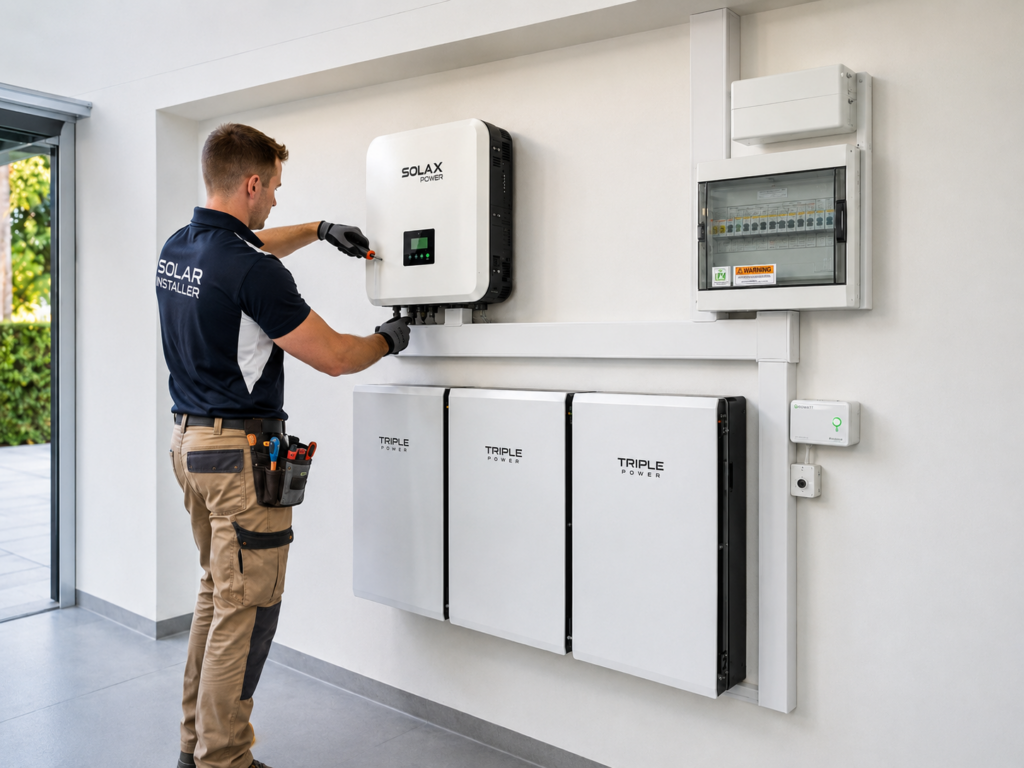
Battery storage allows electricity to be used when solar production is low or grid power is unavailable.
Battery sizing depends on:
- the appliances being backed up
- the amount of power those appliances use
- the desired backup time
- available charging power
- solar-panel capacity
- battery chemistry
- allowable depth of discharge
A larger battery does not automatically mean a better system. It must be matched correctly with the inverter and charging capacity.
Lithium Battery Installation
Lithium batteries are commonly used in modern residential and commercial solar systems because they can provide high usable capacity and support frequent charging cycles.
Installation should consider:
- battery compatibility with the inverter
- manufacturer communication cables
- correct protection devices
- ventilation requirements
- mounting position
- safe clearances
- future expansion
Ask the contractor about the battery warranty, expected cycle life and usable capacity rather than comparing only the advertised capacity.
Hybrid Solar Systems
A hybrid solar system can combine solar panels, batteries and grid electricity. The inverter automatically manages available energy according to its programming.
A hybrid system may allow you to:
- use solar electricity during the day
- charge batteries from solar power
- keep selected circuits running during outages
- use grid electricity when required
- monitor energy production and consumption
- expand the system later
The system should be configured according to your priorities, such as reducing grid use, maintaining battery reserve or maximising backup time.
Backup Power Without Solar Panels
Some homeowners start with an inverter and battery system before adding solar panels later.
A battery-backup system may support:
- lighting circuits
- internet equipment
- security systems
- televisions
- computers
- refrigerators
- selected sockets
If you plan to add solar panels later, tell the installer so the inverter, battery and electrical design can allow for future expansion.
Choosing Which Circuits to Back Up
Not every appliance needs to operate during an outage. Separating essential and non-essential loads can reduce the size and cost of the solar system.
Essential loads may include:
- lights
- refrigerators and freezers
- Wi-Fi routers
- CCTV systems
- alarm systems
- gate motors
- televisions
- computers
- selected plug circuits
High-load appliances may need to remain on the non-essential supply unless the system has been specifically sized for them.
Solar System Sizing
Correct system sizing is one of the most important parts of a solar installation.
The contractor should consider:
- daily electricity consumption
- peak power demand
- daytime and night-time usage
- essential loads
- desired backup duration
- roof space
- solar production
- battery capacity
- future expansion
A system that is too small may not meet expectations, while an unnecessarily large system may increase the project cost without providing enough additional benefit.
Understanding Your Electricity Usage
Your electricity bill provides useful information when designing a solar system, but monthly consumption alone does not show when electricity is used.
A contractor may ask about:
- average monthly electricity consumption
- daytime occupancy
- electric geysers
- pool pumps
- air conditioners
- electric cooking
- heaters
- home-office equipment
- future appliances
Understanding when power is used helps determine whether solar panels, batteries or both should receive priority.
Solar for Security Systems
Security equipment often needs to remain operational during electricity outages.
A solar or backup-power system may support:
- CCTV cameras
- recorders
- alarm systems
- electric fences
- gate motors
- access-control systems
- intercom systems
- network equipment
ProFixer also helps customers find contractors for CCTV installation, intruder alarms, electric fencing and gate motor installation.
Commercial Solar Installers
Professional commercial solar installers work on offices, retail properties, warehouses, schools, factories, apartment complexes and other business premises.
Commercial solar projects may include:
- rooftop solar arrays
- large hybrid inverters
- battery banks
- three-phase systems
- solar carports
- backup for essential circuits
- energy monitoring
- load management
- system expansion
Commercial systems often require more detailed load analysis, electrical design and planning than small residential systems.
Solar Systems for Offices
Office solar systems can help reduce daytime electricity consumption because many offices use their highest loads while the sun is available.
Office loads may include:
- computers
- network equipment
- lighting
- printers
- security systems
- air conditioning
- kitchen appliances
- access-control systems
The installer should identify which systems need backup during outages and which can switch off temporarily.
Solar for Retail and Commercial Properties
Retail properties may use substantial electricity during daylight hours, making solar generation particularly useful.
Possible applications include:
- shops
- shopping centres
- restaurants
- guest houses
- medical practices
- business parks
- schools
- warehouses
The project should consider trading hours, refrigeration, lighting, security and equipment that cannot tolerate interruptions.
Three-Phase Solar Systems
Larger homes and businesses may have three-phase electrical supplies.
Three-phase solar installations require careful consideration of:
- phase balancing
- inverter configuration
- essential circuits
- battery capacity
- high-power equipment
- electrical protection
- distribution-board design
Ask the contractor whether the proposed equipment is appropriate for the existing supply and expected loads.
Solar Panel Shading
Shade from trees, neighbouring buildings, chimneys and roof structures can reduce solar-panel output.
A site survey should consider:
- morning shade
- afternoon shade
- seasonal changes
- tree growth
- roof orientation
- panel-string design
Removing unnecessary shading or changing the panel layout may improve system performance.
Solar Monitoring Systems
Most modern solar inverters provide monitoring through an application or online portal.
Monitoring may show:
- solar production
- household consumption
- battery charge level
- grid usage
- system faults
- historical energy data
The installer should demonstrate the monitoring system and provide the homeowner or business owner with appropriate login access.
Electrical Protection for Solar Systems
A solar installation needs suitable electrical protection on both the AC and DC sides of the system.
Protection may include:
- isolators
- circuit breakers
- fuses
- surge protection
- earthing
- battery protection
- correct cable sizing
- clearly labelled circuits
Electrical work should be completed by suitably qualified personnel and tested before the system is commissioned.
Distribution Board Upgrades
Some solar installations require changes to the existing electrical distribution board.
Work may include:
- separating essential and non-essential circuits
- installing new breakers
- adding isolators
- improving labelling
- installing surge protection
- creating space for additional equipment
Older or overcrowded distribution boards may require upgrading before the solar system can be connected safely.
For electrical work, you can also compare specialists through our electrical services page.
Solar Installation Safety
Solar installations involve roof work, high DC voltages, batteries and electrical connections. Contractors should follow suitable safety procedures throughout the project.
Safety considerations may include:
- safe roof access
- fall protection
- secure ladders and scaffolding where required
- electrical isolation
- correct PPE
- safe battery handling
- secure cable routes
- fire-safe equipment locations
Do not choose an installer solely on price if the quotation appears to exclude important safety or electrical work.
Solar System Maintenance
Solar systems generally require limited routine maintenance, but inspections can help identify developing faults.
Maintenance may include:
- checking panel condition
- cleaning panels where necessary
- checking mounting hardware
- inspecting cables
- checking inverter warnings
- reviewing battery performance
- checking electrical connections
- updating system settings
Monitoring data may reveal reduced production or battery performance before the problem becomes obvious.
Solar Panel Cleaning
Dust, bird droppings and environmental dirt can reduce panel output when they build up significantly.
Cleaning frequency depends on:
- local dust levels
- rainfall
- roof angle
- nearby trees
- bird activity
- industrial pollution
Roof access should always be carried out safely. Panels should not be damaged by abrasive tools or unsuitable chemicals.
Expanding an Existing Solar System
Many systems can be expanded later, but compatibility must be checked before additional equipment is installed.
Expansion may involve:
- adding solar panels
- adding batteries
- upgrading the inverter
- adding additional circuits
- changing system programming
- improving monitoring
Provide the contractor with the existing inverter, battery and panel specifications before requesting an expansion quote.
Replacing Existing Solar Equipment
Failed or outdated components may sometimes be replaced without rebuilding the entire system.
Replacement work may involve:
- inverters
- batteries
- solar panels
- monitoring devices
- isolators
- protection equipment
- damaged cabling
Compatibility should always be checked when mixing new and existing equipment.
Solar Equipment Warranties
Different components normally have different warranty periods and conditions.
Ask about warranties for:
- solar panels
- inverters
- batteries
- mounting systems
- electrical equipment
- installation workmanship
Confirm who handles warranty claims and whether the installer provides local after-sales support.
What Affects Solar Installation Costs?
The cost of hiring solar installation contractors depends on the system size, equipment selected and complexity of the installation.
Costs may be affected by:
- number and type of solar panels
- inverter capacity
- battery capacity
- roof type and access
- mounting system
- electrical-board upgrades
- cable distances
- three-phase requirements
- monitoring equipment
- surge and electrical protection
- scaffolding or access equipment
- installation labour
A cheaper quotation may use smaller batteries, fewer panels or exclude important protection equipment. Compare the complete system specification rather than the total price alone.
What Should a Solar Installation Quote Include?
A detailed quotation from professional solar installation contractors should state:
- solar-panel brand, model and quantity
- inverter brand and capacity
- battery brand and usable capacity
- mounting system
- electrical protection
- cabling
- distribution-board changes
- monitoring setup
- labour and installation
- testing and commissioning
- equipment warranties
- workmanship warranty
- expected installation duration
- whether VAT is included
Ask for model numbers where possible so that competing quotations can be compared accurately.
Questions to Ask Solar Installation Contractors
Before appointing an installer, ask:
- How did you calculate the recommended system size?
- Which appliances will the system support?
- What happens during a power outage?
- How long should the batteries provide backup?
- Which panel, inverter and battery brands are included?
- Can the system be expanded later?
- What electrical protection is included?
- Will the distribution board need changes?
- How will system monitoring work?
- What warranties are provided?
- Who handles after-sales support?
- What could increase the final price?
Clear answers help you compare systems based on performance, equipment and support rather than price alone.
Compare Solar Installation Contractors Through ProFixer
Finding reliable solar installation contractors can be difficult because different installers may recommend very different system sizes and equipment.
ProFixer allows you to post one request and compare responses from local solar specialists. Include your electricity usage, photographs and a clear explanation of what you want the system to achieve.
Compare:
- system size
- equipment brands and models
- battery capacity
- number of panels
- electrical protection
- installation method
- warranties
- after-sales support
- total price
You can also read our guide on comparing solar installer quotes before choosing a contractor.
Post Your Solar Installation Job Free
Whether you need reliable solar installers near me, a complete home solar installation, experienced solar panel installers or professional commercial solar installers, ProFixer can help you connect with suitable local specialists.
Post your solar installation job free and compare up to three no-obligation quotes. You can also learn more about how ProFixer works or browse our complete range of home and property services.
Find trusted solar installation contractors near you and get a properly designed, safely installed and clearly quoted solar system for your home or business.
Get Solar Quotes