
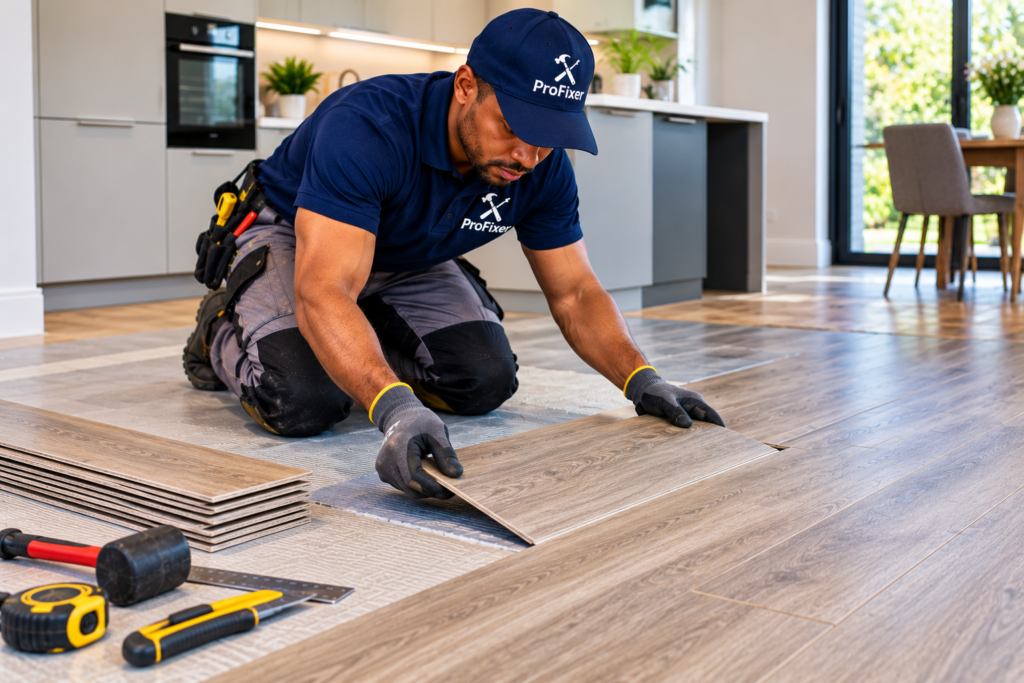
Find Trusted Vinyl Flooring Installers Near You
Vinyl flooring has become a popular choice for homes, rental properties, offices and commercial spaces because it combines practical maintenance with a wide range of styles. Modern vinyl can imitate timber, stone or tile while offering a softer feel underfoot than many hard flooring options.
Professional vinyl flooring installers can help with new installations, replacements, repairs, subfloor preparation and finishing. Whether you are fitting vinyl in a kitchen, bathroom, bedroom, office or larger commercial area, the quality of the finished floor depends heavily on correct preparation and the right installation method.
ProFixer makes it easier to connect with suitable local specialists. Post your flooring job free, upload photographs where possible and compare up to three no-obligation quotes from contractors serving your area.
Table of Contents
Why Hire Professional Vinyl Flooring Installers?
Vinyl can look straightforward to install, but small imperfections in the floor underneath can become very visible once the material is laid. Poor preparation can also lead to lifting, bubbles, uneven joints and premature wear.
Experienced vinyl flooring installers can inspect the existing surface, assess moisture, check whether levelling is required and recommend the correct installation method for the product being used.
Some vinyl systems are glued directly to the floor, while others click together and float above the subfloor. Sheet vinyl requires accurate cutting and careful fitting around walls, corners and fittings.
A professional installer should also consider transitions, door clearances and how the vinyl will meet other flooring materials.
How to Find Vinyl Flooring Installers Near Me
When searching for vinyl flooring near me, give contractors enough information to understand the job before they quote.
Useful details include the approximate room size, existing floor type, whether old flooring needs to be removed and whether you already have the vinyl.
Photographs are useful where the floor is damaged, uneven or affected by moisture. They can also help contractors identify awkward corners, stairs or transitions.
Final measurements should normally be confirmed before materials are ordered.
Vinyl Floor Installation
Professional vinyl floor installation usually begins with subfloor preparation.
The existing surface should be clean, stable, dry and smooth enough for the chosen vinyl product. Any loose materials, high spots or damaged sections may need attention first.
Once the floor is ready, the installer can begin laying the vinyl according to the manufacturer’s system.
The final result should sit flat, align neatly and finish cleanly around walls, thresholds and fixed objects.
Sheet Vinyl Flooring
Sheet vinyl is supplied in large rolls and can create a continuous floor with few or no visible joints in smaller rooms.
It is commonly used in:
- Kitchens
- Bathrooms
- Utility rooms
- Rental properties
- Clinics
- Offices
Accurate cutting is important because mistakes around corners or fittings can be difficult to correct once the material is trimmed.
Luxury Vinyl Plank Flooring
Luxury vinyl plank, often called LVP, is designed to resemble timber boards.
It can provide a more realistic timber appearance than traditional sheet vinyl while remaining relatively easy to maintain.
LVP may use:
- Click systems
- Glue-down installation
- Loose-lay systems
The correct method depends on the product and the condition of the subfloor.
Luxury Vinyl Tile
Luxury vinyl tile, or LVT, is designed to imitate stone, ceramic or other hard-floor finishes.
It can be used in residential and commercial spaces where the appearance of tile is desired without using traditional ceramic products.
The layout should be planned carefully so cut pieces around walls remain balanced.
Click Vinyl Flooring
Click vinyl uses interlocking edges and is installed in a similar way to many laminate floors.
The planks or tiles float over the subfloor rather than being permanently bonded in place.
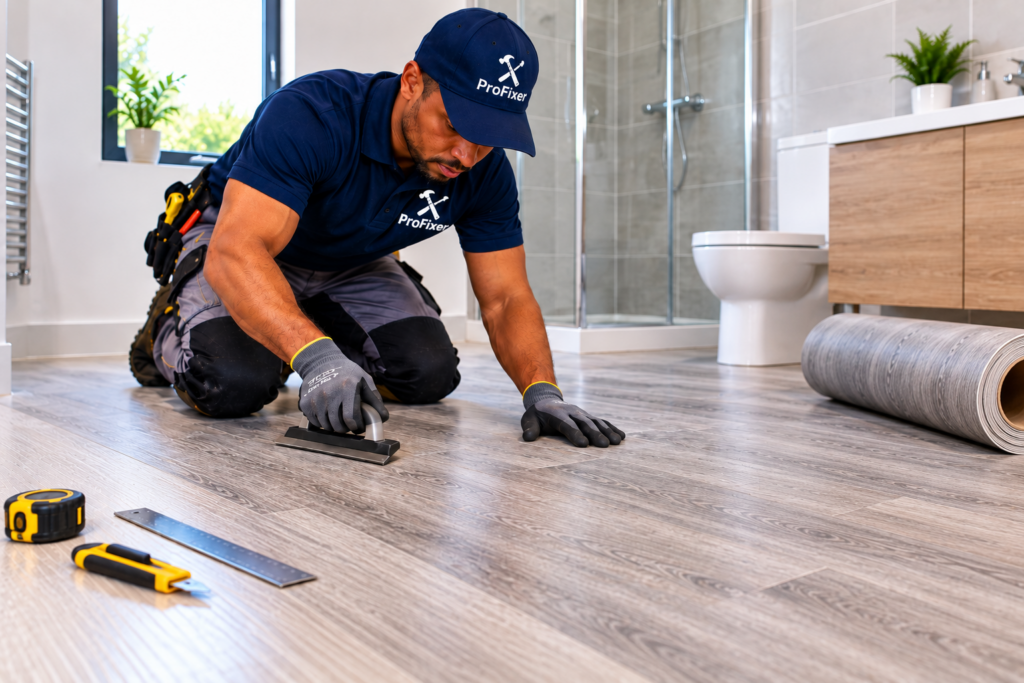
A flat surface is still essential because excessive movement underneath can damage the locking joints.
Expansion requirements should follow the manufacturer’s instructions.
Glue-Down Vinyl Flooring
Glue-down vinyl is bonded directly to the prepared floor using adhesive.
This system is often used for:
- Commercial spaces
- High-traffic areas
- Large open-plan rooms
- Some residential installations
The subfloor must be smooth because imperfections can show through the finished vinyl.
Loose-Lay Vinyl Flooring
Some vinyl products are designed to sit in place with minimal adhesive.
These systems can make future replacement easier in certain applications.
The floor still needs to be flat and stable for the material to perform correctly.
Subfloor Preparation for Vinyl Flooring
Subfloor preparation is one of the most important parts of a vinyl installation.
Vinyl is relatively thin, so bumps, cracks and joints beneath the surface can become visible after installation.
Preparation may include:
- Cleaning
- Filling cracks
- Removing old adhesive
- Grinding high spots
- Levelling low areas
- Repairing damaged boards
Skipping these steps can reduce the quality and lifespan of the installation.
Floor Levelling Before Vinyl Installation
An uneven floor can cause vinyl to look wavy or sit poorly.
Levelling compound may be used on suitable surfaces to create a flatter base.
The contractor should assess whether the problem is minor surface irregularity or a more significant structural issue.
Moisture Problems Under Vinyl Flooring
Vinyl itself can resist surface moisture, but moisture coming from underneath can still create problems.
Possible signs include:
- Lifting
- Adhesive failure
- Discolouration
- Musty smells
- Damp patches
The moisture source should be identified before new flooring is installed.
Vinyl Flooring on Concrete
Concrete is a common base for vinyl.
Before installation, it should be checked for:
- Moisture
- Cracks
- Unevenness
- Contamination
- Loose material
Glue-down vinyl may require particularly careful preparation.
Vinyl Flooring Over Existing Tiles
Vinyl can sometimes be installed over existing tiles if the surface is stable and sufficiently smooth.
Deep grout lines may need filling so they do not show through the finished vinyl.
Loose or cracked tiles should be repaired first.
Vinyl Flooring Over Timber Floors
Timber subfloors may require additional preparation before vinyl is installed.
Loose boards, gaps and movement should be corrected.
In some cases, a suitable overlay board may be used to create a smoother surface.
Vinyl Flooring for Kitchens
Vinyl is often used in kitchens because it is relatively easy to clean and available in many styles.
The installer should pay particular attention to areas around:
- Sinks
- Dishwashers
- Fridges
- Kitchen units
Existing water leaks should be repaired before the floor is installed.
Vinyl Flooring for Bathrooms
Suitable vinyl products can work well in bathrooms because they provide a continuous, easy-to-clean surface.
However, installation needs to be accurate around toilets, basins and doorways.
Water should not be allowed to penetrate beneath the flooring around edges or damaged areas.
For tiled alternatives, compare professional tiling contractors through ProFixer.
Vinyl Flooring for Bedrooms
Vinyl can provide a comfortable and low-maintenance finish in bedrooms.
Timber-effect vinyl is especially popular where homeowners want a warm appearance without natural wood.
The installer should coordinate the floor with skirting and built-in cupboards.
Vinyl Flooring for Living Rooms
Modern vinyl planks can create a continuous timber-style floor through living spaces.
Colour, plank size and layout direction all affect the final appearance.
Larger rooms may require more careful planning around transitions and expansion.
Vinyl Flooring for Hallways
Hallways receive frequent foot traffic and should use a vinyl product suitable for regular use.
Good installation is important because seams, joints and transitions are highly visible in long passageways.
Vinyl Flooring for Home Offices
Vinyl can be practical in home offices because it works well with desks and office furniture.
The selected product should be durable enough for chair movement and regular foot traffic.
Protective pads can help reduce scratching or indentation.
Vinyl Flooring for Rental Properties
Landlords often choose vinyl because it can be durable, easy to maintain and relatively straightforward to replace.
A practical design may help hide everyday wear better than very light or very dark finishes.
For broader rental-property work, compare property maintenance contractors through ProFixer.
Vinyl Flooring for Commercial Properties
Commercial spaces can require more durable vinyl than residential rooms.
Common applications include:
- Offices
- Shops
- Clinics
- Salons
- Staff areas
The product should be selected based on traffic, cleaning requirements and the type of business.
Vinyl Flooring for Shops
Retail floors need to withstand regular foot traffic and frequent cleaning.
Glue-down systems are often used where stability is important.
The installer should also consider doorways, display fixtures and transitions between areas.
Vinyl Flooring for Offices
Office vinyl should provide a practical surface under desks, chairs and foot traffic.
The flooring specification should suit the level of use rather than being selected on appearance alone.
Vinyl Flooring During Renovations
Vinyl is often installed near the end of a renovation.
Painting, plastering and major construction work should usually be completed first so the new floor is not damaged.
For larger renovation projects, compare renovation contractors through ProFixer.
Vinyl Flooring for Home Improvement Projects
New flooring can refresh a room without changing the structure.
Vinyl may be combined with:
- New paint
- Cupboards
- Interior doors
- Lighting
- Skirting
For wider upgrades, compare home improvement contractors through ProFixer.
Vinyl Flooring and Skirting Boards
Skirting helps create a clean edge between the wall and floor.
Depending on the flooring system, existing skirting may be removed, replaced or retained.
The installer should ensure the finished floor edge remains neat.
Vinyl Flooring and Door Frames
The flooring should fit cleanly around door frames and architraves.
Rough or oversized cuts around frames can make an otherwise good installation look unfinished.
Door clearances should also be checked before installation.
Vinyl Flooring and Doors
New vinyl may slightly change the finished floor height.
In some cases, doors may need adjustment.
Where substantial door work is required, compare door installation and repairs contractors through ProFixer.
Vinyl Flooring and Kitchen Cabinets
Vinyl installation should be coordinated with kitchen cabinets and fixed units.
The sequence depends on the flooring type and the specific installation system.
Contractors should agree on finished levels before work begins.
Vinyl Flooring and Built-In Cupboards
Built-in cupboards can affect flooring layout and installation sequence.
The installer should follow the vinyl manufacturer’s requirements around heavy fixed units.
Vinyl Flooring Transitions
Transition strips provide a clean finish where vinyl meets another material.
Common transitions include:
- Vinyl to tile
- Vinyl to laminate
- Vinyl to carpet
- Vinyl to timber
These strips also help manage small differences in height.
Vinyl Flooring Around Stairs
Vinyl can sometimes be used on stair landings and selected stair areas.
Edges need appropriate finishing to avoid lifting or creating a trip hazard.
The contractor should use suitable stair trims where required.
Vinyl Floor Repairs
Professional vinyl floor repairs may be possible where damage is localised.
Repairs can include damaged planks, lifted edges, tears, loose sections or failed seams.
The best repair method depends on the type of vinyl and installation system.
Lifting Vinyl Flooring
Vinyl may lift due to:
- Adhesive failure
- Moisture
- Poor preparation
- Dirt beneath the flooring
- Excessive movement
The cause should be corrected before the affected section is refitted or replaced.
Bubbling Vinyl Flooring
Bubbles or raised areas can develop where air, moisture or adhesive problems exist beneath the surface.
The contractor should investigate the cause rather than simply pressing the vinyl back down.
Torn Vinyl Flooring
Sheet vinyl can tear if damaged by sharp objects, heavy furniture or poor handling.
Small tears may sometimes be repaired.
Large or highly visible damage may require replacement of the affected section or complete floor.
Damaged Vinyl Planks
Individual vinyl planks may be scratched, chipped or damaged by impact.
With some systems, individual planks can be removed and replaced.
Matching material should be sourced wherever possible.
Vinyl Flooring Seam Repairs
Sheet vinyl installations may have seams in larger rooms.
Seams can sometimes lift or separate over time.
Repair methods depend on the product and adhesive used.
Vinyl Flooring After Water Damage
Water can sometimes enter beneath vinyl through damaged edges or failed seals.
The area should be dried and the source of water corrected before repairs are completed.
Where the subfloor has been damaged, additional work may be required.
Vinyl Flooring After Plumbing Leaks
Leaks from sinks, washing machines and dishwashers can affect vinyl and the surface underneath.
The plumbing fault should be repaired first.
The contractor can then determine whether the floor can be dried and retained or needs replacement.
Vinyl Flooring After Renovation Damage
Construction work can scratch, cut or stain existing vinyl.
Protective coverings should be used where the flooring is being retained during renovations.
Localised damage can then be assessed before final handover.
Scratched Vinyl Flooring
Minor surface scratches may be less noticeable on patterned vinyl.
Deep scratches or cuts can be more difficult to repair.
Furniture pads and regular cleaning can help reduce future damage.
Dented Vinyl Flooring
Heavy furniture can leave indentations in some vinyl products.
The risk depends on the product thickness and construction.
Furniture feet or pads can help distribute weight.
Vinyl Flooring Repairs Around Edges
Edges near walls and doorways can sometimes lift or curl.
This may indicate adhesive failure or repeated movement.
The repair should address the cause rather than simply applying more adhesive.
Repair or Replace Vinyl Flooring?
Repair is often worthwhile where the damage is limited to a small area and matching material is available.
Replacement may be better where the floor is widely damaged, badly worn or affected by moisture.
The contractor should also assess the condition of the subfloor before recommending replacement.
Choosing Vinyl Flooring
Vinyl products vary widely in:
- Thickness
- Wear layer
- Installation system
- Pattern
- Moisture resistance
- Commercial rating
The correct product depends on where it will be installed and how much traffic it will receive.
Vinyl Flooring Colours and Styles
Modern vinyl can imitate:
- Oak
- Walnut
- Stone
- Concrete
- Ceramic tile
- Decorative patterns
The style should complement the room rather than being selected in isolation.
Wood-Look Vinyl Flooring
Wood-look vinyl is popular because it provides a timber appearance with simpler maintenance.
It is available in many shades and plank sizes.
Careful plank layout can help reduce obvious pattern repetition.
Stone-Look Vinyl Flooring
Stone-effect vinyl can create the appearance of natural stone without the weight or installation requirements of real stone.
It can work particularly well in kitchens, bathrooms and entrances.
Concrete-Look Vinyl Flooring
Concrete-effect vinyl is often used in modern or industrial-style interiors.
It can create a clean contemporary appearance without installing a polished concrete floor.
Vinyl Flooring and Underfloor Heating
Some vinyl products are compatible with certain underfloor-heating systems.
The flooring, adhesive and subfloor preparation must all be suitable for the application.
Installation should follow the manufacturer’s temperature limits.
Vinyl Flooring Installation and Final Checks
Once installation is complete, the contractor should inspect the floor carefully.
The vinyl should sit flat, joints should be secure and transitions should be neat.
Glue-down floors should be checked for areas that have not bonded correctly.
Doors should also open freely over the finished floor.
Checking Vinyl Seams and Joints
Joints should remain neat and consistent.
Visible gaps or lifted edges can indicate installation problems.
These are easier to correct before the room is fully furnished.
Checking Floor Edges
Flooring around walls, doorways and fixed objects should be neatly cut and secure.
Poor edge finishing can affect both appearance and durability.
What Affects Vinyl Flooring Installation Costs?
The cost of hiring vinyl flooring installers depends on the type of vinyl, room size and preparation required.
Sheet vinyl, click vinyl and glue-down products involve different installation methods and labour.
Other factors can include:
- Old-floor removal
- Levelling
- Adhesive
- Trims
- Skirting
- Moisture treatment
- Waste disposal
Subfloor preparation can sometimes represent a significant portion of the overall cost.
What Affects Vinyl Floor Repair Costs?
Repair costs depend on the type of damage and flooring system.
Replacing one damaged click-vinyl plank may be relatively straightforward, while repairing sheet vinyl or adhesive failure can involve more work.
Matching the existing colour and pattern can also affect the repair.
Supply and Installation or Installation Only?
Some contractors can supply both the vinyl and the installation.
Others provide installation only.
If you buy the material yourself, ask the installer how much extra flooring should be ordered for cuts and wastage.
It is also important to confirm that the selected product is suitable for the room.
What Should a Vinyl Flooring Quote Include?
A good quotation should describe the full scope of work.
It should explain whether the price includes:
- Vinyl flooring
- Adhesive
- Underlay if required
- Floor preparation
- Levelling
- Installation
- Trims
- Existing-floor removal
- Disposal
Ask contractors to identify exclusions clearly.
Questions to Ask Vinyl Flooring Installers
Before choosing a contractor, ask what preparation the existing floor requires and which installation method will be used.
Also confirm whether old-floor removal, levelling, adhesive and trims are included.
If the contractor is supplying the vinyl, ask what product and wear rating are included in the quotation.
A workmanship warranty can also help you compare installers.
Compare Vinyl Flooring Installers Through ProFixer
Choosing vinyl flooring installers is easier when you compare the complete scope of work rather than just the installation price.
One contractor may include levelling, adhesive and old-floor removal, while another quote may cover labour only.
ProFixer lets you post your flooring project once and connect with suitable local professionals. Upload photographs, provide approximate dimensions and explain whether you need a new installation, replacement or repairs.
Compare contractors based on preparation, materials, installation method, finishing, warranty and total cost.
Get Free Vinyl Flooring Quotes
Whether you need vinyl flooring near me, professional vinyl floor installation, reliable vinyl floor repairs or experienced vinyl flooring contractors, ProFixer can help you connect with suitable local specialists.
Compare up to three no-obligation quotes from local vinyl flooring contractors.
Get Free Vinyl Flooring Quotes