
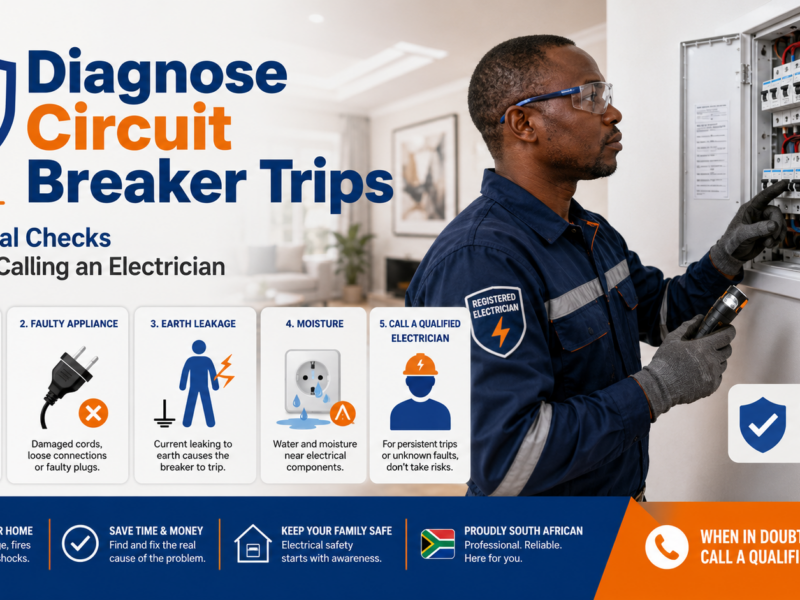
A circuit breaker that trips once during a storm may be a nuisance. One that trips every time you boil the kettle, switch on the geyser or use a particular plug point is giving you useful information: something in the electrical system needs attention. Knowing how to diagnose circuit breaker trips can help you describe the problem clearly, avoid unsafe guesswork and get the right electrician out sooner.
Do not treat a repeatedly tripping breaker as something to reset until it stays on. Circuit breakers and earth leakage devices are designed to disconnect power when they detect a possible overload, short circuit or current leak. The interruption is inconvenient, but it can prevent electric shock, damaged appliances and fire.
Table of Contents
Start with safety, not the distribution board
Before checking anything, turn off or unplug appliances in the affected area. Keep hands dry, stand on a dry floor and do not open the cover of the distribution board or touch exposed wiring. If there is a burning smell, crackling sound, scorch mark, warm plug socket, smoke or visible water near electrical equipment, leave the power off and arrange urgent help from a qualified electrician.
The same applies if your property has had water damage, a roof leak or flooding. Water can affect plug points, lights, outdoor fittings and wiring long after the visible moisture has gone.
If you rent a flat, house or commercial space, report recurring trips to the landlord or property manager. You can still note what was happening when the power went off, but repairs to fixed wiring, the distribution board and permanent circuits should be handled by a qualified professional.
Identify what has tripped
Most South African properties have a distribution board containing circuit breakers, often called MCBs, plus an earth leakage device. The labels can vary, but breakers may be marked for plugs, lights, stove, geyser, pool, garage or separate areas of the building.
A standard circuit breaker usually protects a specific circuit against too much current or a fault. An earth leakage device, sometimes labelled earth leakage or RCD, is designed to detect electricity leaking to earth. It may trip several circuits at once, which is why part or all of the property can lose power.
Look at the switches without removing any covers. A tripped breaker may sit in a middle position or fully off. First move it firmly to off, then switch it back on once. If it remains on and the problem does not return, monitor it. If it immediately trips again, leave it off. Repeatedly forcing it on does not fix the cause.
What the affected area can tell you
If only one room, one group of sockets or one major appliance loses power, the issue may be limited to that circuit. If the whole property goes off when the earth leakage trips, the cause could still be a single appliance, but it may also involve a damp outdoor fitting, geyser element, pool equipment or another circuit connected through the device.
Make a quick note of the date, weather, breaker label and what was running at the time. This is especially useful where the fault happens only after rain, overnight, during load restoration or when a high-demand appliance starts.
Check for an overloaded circuit
One of the safest ways to diagnose circuit breaker trips is to reduce the load, reset the breaker once and observe whether the fault returns as appliances are reconnected.
An overload happens when a circuit is asked to supply more power than it is designed to carry. It is common in older homes, temporary office setups and rooms where extension leads have quietly become permanent.
Think about what was on when the breaker tripped. A kettle, microwave, heater, toaster, air fryer and washing machine can draw substantial power. Running several of them from sockets on the same circuit can be enough to trip it, even when every appliance is working correctly.
Switch off and unplug the non-essential items on that circuit, then reset the breaker once. Reconnect appliances one at a time, allowing each to run before adding the next. If the breaker stays on until several high-use items operate together, an overload is likely.
The practical solution may be as simple as spreading appliances across different circuits and avoiding multi-plug adaptors for high-wattage items. But if normal day-to-day use regularly causes trips, ask an electrician to assess the circuit capacity, socket layout and distribution board. A new dedicated circuit may be safer than relying on extensions or continually changing how you use the room.
Isolate a faulty appliance
If the breaker trips only when one appliance is plugged in or switched on, stop using that appliance. Do not keep testing it, even if it sometimes works. Internal faults can be intermittent, particularly in appliances with heating elements, motors, worn cables or moisture exposure.
Start with everything on the affected circuit unplugged. Reset the breaker, then plug in and operate one item at a time. Pay close attention to the result. If the trip happens when a particular appliance is connected, that appliance or its cable is a strong suspect.
Common culprits include kettles, heaters, irons, washing machines, dishwashers, tumble dryers, fridges, freezers, pool pumps and geysers. An appliance can appear normal yet still leak current to earth, causing the earth leakage to trip. That fault requires proper testing, not a replacement plug or a larger breaker.
Also inspect leads and plugs from the outside only. Stop using any item with a cracked plug, damaged insulation, loose pins, discolouration or a cable that has been trapped under furniture or a door.
Look for patterns involving water and fixed equipment
A trip that follows rain, irrigation, washing down a patio or high humidity points towards moisture. Outdoor plugs, garden lights, gate motors, electric fencing, pool pumps and external security equipment are frequent areas to investigate. Do not dismantle or dry electrical fittings yourself. Keep the affected circuit off and arrange an inspection.
A geyser circuit that trips can also indicate a faulty element, thermostat or wiring issue. Because geysers combine electricity and water, this is not a DIY repair. Turn off the relevant breaker and tell the electrician whether the trip occurs when the geyser heats, after hot water is used or at random times.
In commercial premises, faults can be linked to refrigeration, kitchen equipment, air conditioning, pumps, signage or machinery starting up. Record which equipment was running and whether the trip occurs at a consistent time. That detail can reduce diagnostic time and help avoid unnecessary disruption to staff or customers.
How to diagnose circuit breaker trips without making it worse
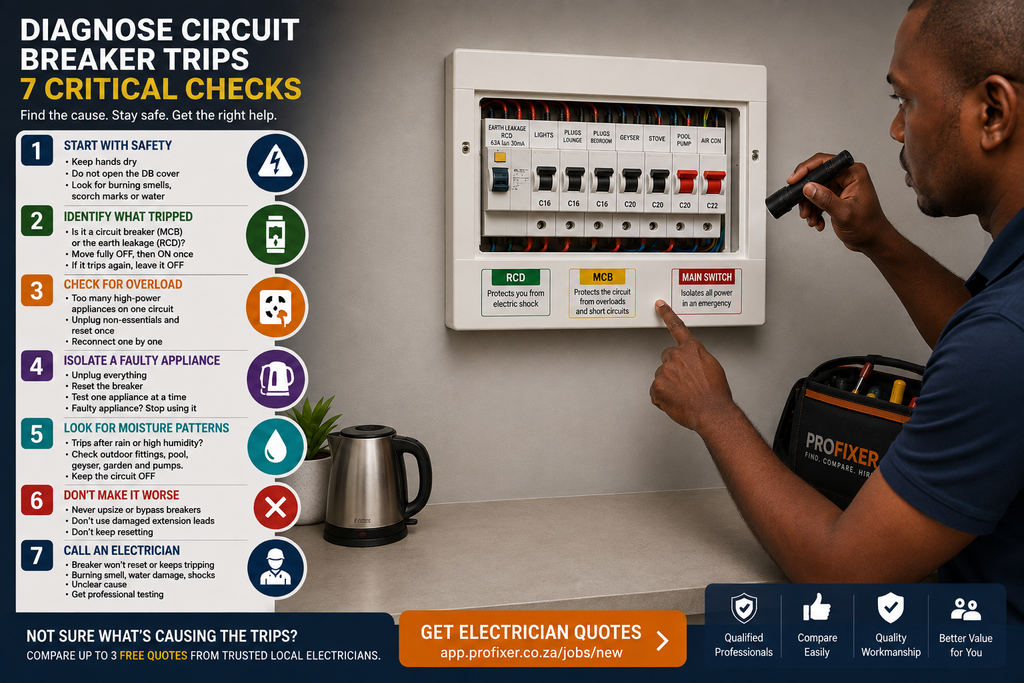
There are a few things not to do. Never replace a breaker with a higher-rated one to stop it tripping. The breaker rating is matched to the cable and circuit design, so increasing it can allow wiring to overheat before protection operates.
Do not bypass the earth leakage device, tape a breaker in the on position or use damaged extension leads as a temporary fix. Avoid plugging a high-demand appliance into a different socket merely to hide the symptom. If that socket is on another circuit, the appliance may still be faulty and could cause an earth leakage trip elsewhere.
A reset is reasonable after you have reduced the load or unplugged suspected appliances. Anything beyond basic isolation should be left to a qualified electrician with the correct test equipment. They can test insulation resistance, earth continuity, appliance leakage and circuit loading safely.
When to call an electrician straight away
If basic isolation does not help you diagnose circuit breaker trips, leave the affected circuit off and arrange professional testing rather than continuing to reset the protection device.
Book an electrician promptly when a breaker will not reset, trips immediately with everything unplugged, trips repeatedly, or affects lights and sockets with no obvious appliance connected. Urgent attention is also needed after water ingress, electrical burning smells, shock sensations from taps or appliances, damaged distribution board components, or visible overheating.
If you need help quickly, provide clear information when requesting quotes: the suburb, type of property, breaker label, appliances in use, whether earth leakage also trips, and any signs of damp or damage. Photos of the closed distribution board and affected appliance can be useful, provided it is safe to take them.
With Profixer, you can post your electrical fault free and connect with local electricians interested in quoting for the work. Include the breaker label, when the trip happens, what appliances were running and whether earth leakage is also affected so contractors can respond with more useful information.
A breaker that trips is not an inconvenience to work around. Treat it as an early warning, keep careful notes and leave the circuit off when the cause is unclear. That small pause can make the eventual repair faster and far safer.
Knowing how to diagnose circuit breaker trips safely is mainly about observing patterns, isolating obvious appliance loads and knowing when to stop. If the breaker keeps tripping, will not reset or there are signs of heat, water or damage, leave the circuit off and arrange a qualified electrical inspection.
GET ELECTRICIAN QUOTES