
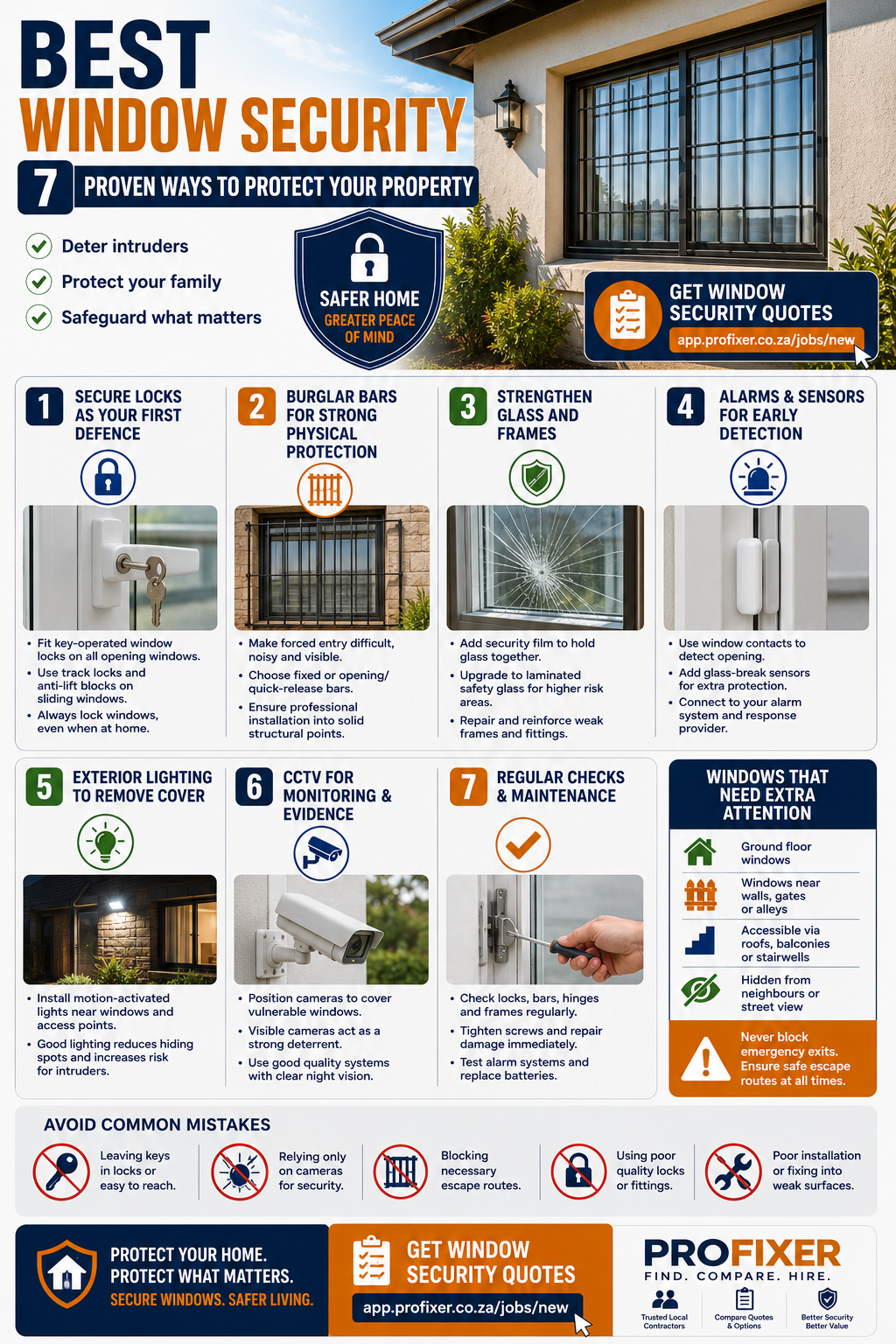
Best Window Security: 7 Proven Ways to Stay Safer
A window left slightly open for fresh air can become the weakest point in an otherwise secure property. The best window security is rarely one product on its own. It is a practical combination of secure frames, reliable locks, physical barriers and detection suited to how you use the space.
For a family home, rental flat, office or retail premises, the right approach depends on the window type, location and level of risk. Ground-floor windows facing a quiet side passage need different protection from an upstairs bathroom window or a shopfront facing a busy road. The aim is to make forced entry difficult, visible and noisy, without turning your property into an uncomfortable place to live or work.
Table of Contents
Start with the windows that present the greatest risk
Before buying security products, walk around the property and look at it as an intruder would. Focus first on accessible windows near gates, driveways, alleys, boundary walls, bins or other cover. Windows hidden from neighbours and those opening onto a flat roof, balcony or stairwell also deserve attention.
Pay close attention to older timber, aluminium or steel frames. A strong lock is less useful if the frame is loose, the putty is failing, or the sash can be forced away from the wall. Repairing damaged frames, replacing worn handles and securing loose glazing are often the most cost-effective first steps.
For landlords and property managers, inspect vacant units between tenancies. Empty properties can be targeted quickly, especially where windows have been left unlocked after cleaning, maintenance or viewings. A simple window security check should form part of every handover process.
Best window security starts with proper locks
Many standard window catches are designed to keep a window closed, not to resist force. Key-operated window locks give you a stronger first layer of protection, particularly on opening casement, sliding and sash windows. They should be fitted to sound frames and used consistently, not kept locked in a drawer after installation.
Sliding windows and doors need particular attention because they can sometimes be lifted out of their tracks. Anti-lift blocks, track locks and suitably fitted security pins can prevent this. A professional installer can assess whether the track, rollers and frame are in good condition before recommending hardware.
Window locks do have a trade-off. Bedrooms and other rooms used for escape in a fire must still have a safe and clear exit route. Keep keys accessible to occupants who need them, but not visible from outside or stored where children could misuse them. Your installer should explain how the security setup works in an emergency.
Use burglar bars where physical protection is needed
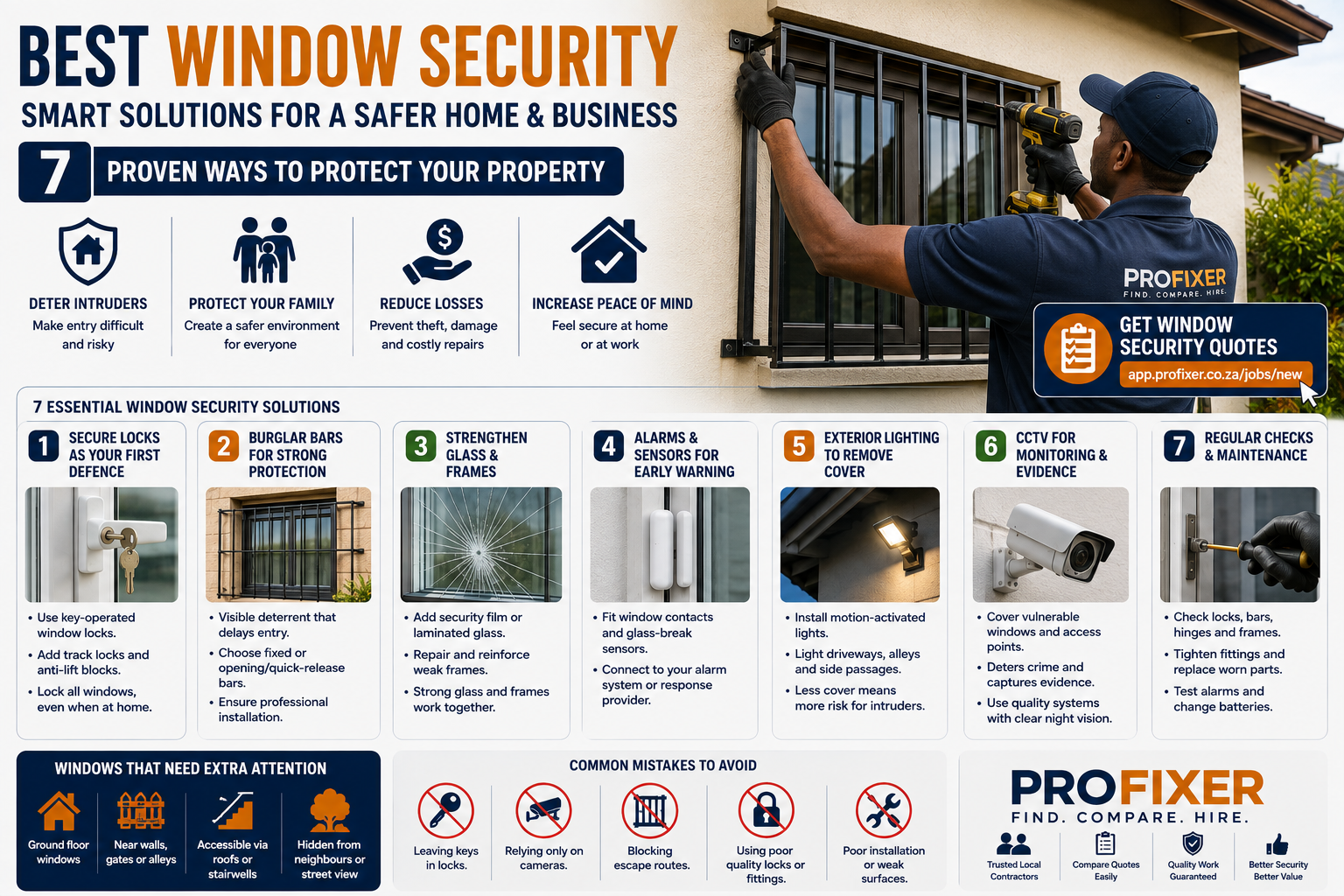
Burglar bars remain one of the most effective visible deterrents for accessible windows in South Africa. Properly installed steel bars make smashing a pane far less useful to an intruder because the opening remains protected. They are especially useful for ground-floor bedrooms, kitchens, bathrooms, store rooms and windows close to boundary walls.
The quality of fitting matters as much as the bars themselves. Bars fixed only into weak plaster, damaged brickwork or a light window frame may be easier to remove than expected. A security specialist should secure them into suitable structural points and check that their spacing does not create a safety risk for children.
Fixed burglar bars suit windows that do not need to serve as an emergency exit. For bedrooms, living areas and commercial premises, opening or quick-release bars may be a better choice. These can provide daily protection while allowing occupants to exit during a fire. The release mechanism must be easy for responsible occupants to operate, and everyone in the property should know where it is.
There is also an aesthetic decision. Traditional bars are practical and affordable, while clear polycarbonate bars or more decorative designs can feel less restrictive. Clear bars may suit homes where appearance matters, but they are not automatically the best option for every exposure. Ask about the material thickness, fixing method, warranty and expected maintenance before comparing prices.
Strengthen the glass and frame
The best window security usually combines strong glazing, a secure frame and suitable locking or physical barriers rather than relying on one product alone.
Standard glass is vulnerable to impact. Security film can hold broken glass together after a strike, slowing access and reducing dangerous shards. It works best when professionally applied and paired with a secure frame. Film alone does not turn ordinary glazing into an impenetrable barrier, but it can buy valuable time and create more noise during an attempted break-in.
Laminated safety glass provides stronger protection because it has an interlayer that helps hold the pane together when broken. It can be a worthwhile upgrade for vulnerable windows, side panels and shopfronts, particularly during a renovation or window replacement. The cost is higher than applying film, so it is usually best reserved for priority areas.
Do not overlook frame reinforcement. Older windows may need new hinges, longer screws, upgraded keeps or repairs to damaged timber and aluminium sections. If water damage or corrosion has weakened the frame, address that problem before fitting expensive security hardware. Security upgrades last longer when the window itself is properly maintained.
Add alarms and lighting to create a layered defence
Physical security delays entry. Detection helps ensure that an attempted entry gets a response. Window contacts can trigger an alarm when a window is opened, while glass-break sensors can detect the sound pattern of breaking glass. These options can be connected to an existing alarm system and, where appropriate, monitored response services.
Contacts are useful for windows you want to keep closed at night. Glass-break sensors may suit rooms with several windows, although correct placement and setup are essential to reduce false alarms. A qualified security installer can advise whether contacts, sensors, cameras or a combination will be most practical for your layout.
Exterior lighting can also make a real difference. Motion-activated lights near side passages, garages and rear windows remove the cover intruders rely on. Position fittings carefully so they light access points without shining into bedrooms, neighbours’ homes or passing traffic. CCTV can add useful visibility, but it should support good locks and barriers rather than replace them.
Avoid common window security mistakes
The most expensive option is not always the safest one. Weak installations, poor-quality locks and unsuitable materials can create false confidence. Avoid fitting bars that block a required escape route, leaving keys in locks where they are reachable through broken glass, or relying only on a camera to protect an easily opened window.
It is also worth considering how the property operates day to day. Tenants need a clear explanation of keys and release mechanisms. Staff need procedures for opening and securing commercial premises. If windows are regularly opened for ventilation, ask about restrictors or lockable ventilation positions rather than expecting everyone to keep them shut all the time.
For businesses, security should match the value and type of stock inside. A ground-level office storing laptops needs a different plan from a warehouse with high windows or a salon with a glazed street frontage. Your insurer may also specify minimum requirements, so check your policy before committing to an installation.
How to choose the right installer
A contractor recommending the best window security for your property should explain why each lock, bar, sensor or glazing option suits the specific window and level of risk.
A good security installer will inspect the property before giving a final recommendation. They should ask which windows are used as exits, identify weak frames or glazing, and explain the difference between fixed and opening burglar bars. They should also provide a clear scope covering materials, quantities, fittings, finishing and any alarm integration.
When comparing quotes, do not only compare the total. Check whether each contractor has allowed for the same bar design, lock type, glass treatment and installation method. Ask about lead times, warranties, maintenance needs and whether repairs to frames or walls are included. A cheaper quote can become costly if it leaves out essential preparation work.
With Profixer, you can post your window security job free and connect with local contractors interested in quoting for the work. Compare the proposed burglar bars, locks, glazing, alarm integration, warranties and installation method before deciding who to appoint.
The best choice is the one that protects your most exposed windows, works with your daily routine and gives everyone inside a safe way out. Start with the weak points you can see, then get clear advice from local professionals before the next small repair becomes a larger security problem.
The best window security is the combination that protects your most exposed openings without creating unnecessary inconvenience or blocking safe escape routes. Start with the weakest windows, then compare local contractors and choose a solution that suits the property, budget and way the building is used.
Get Window Security Quotes