
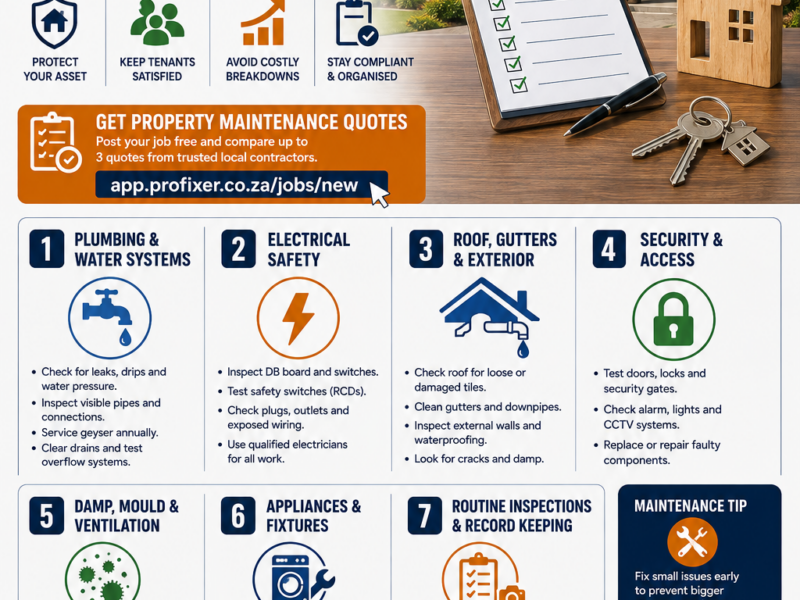
Landlord Maintenance Guide: 7 Essential Checks to Prevent Expensive Problems
A leaking geyser at 6am, a tripped circuit board before a new tenant moves in, or a gate that will not close properly can quickly turn a rental property into a costly problem. A practical landlord maintenance guide helps you act before small faults affect your tenant, your income, or the condition of the property.
For landlords and property managers, maintenance is not only about fixing what is broken. It is about protecting an asset, keeping tenants safe and comfortable, and avoiding the disruption of urgent repairs where choices are limited and costs can rise. The right plan makes it easier to know what needs attention, when to call a professional, and how to compare the work before approving it.
Table of Contents
Start with clear maintenance responsibilities
A well-maintained rental depends on clear communication from the beginning. Your lease should explain how tenants report faults, who they should contact in an emergency, and which day-to-day tasks they are expected to handle. Tenants can reasonably keep the property tidy, replace ordinary light bulbs where safe, and report issues early. Structural repairs, failing plumbing, electrical faults, security issues and worn fixtures generally need a landlord’s attention.
Avoid relying on verbal reports alone. Ask tenants to send a written description, photos or a short video where possible. This gives you a useful record, helps a contractor understand the issue before arriving, and can prevent disagreements over when damage or a fault first appeared.
It also helps to define an emergency. A burst pipe, exposed wiring, sewage backup, broken external security gate or failed lock at an occupied property needs quick action. A dripping tap, loose cupboard hinge or cracked tile may be less urgent, but it should still be logged and scheduled. Fast acknowledgement matters even when the repair cannot happen immediately.
Build a preventative maintenance calendar
A practical landlord maintenance guide should combine routine inspections, seasonal checks and professional servicing so problems are identified before they become emergencies.
Waiting for things to fail is usually the most expensive approach. Preventative maintenance spreads costs across the year and reduces the chance that a tenant is left without water, power, access or adequate security. The exact schedule depends on the property’s age, location and features, but a regular inspection routine is a strong starting point.
Seasonal checks that protect the property
Before the rainy season, inspect the roof, gutters, downpipes and exterior drainage. Clear blockages and look for loose tiles, cracked waterproofing or signs of damp around ceilings and walls. In areas with heavy rain, poor drainage can affect paving, foundations, boundary walls and garages as well as the home itself.
During colder months, check geysers, visible pipes, roof insulation and weather seals around doors and windows. A small water leak can become substantial damage if it goes unnoticed in an empty unit. If the property has a fireplace, gas appliance or alternative heating system, arrange appropriate servicing by a qualified professional.
Summer is a good time to inspect outdoor areas. Check boundary walls, gates, fencing, irrigation, garden drainage and exterior lighting. Trees close to a roof, power line or boundary wall may need trimming before wind causes damage. For flats in a sectional title scheme, confirm which outdoor and common-area responsibilities fall to the body corporate and which remain yours.
Annual professional servicing
Some jobs need more than a visual inspection. Book qualified tradespeople to assess systems that could cause major damage or safety risks if they fail. This may include electrical installations, geysers, plumbing pressure, security gates, alarm systems, air conditioning and solar or backup-power equipment.
Keep invoices, service reports, warranties and photos in one property file. These records make future repairs easier to diagnose, support insurance discussions if needed, and show a consistent maintenance history when you sell or refinance. They also help a new contractor avoid repeating work that has already been done.
Prioritise repairs by risk, not annoyance
Not every maintenance request carries the same consequence. Prioritising properly prevents serious issues from being delayed while minor cosmetic work absorbs your budget. A useful approach is to assess each issue according to safety, potential property damage, security, tenant comfort and legal or insurance implications.
Electrical faults, water leaks, blocked drains, damaged locks, malfunctioning gates and roof leaks should move to the top of the list. These can create safety risks, leave the property vulnerable or cause damage that spreads quickly. A cracked bathroom tile or peeling paint may wait, unless it exposes damp, mould or a sharp edge.
Mould needs careful assessment. It can be linked to a roof leak, plumbing leak, poor bathroom ventilation, rising damp or everyday condensation. Simply painting over it may hide the appearance for a short time without solving the source. Establish the cause first, then arrange the appropriate repair and cleaning work.
For older properties, it is sensible to set aside a contingency fund. The amount depends on the building and rental income, but the principle is simple: urgent work should not force you into the first available quote without checking scope, credentials and cost.
Use inspections to catch issues early
Routine inspections are one of the most useful tools in a landlord maintenance guide. Arrange them with reasonable notice and follow the access terms in your lease. The aim is not to interfere with a tenant’s home life. It is to identify leaks, damage, wear and safety concerns before they become expensive.
Take date-stamped photos and use the same checklist each time. Look under sinks, around geysers, inside cupboards near plumbing, along ceilings, around windows, at exterior walls and at gates or garage doors. Test smoke alarms where installed, check that exterior lights work, and note any water staining or cracking.
A move-in inspection should be especially detailed. Record the state of floors, walls, appliances, keys, remotes, meters, garden areas and security features. Repeat this process at move-out. A clear condition report makes it easier to distinguish fair wear and tear from tenant-caused damage, while helping both parties stay on the same page.
Choose contractors carefully and compare the scope
Following a landlord maintenance guide also means keeping clear records of quotations, repairs, warranties and contractor recommendations for each rental property.
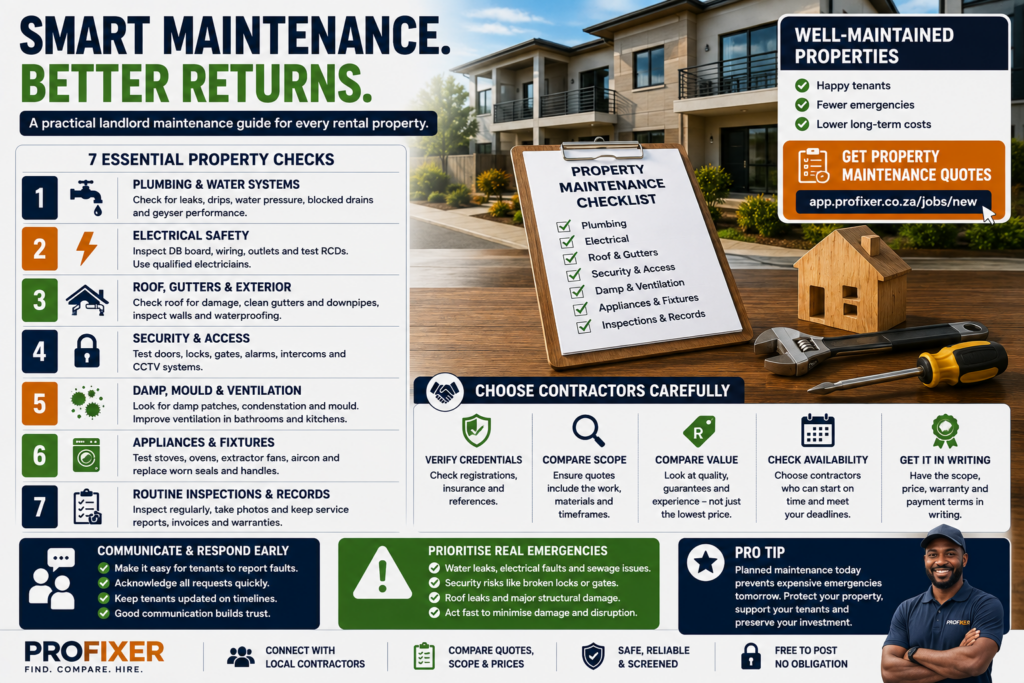
The cheapest quote is not always the lowest-cost repair. A contractor may price only the visible fault while another has included the underlying issue, materials, labour, call-out costs and a workmanship guarantee. Before choosing, make sure each quote covers the same job.
Ask for a plain description of the work, the expected timeframe, materials to be used, exclusions and whether follow-up work may be required. For specialised work, such as electrical repairs, solar systems, gas installations or security equipment, use appropriately qualified providers and request the relevant documentation where applicable.
Getting more than one quote is particularly useful for non-emergency jobs, larger repairs and recurring maintenance. It gives you a clearer view of realistic pricing and different repair options. For urgent cases, speed may take priority, but you can still ask for confirmation of the call-out fee and likely next steps before work begins.
With Profixer, landlords and property managers can post a maintenance job free and connect with local contractors interested in quoting for the work. Compare the proposed scope, availability, materials, guarantees and price before choosing who to appoint.
Make communication part of the repair process
Tenants do not expect every problem to be fixed instantly, but they do expect to know what is happening. Confirm that you have received the report, explain the next step, and give a realistic timeframe. If a contractor needs access, agree on a suitable appointment and let the tenant know who will attend.
After the repair, ask whether the issue has been resolved and retain the invoice. For recurring faults, do not keep applying temporary fixes. A repeatedly blocked drain, tripping power supply or leaking roof needs a fuller investigation. Paying for the right diagnosis can be better value than several small call-outs.
Good communication is also useful when the issue is tenant-caused. Explain the finding, share the contractor’s report where appropriate, and handle any cost recovery in line with the lease and applicable requirements. Staying factual and prompt protects the relationship better than allowing frustration to build.
Plan maintenance between tenancies
The period between tenants is your best opportunity to deal with work that is difficult to complete while a property is occupied. Use it for painting, deep cleaning, appliance servicing, pest treatment, waterproofing, flooring repairs, garden work and security upgrades.
It is also a chance to improve the property’s appeal without overspending. Fresh paint in neutral colours, working lights, reliable hot water, secure access and a clean outdoor area often matter more to prospective tenants than purely decorative upgrades. Where budgets are tight, focus first on condition, safety and functionality.
A rental property rarely stays trouble-free by accident. Keep a record, respond early, budget for the unexpected and use qualified local professionals for the work that needs proper attention. That approach gives tenants confidence, protects your investment and keeps the next repair from becoming a crisis.
A good landlord maintenance guide helps you move from emergency repairs to planned property care. Keep clear records, inspect regularly, respond to faults early and use qualified local professionals for work that needs specialist attention. This protects the property, supports tenants and makes maintenance costs easier to manage.
GET PROPERTY MAINTENANCE QUOTES