
Alarm System Installers: 7 Essential Questions to Ask
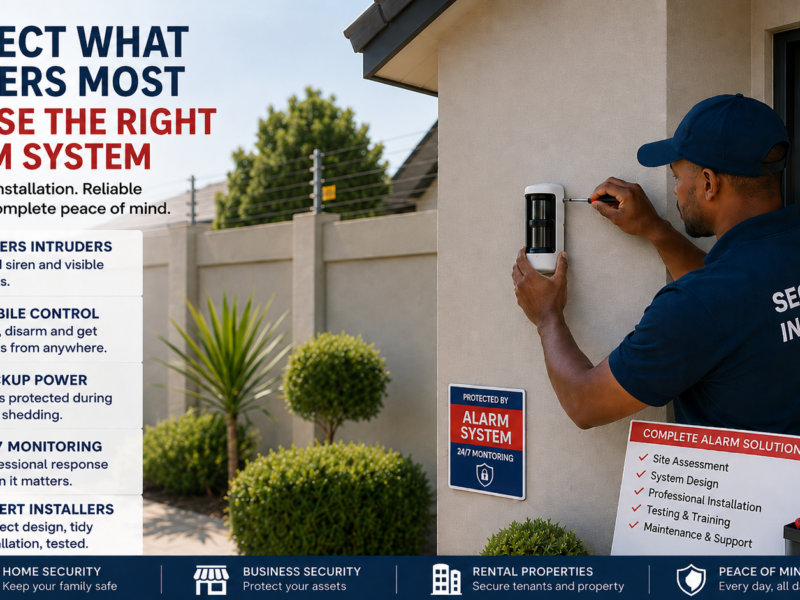
A break-in is not the time to find out whether your alarm system was poorly planned, incorrectly fitted or left without support. Reliable alarm system installers help you choose protection that suits the way your property is used, then install and test it properly before it is needed.
For a family home, a rental flat, a shop or a busy office, the right setup is rarely about buying the most expensive panel. It is about covering real risks: accessible doors, vulnerable windows, quiet outdoor areas, staff access, power interruptions and the response you need after an alarm is triggered.
Table of Contents
What alarm system installers should assess first
A good installer starts with the property, not a one-size-fits-all package. They should walk through the space with you, identify likely entry points and ask how many people need access. A ground-floor townhouse with pets needs a different approach from a warehouse with multiple loading doors, for example.
The assessment should consider where intruders could enter without being seen, whether there are existing gates or electric fencing, and where the alarm panel and backup equipment can be safely placed. Your installer should also ask about your daily routine. If children, domestic workers, tenants or employees use the property, the system must be straightforward enough for everyone authorised to use it correctly.
For commercial premises, access control may matter as much as detection. You may want separate codes or tags for managers, staff and contractors, along with records of who entered and when. For landlords and property managers, the focus may be on protecting common areas while keeping tenant access practical.
Choosing the right alarm setup
Most modern alarm systems combine several components. The best combination depends on the layout, budget and level of risk rather than on a fixed checklist.
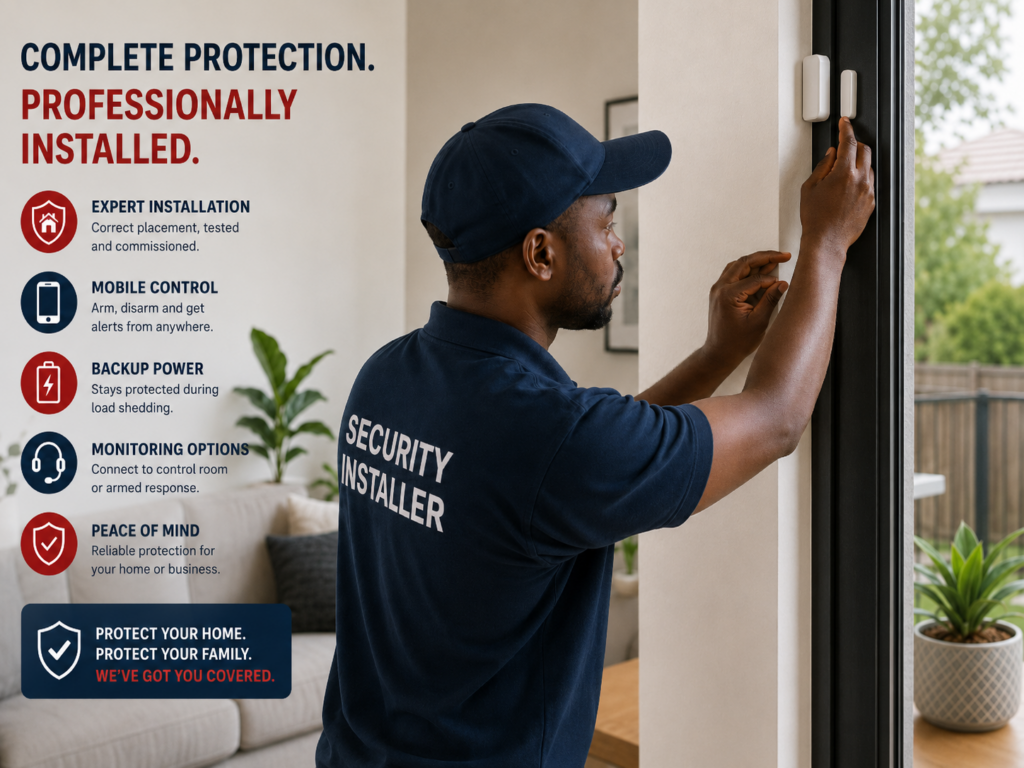
Door and window contacts alert you when a protected opening is breached. Motion sensors cover internal rooms and passageways, while outdoor beams can provide an earlier warning around gardens, driveways or perimeter areas. Panic buttons offer immediate assistance during an emergency, and a siren helps draw attention to an active incident.
Many property owners now add a mobile app or remote arming option. This can be useful when you are travelling, managing a rental property or closing a business after hours. However, convenience should not replace basic reliability. Ask what happens if the Wi-Fi fails, the power goes out or the mobile network is unavailable.
Wired, wireless or hybrid?
Wired alarms are often a strong choice during a new build, major renovation or when ceiling access is easy. They can be dependable and do not rely on batteries for every sensor, but installation may involve more labour and disruption in an existing property.
Wireless systems are quicker to fit and can work well in finished homes, flats and smaller businesses. They are not automatically the cheaper option over time, as batteries need checking and replacement. Signal strength also needs to be tested properly, particularly in larger buildings or properties with thick walls.
A hybrid system uses both wired and wireless devices. This can be practical when you want hard-wired protection in key areas but need flexible coverage in extensions, outbuildings or areas where cabling would be difficult. A capable installer should explain the trade-offs clearly rather than steering every customer towards the same solution.
Alarm monitoring and armed response
An alarm that only sounds on site may be enough for some low-risk properties, but it has limits. If nobody is nearby, a siren can be ignored or switched off quickly. Monitoring services can send alarm signals to a control room, which may contact you, nominated keyholders or an armed response provider depending on your selected service.
Before signing up, ask how signals are transmitted, what backup communication is available and whether monitoring costs are separate from installation. It is also worth confirming call-out fees, contract terms, cancellation requirements and the expected process after a false alarm.
Armed response coverage and quality can vary by area. If this service is important to you, discuss local coverage directly with the provider and make sure the installer can integrate the alarm with the service you choose. Do not assume that an alarm installation includes response membership unless it is stated in writing.
Questions to ask alarm system installers before you hire
Price matters, but the lowest quote can leave out important equipment, batteries, commissioning or after-installation support. Comparing like for like is the fairest way to decide.
Ask each installer whether the quote includes the alarm panel, sensors, keypad, siren, backup battery, labour, programming and testing. Check whether the equipment has a warranty, who handles faults, and whether routine maintenance is available. If you need monitoring, establish whether the system is compatible with your preferred provider.
You should also ask about pet-friendly sensors if animals move freely indoors. A sensor that is poorly positioned can cause nuisance alarms, while a sensor set too cautiously may leave an area inadequately protected. The installer should recommend placement based on the size and movement of your pets, not just promise that every detector is pet-friendly.
For South African properties, it is sensible to ask about backup power during load shedding and how long the system can operate if mains power is unavailable. The answer depends on the panel, battery capacity, connected devices and the condition of the battery. A clear explanation is more useful than a vague promise of all-day backup.
Where relevant, ask whether the business and technicians hold the registrations or accreditations required for the work and security services being provided. You should receive a written quote and clear details of what will be installed.
Why a site visit can save money
Remote estimates are helpful for an initial budget, particularly if you can provide photos, a floor plan and the number of doors or windows. But a site visit often prevents costly assumptions. An installer may find that one well-positioned motion detector covers two rooms, or that an outdoor beam would create repeated false alarms because of vegetation, pets or regular pedestrian movement.
The same applies to cabling routes and signal testing. A quote that appears cheaper before an inspection may increase once access problems, additional devices or backup requirements are identified. This does not mean every job needs a lengthy survey, but it does mean the final scope should be based on the actual property.
Maintaining an alarm after installation
Even a well-installed alarm needs attention. Test the system according to the installer or monitoring provider’s guidance, keep contact details current and make sure authorised users know how to arm, disarm and use the panic function. If you change your router, renovate a room, add a pet or extend the building, let your provider know. These changes can affect coverage and connectivity.
Battery health is especially important. A system may still appear operational while its backup capacity has reduced. Arrange maintenance if you receive low-battery alerts, notice intermittent faults or experience repeated false alarms. Ignoring nuisance alarms can lead people to stop taking genuine alerts seriously.
For businesses, keep access codes controlled. Remove former employees promptly, avoid sharing master codes widely and review access permissions when roles change. A security system is only as effective as the way it is managed every day.
Get quotes that match your property
The right installer will not simply sell equipment. They will help you understand what is covered, what is optional and what ongoing costs you should expect. When comparing quotes, look at the design, equipment quality, backup arrangements, warranty and support alongside the final price.
With Profixer, you can post your alarm installation job free and connect with local contractors interested in quoting for the work. Include the property type, suburb, whether you need monitoring and details of any existing security equipment so installers can provide more relevant options.
A well-planned alarm system gives you more than a loud siren. It gives the people using your property a clear, reliable way to respond when something is wrong.
Choosing experienced alarm system installers can help you avoid poor coverage, unreliable backup power and unnecessary false alarms. Post your job free on Profixer and compare local contractors before deciding who should protect your property
GET ALARM INSTALLATION QUOTES