
7 Essential Residential Property Maintenance Tips for South African Homes
Regular residential property maintenance can reduce emergency call-outs and help homeowners plan repairs around their available budget. A dripping geyser relief valve, a gate that only opens after three attempts, or a dark patch spreading across a ceiling can look like separate jobs. In practice, they are all reminders that residential property maintenance is cheaper and less stressful when small faults are handled before they interrupt daily life or damage the property.
For homeowners, landlords and property managers, the goal is not to spend money on work that can wait. It is to spot the jobs that protect safety, prevent expensive damage and keep a home comfortable, secure and ready for tenants or buyers. A simple maintenance plan also makes it easier to get accurate quotes, rather than making decisions under pressure during an emergency.
Table of Contents
What residential property maintenance should cover
Residential property maintenance includes the routine checks, repairs and servicing needed to keep a house, flat, complex unit or rental property in good working order. Some work is visible, such as repainting a boundary wall or clearing gutters. Other tasks happen behind the scenes, including electrical inspections, plumbing repairs, roof waterproofing and servicing an automatic gate motor.
The right plan depends on the property’s age, location and condition. A coastal home may need more attention to rust, damp and exterior paintwork. A Johannesburg property with mature trees may need regular gutter clearing before summer storms. A rental flat may need close checks between tenancies, particularly for leaks, appliances, locks and wear to walls or floors.
The key is to separate urgent risks from routine improvements. A tripping circuit breaker, leaking pipe, damaged roof or faulty security gate deserves prompt attention. Replacing a tired kitchen tap or refreshing a bedroom colour may be worthwhile, but it can usually be planned around your budget.
Start with the jobs that can cause real damage
Property maintenance often gets delayed because the issue seems manageable. A small roof leak may only appear during heavy rain, while a slow water leak can remain hidden behind a cupboard. Both can lead to mould, damaged ceilings, swollen cupboards and higher repair costs if left untreated.

Water, roofs and drainage
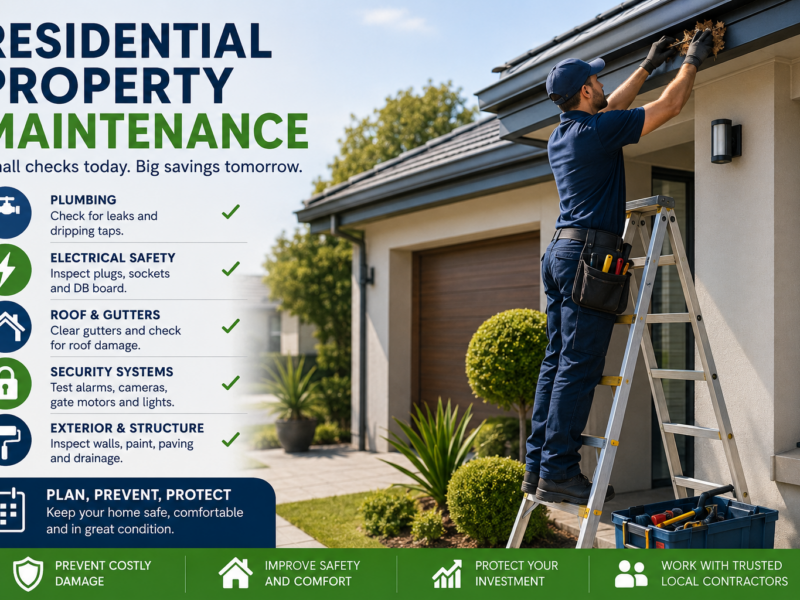
Water damage is one of the most common and costly maintenance problems. Check under sinks, around toilets, at geysers and near washing machine connections for drips, staining or damp smells. Watch for changes in water pressure, unusually high water bills and cracks in exterior walls that may allow moisture in.
Roofs, gutters and downpipes need attention before the rainy season. Remove leaves and debris that stop water flowing away from the building. Look for loose tiles, damaged flashing, rusted sheeting and signs of water marks on ceilings. It may be tempting to patch the visible stain indoors, but the source of the leak needs to be found first.
Electrical safety
Electrical faults are not a DIY trial-and-error job. Flickering lights, plugs that feel hot, repeatedly tripping breakers and loose sockets should be assessed by a qualified electrician. The same applies when adding high-demand equipment such as an inverter, solar system, air conditioner or electric gate motor.
Older homes can have wiring that was never designed for modern appliances and backup power. An electrician can identify overloaded circuits, earthing issues and work needed to bring installations up to a safe standard. This is a safety decision first, but early repairs can also prevent damage to appliances and avoid disruptive failures.
Security and access
Security equipment needs maintenance just as much as plumbing or paintwork. Test alarm sensors, CCTV cameras, intercoms, electric fencing, outdoor lights and gate motors regularly. Replace weak remote batteries, check that cameras have a clear view and make sure gates close properly without forcing them.
A gate that sticks can be caused by a worn motor, misaligned track, damaged wheels or poor electrical supply. The right repair depends on the cause. Asking a contractor to inspect the full system, rather than only replacing one visible part, can prevent the same problem returning a few weeks later.
A practical maintenance schedule for South African homes
A practical residential property maintenance checklist should cover plumbing, electrical safety, roofing, drainage, security systems and exterior areas. You do not need a complicated spreadsheet to stay ahead of repairs. A calendar reminder and a short property checklist are enough for most households. The useful approach is to group work by how often it needs attention.
Each month, walk around the property and look for leaks, new cracks, damaged paving, loose fencing, faulty lights and signs of pests. Test smoke alarms where fitted, check the electric gate and make sure exterior drainage points are clear. This takes little time, but it helps you notice changes before they become urgent.
Every few months, inspect gutters, roof edges, exterior paint, seals around windows and doors, taps, toilet cisterns and appliance hoses. Clean or service pool equipment if applicable, trim plants away from walls and security fencing, and check that garden irrigation is not soaking foundations or paving.
Once a year, arrange professional servicing or inspections for systems that need specialist knowledge. This may include the geyser, electrical installation, alarm system, air conditioning, chimney, septic system or solar equipment. Keep invoices, certificates, warranties and photographs of completed work in one folder. They are useful for insurance claims, tenant handovers and future property sales.
Plan maintenance around seasons and occupancy
Timing makes a difference. Before the wet season, focus on roofs, waterproofing, gutters, drainage and tree trimming. Before colder months, inspect geysers, insulation, windows and any heating equipment. In hot periods, air conditioners, pools and irrigation systems may need more attention.
Landlords should build checks into tenant changeovers. This is the best time to inspect for water damage, test appliances, repair locks, touch up paintwork and deal with minor defects before a new tenant moves in. Waiting until a complaint is made can create inconvenience for the tenant and make access more difficult.
For owner-occupied homes, it can be sensible to combine smaller jobs into one visit where the contractor has the right skills and tools. However, do not use one general provider for specialised electrical, gas or structural work unless they are properly qualified for it. Convenience matters, but safety and quality matter more.
Getting quotes without losing control of the job
A clear job description helps contractors quote fairly and helps you compare like for like. Instead of saying, “There is a leak in the bathroom,” explain where it appears, when it happens, whether water is visible, and whether the problem affects a neighbouring room. Add photographs where possible and state whether the job is urgent.
When comparing quotes, look beyond the final amount. Check what labour, materials, call-out fees, removal of old parts and follow-up work are included. Ask whether the quoted repair addresses the cause of the fault or only the immediate symptom. A lower price can be the better choice for a straightforward job, but it may not offer value if important work has been excluded.
For larger repairs, such as roof restoration, repainting, bathroom upgrades or solar installation, agree on the scope before work starts. Confirm the materials, expected timeframe, payment stages and who is responsible for clearing rubble or protecting existing finishes. Written details reduce misunderstandings for both customer and contractor.
Profixer helps property owners post maintenance jobs free and connect with local contractors interested in quoting for the work. Compare the proposed repair, materials, availability and price before choosing who to appoint.
Know when maintenance becomes an emergency
Some problems should not wait for the next planned inspection. Switch off the water supply and seek help for a burst pipe or major leak. Isolate power where safe to do so and contact an electrician for burning smells, sparks, exposed wiring or repeated electrical trips. A suspected gas leak, unstable wall, severe roof damage or security failure also needs urgent professional attention.
For less urgent jobs, acting within days rather than months is usually enough to limit cost. Take photos when you first notice the issue, record any changes and avoid temporary fixes that hide the damage. Covering a damp patch with paint, for example, does nothing to stop moisture from returning.
A well-maintained property is not one with no faults at all. It is one where faults are noticed early, prioritised sensibly and repaired by the right local professional before they become a much bigger problem.
Consistent residential property maintenance helps protect your home, control repair costs and prevent small defects from becoming emergencies. Post your maintenance job free on Profixer and connect with local contractors serving your area.
GET PROPERTY MAINTENANCE QUOTES