

When the power goes out halfway through a working day, it is not just the lights that stop. Wi-Fi drops, security systems may be affected, fridges warm up and essential equipment sits idle. The best load shedding solutions are the ones that keep the parts of your home or business that matter most running, without leaving you with an oversized system or an unexpected installation bill.
There is no single backup option that suits every property. A flat with a laptop and fibre router has very different needs from a family home with a borehole pump, or a retail premises that cannot afford to lose its point-of-sale system. Start with what you need to protect, how long you need it to run, and how much you are prepared to spend on equipment and installation.
Table of Contents
Start with the loads you cannot lose
Before comparing products, separate your essential circuits from the appliances that use the most electricity. For many households, the priority is lighting, the Wi-Fi router, a television, mobile phone charging and a fridge. A home office may also need a laptop, monitor and fibre ONT. Businesses may need computers, a network cabinet, CCTV, access control, alarm systems, refrigeration or card machines.
High-draw appliances change the calculation quickly. Electric geysers, ovens, kettles, heaters, pool pumps and air conditioners can drain a battery bank rapidly. Running these during an outage usually requires a much larger inverter and battery system, or a generator. It is often more affordable to leave them off and design backup around essential circuits only.
Write down each item you want powered, its wattage and the number of hours you want it available. This gives an installer a clear starting point and makes quotes far easier to compare. It also helps prevent a common disappointment: a system that looks powerful on paper but cannot run the equipment you assumed it would.
The best load shedding solutions by need
A UPS for short Wi-Fi and work interruptions
A UPS is often the quickest, lowest-cost option for a router, fibre box, laptop or small desktop setup. It switches to battery power when the mains supply fails and can keep a connection online for a few hours, depending on the model and load.
This is a sensible choice for tenants, smaller flats and people who only need reliable internet for meetings or remote work. It is not designed to power household plugs, fridges or heavy appliances. Check that the unit has enough capacity for both the router and ONT, as fibre equipment is frequently overlooked.
An inverter and battery for everyday essentials
For most homes, an inverter and lithium battery system is the practical middle ground. It can power selected plug points and lights automatically, with no refuelling, fumes or waiting for a generator to start. A correctly sized system can cover internet, lighting, television, security equipment, fridge-freezer circuits and some office equipment through a typical outage.
Lithium batteries cost more upfront than older lead-acid alternatives, but they generally offer more usable capacity, faster charging and a longer service life. They are usually the better option where power cuts are regular. Battery capacity matters as much as inverter size: a powerful inverter cannot provide long runtime if the battery storage is too small.
Ask the installer whether the quote includes essential-circuit wiring, changeover protection, a distribution board assessment and surge protection. These items affect both safety and the final cost. A cheap package may only include the equipment, leaving important electrical work as an extra.
Solar and battery for lower running costs
Solar panels combined with an inverter and battery provide backup during outages while also producing power during daylight hours. For homeowners and businesses with significant daytime electricity use, this can reduce reliance on the grid beyond load shedding.
Solar is a larger investment and works best when the system is properly designed around your consumption pattern, available roof space and budget. Panels alone will not usually keep your property powered during an outage. You need compatible battery storage and an inverter with backup capability.
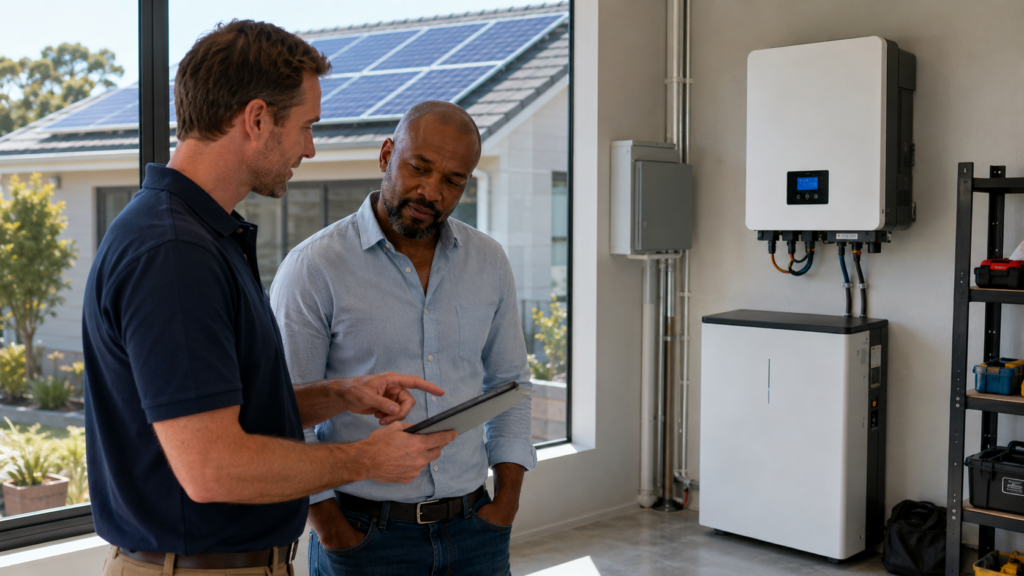
Roof condition is worth checking before installation. It makes little sense to mount panels on a roof that needs repairs soon afterwards. Commercial properties may also need a closer look at daytime demand, roof access, metering arrangements and whether critical equipment needs separate backup circuits.
A generator for high-demand equipment
Generators remain useful where large loads must keep operating. They can support equipment that would make a battery system expensive, including pumps, workshop machinery, refrigeration, commercial kitchens and selected air conditioning loads. They are also an option for sites with long outages or limited roof space.
The trade-off is noise, fuel, servicing and emissions. A generator needs a safe outdoor location, adequate ventilation and secure fuel storage. It should never run in an enclosed garage, near open windows or in a space where exhaust fumes can enter the building. An automatic changeover switch can make the system more convenient, but it must be fitted by a qualified professional.
For some properties, a hybrid setup is the most practical answer: batteries carry quieter, smaller loads, while a generator is reserved for prolonged outages or heavier equipment.
How to choose the right system size
The best load shedding solutions are sized around your actual essential loads, expected runtime and the electrical condition of the property.
System sizing is where generic package deals can fall short. The right setup depends on the total watts your appliances draw at once, their start-up surge, and the hours of backup required. Fridges, pumps and certain tools can need a higher surge of power when they start, even if their normal running wattage appears modest.
A reliable installer should ask about your priority appliances rather than simply recommend the largest package. They should also explain what cannot run at the same time. For example, a home system may support the fridge, lights and office plugs comfortably, but not a kettle and microwave together.
When reviewing quotes, make sure each contractor states the inverter rating, usable battery capacity, battery brand or specification, expected runtime for your stated loads, warranties and the electrical work included. If solar is part of the proposal, ask for panel size, mounting details and expected production assumptions.
Do not choose only on the lowest price. A lower quote may use smaller batteries, exclude installation work, provide less after-sales support or make assumptions about your existing wiring. Compare like for like before deciding.
Safety, compliance and installation matter
Backup power connects directly to your property’s electrical system, so professional installation is not optional. Incorrect wiring can create shock, fire and backfeed risks, especially when a system can send power into circuits that should be isolated from the grid.
Use a qualified electrician for electrical connections and ensure the work is properly tested. Depending on the scope of the installation, you may need an updated Certificate of Compliance. For solar installations, check local municipal requirements and whether your property needs approval before connecting any system that can interact with the grid.
Battery and inverter placement also matters. Equipment needs a suitable, dry location with adequate ventilation and access for servicing. Do not install batteries where they can be damaged by water, extreme heat or accidental impact. For rental properties, obtain the owner’s approval before altering distribution boards, adding panels or fitting fixed equipment.
Get quotes that answer the same question
The quickest way to avoid confusion is to give each contractor the same brief. State whether the property is a home, office, shop or rental unit; list the appliances you need to run; mention the number of outage hours to cover; and say whether you want battery backup, solar, a generator or advice on the most suitable route.
It can help to include photographs of your distribution board, proposed equipment location and roof if solar is under consideration. A site visit may still be needed, but clear information leads to more useful first quotes and fewer surprises later.
With Profixer, you can post your backup-power job free and connect with local electricians, solar installers and generator specialists interested in quoting for the work. Compare the proposed system size, equipment, installation scope, expected runtime, warranty and price before choosing a provider.
Power cuts do not have to bring your property to a standstill. Choose the system around your essential loads first, then invest in the capacity and professional installation that will keep those essentials working when you need them most.
The best load shedding solutions keep essential equipment running without forcing you to pay for capacity you do not need. Post your job free on Profixer and connect with local contractors who can assess your property and recommend a suitable backup-power system.
GET BACKUP POWER QUOTES