

A basin that takes forever to empty, a toilet that gurgles after flushing or a bad smell near an outside drain can turn into a bigger problem surprisingly quickly. Blocked drains are more than an everyday inconvenience: left untreated, they can cause dirty water to back up, damage floors and walls, disrupt tenants or customers, and create an unpleasant hygiene issue.
The right response depends on where the blockage is and how severe it has become. A slow bathroom basin may be a simple local build-up. Water rising from more than one fixture, however, often points to a blockage deeper in the property’s drainage system and needs prompt professional attention.
Table of Contents
The warning signs of blocked drains
A drain rarely blocks without giving some warning. Slow drainage is usually the first sign, especially in showers, basins and kitchen sinks. You may also notice gurgling sounds, unpleasant odours, water pooling around an outdoor gully, or a toilet that flushes weakly and then refills slowly.
One blocked fitting does not always mean the main drain is at fault. Hair and soap residue commonly affect shower and basin waste pipes, while food waste and grease are usual culprits in kitchen sinks. If several fixtures are draining slowly at the same time, or flushing the toilet makes water rise in a shower or basin, the problem is likely further down the line.
For landlords, managing agents and business owners, recurring drain problems deserve particular attention. Repeated call-outs can indicate damaged pipework, roots entering a drain, incorrect pipe gradients or a shared drainage issue. Clearing the symptoms without identifying the cause may only delay the next blockage.
What commonly causes a drain to block?
Most household drain blockages develop gradually. Grease and cooking oil may go down a warm sink as liquid, but they cool and cling to the inside of pipes. Over time, food particles, detergent residue and other debris collect on that layer until water can no longer pass freely.
In bathrooms, hair combines with soap, toothpaste, shampoo residue and limescale. Toilets and sewer lines are often blocked by items that should never be flushed, including wet wipes, sanitary products, cotton buds and excess paper. Even products labelled as flushable may not break down quickly enough to move safely through older or narrower pipes.
Outdoor drains face different pressures. Leaves, sand, garden waste and litter can collect in gullies after heavy rain. Tree roots are another common issue, particularly in established gardens. Roots naturally seek moisture and can enter small gaps in ageing pipes, eventually restricting flow or breaking the pipe apart.
In some cases, the blockage is not entirely on your property. A municipal sewer problem or a blockage in a shared line can affect several homes, flats or commercial units. If neighbours are experiencing similar issues, report the matter to the relevant local authority or body corporate while arranging advice on your own drainage connection.
Safe first steps before you call a plumber
If water is still draining, even slowly, stop using that fitting for a while. Continued use can push dirty water back into the room or make a local blockage more compact. Keep children and pets away from any wastewater, and wear gloves if you need to inspect an accessible drain cover or remove visible debris.
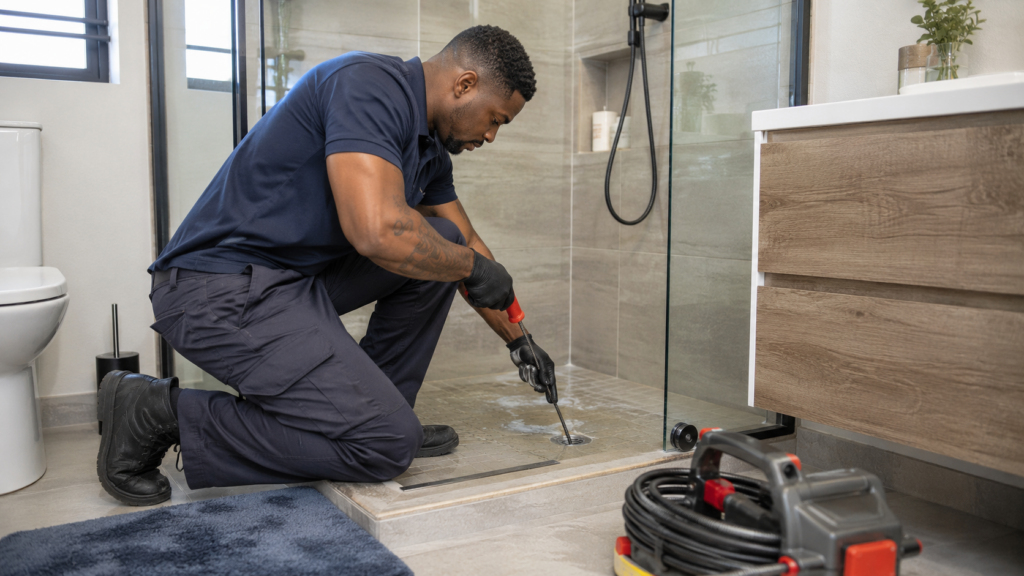
For a basin or shower, remove the plug and clear any hair or residue you can safely reach. A simple plunger can help with a minor blockage, provided there is enough water to create a seal. Cover the overflow opening on a basin with a damp cloth first, then use steady, controlled plunges rather than forceful movements.
A kitchen sink may respond to careful plunging after obvious food waste has been removed. Do not pour boiling water into a drain if you have PVC pipework, and avoid adding several DIY products together. Mixing drain chemicals can release harmful fumes or create a reaction that is dangerous for you and difficult for the plumber who later works on the pipe.
Chemical drain cleaners are also not always the quick fix they appear to be. They may damage older pipework, harm seals and fail to shift dense blockages such as roots, wipes or solid grease. If you have already used a chemical product, tell the plumber before work begins so they can take appropriate precautions.
When blocked drains need urgent help
Some situations should not wait for a convenient appointment. Call a qualified plumber or drainage specialist urgently if sewage is backing up into a toilet, shower, sink or floor drain. The same applies if wastewater is overflowing outside, there is a strong sewer smell inside the building, or water is spreading near electrical points.
Commercial properties should act quickly where blocked toilets or kitchen drains affect staff, customers or food-preparation areas. A restaurant, retail unit, office or rental property can face disruption and hygiene concerns long before the visible water damage becomes serious. Fast action helps protect the premises and reduces downtime.
You should also arrange an inspection if a drain keeps blocking after being cleared. A professional can assess whether the issue is a simple obstruction or a deeper fault. Depending on the pipe layout and suspected cause, they may use drain rods, high-pressure water jetting or a camera inspection to locate the problem accurately.
Why the cheapest quick fix is not always the best choice
Price matters, especially when an unexpected repair lands in the monthly budget. But a quote for clearing a drain should be clear about what is included. Ask whether call-out fees, labour, equipment, drain jetting, camera inspection and disposal of waste are included or charged separately.
A basic clearance may be entirely suitable for a one-off local blockage. If there are signs of roots, broken pipes or frequent backups, paying for an inspection can be better value than repeatedly paying for temporary clearing. The best option depends on the symptoms, the age of the property and whether the issue has happened before.
When comparing plumbers, provide useful details from the start: which drains are affected, when the issue began, whether wastewater has backed up, and whether the property is a house, flat, office or retail space. Photos of an overflowing external gully or affected area can also help a contractor understand the urgency before arriving.
How to prevent future drainage problems
Good drainage habits prevent many avoidable call-outs. In the kitchen, collect cooking oil and grease in a container and dispose of it with household waste once it has cooled. Use a sink strainer to catch food scraps, and avoid treating the sink as a disposal point for coffee grounds, rice, flour or fat.
In bathrooms, fit hair catchers in showers and clear them regularly. Only toilet paper and human waste should go into the toilet. Wet wipes, nappies, sanitary items, tissues and dental floss belong in a bin, even if a product label suggests otherwise.
Outside, clear leaves and debris from gullies before the rainy season and after heavy storms. If your property has mature trees near drainage routes, consider a periodic drainage inspection. This is particularly useful for older homes and properties with a history of recurring blocked drains.
For rental and commercial properties, a simple maintenance record is worthwhile. Note the location of past blockages, the work completed and any recommendations from the contractor. It helps you spot repeat problems, plan maintenance and give the next professional a clearer picture of what is happening.
When water is backing up or the cause is unclear, do not spend the day guessing at the pipework. With Profixer, you can post your blocked drain job free and connect with local plumbing professionals interested in quoting for the work. Describe the affected drains, symptoms and urgency clearly so contractors can respond with more relevant options.
Dealing with blocked drains early can help prevent wastewater damage, unpleasant odours and expensive emergency repairs. Compare the proposed work, availability and price before choosing a local plumber.
Severe blocked drains can create hygiene, property damage and electrical risks when wastewater begins spreading through the building.
GET BLOCKED DRAIN QUOTES Save this