

A shower that fades to a trickle halfway through, a tap that takes ages to fill a kettle, or a toilet cistern that refills slowly can turn an ordinary day into a frustration. If you are asking what causes low water pressure, the answer may be anything from a simple blocked tap aerator to a hidden leak or a wider supply issue.
The useful first step is to notice where and when the problem happens. Low pressure at one basin is usually a smaller, local issue. Weak flow throughout the house, flat, office or rental property needs a more careful check, particularly if it started suddenly.
Table of Contents
What causes low water pressure throughout a property?
When every cold tap, shower and appliance has poor flow, the cause is often on the main supply line or somewhere close to where water enters the property. It can also be linked to a storage tank, pressure pump or pressure-reducing valve where these are fitted.
A municipal supply interruption or reduced pressure
Water pressure can drop during municipal repairs, a burst main, planned maintenance, high local demand or a temporary supply interruption. This is especially noticeable in busy residential areas at peak times. If neighbours are dealing with the same issue, it is unlikely to be caused by your internal plumbing.
Check for local notices where available and ask a nearby neighbour before paying for an investigation. If the issue continues after supply has returned to normal, a plumber can assess the property-side pipework and fittings.
A partly closed stopcock or isolation valve
A main stopcock that is not fully open restricts the amount of water entering the building. This can happen after plumbing work, a move, an emergency shut-off or maintenance on a geyser. Individual isolation valves beneath basins, behind toilets or near appliances can cause the same problem at a single outlet.
Do not force an old, stiff valve. Corroded valves can snap or begin leaking when disturbed. A plumber can replace a faulty valve rather than leaving you with a bigger repair.
A leak on the supply pipe
A leak allows water to escape before it reaches your taps. Underground leaks are a common concern because they can remain out of sight while affecting pressure and increasing the water bill. Damp soil, unexpectedly green patches of lawn, wet paving, staining, a hissing sound near pipes, or a meter that keeps moving with all taps off can all point to a leak.
Not every pressure drop is a leak, but it is one cause that should not be ignored. Left unresolved, it can damage foundations, paving, walls and neighbouring areas of the property.
Faulty pressure-control equipment
When investigating what causes low water pressure throughout a property, pressure-reducing valves, booster pumps, storage tanks and filters should be checked alongside the incoming municipal supply.
Some properties have a pressure-reducing valve to protect pipes and appliances from excessive incoming pressure. Others rely on a booster pump, tank system or borehole set-up. If a valve fails, becomes clogged or is set incorrectly, the whole property may have weak flow. A pump with an electrical fault, blocked filter, worn components or air in the system can do the same.
These systems need the right diagnosis. Increasing pressure without checking the condition of pipes and fittings can create leaks or damage equipment, especially in older buildings.
Low pressure at one tap, shower or toilet
If the problem is limited to one fitting, the main water supply is usually not to blame. Mineral deposits, sand, rust and debris can build up in smaller components over time.
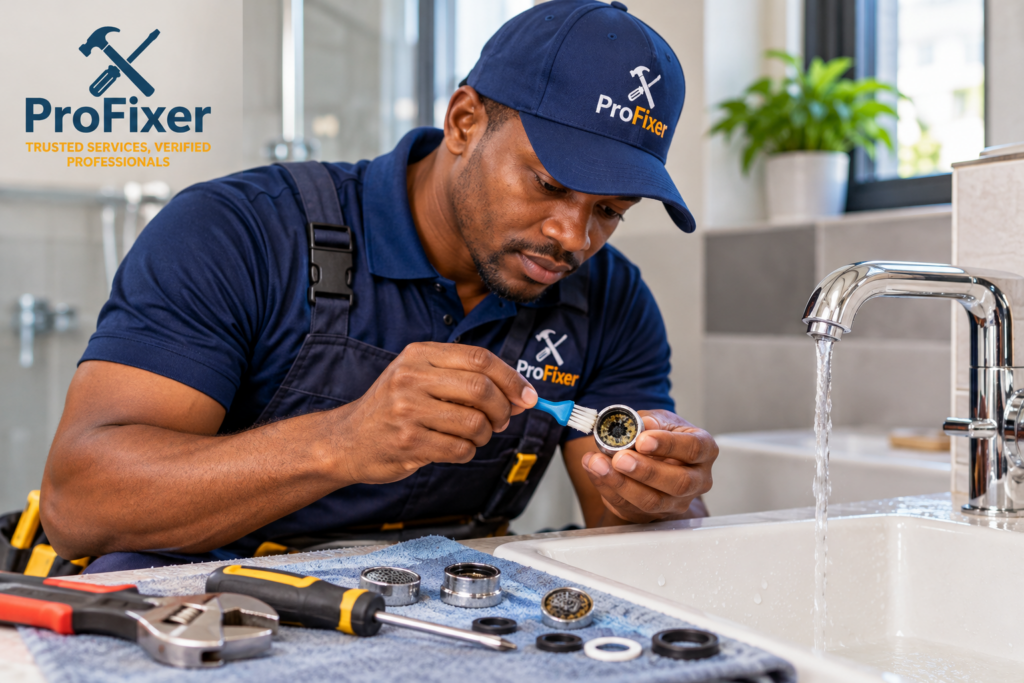
A tap aerator, the small mesh fitting at the end of many taps, is a frequent culprit. It can become blocked and reduce flow even when the pressure elsewhere is normal. Shower heads can clog in the same way, particularly in hard-water areas. Cleaning or replacing the affected fitting may solve the issue quickly.
Cartridge taps, mixer taps and toilet fill valves also have internal parts that wear out or trap debris. A shower mixer that delivers poor flow on both hot and cold settings may need servicing or replacement. If water is only weak at an outside tap, check whether its local valve is fully open and whether the tap itself is damaged.
Avoid poking sharp objects into tap fittings or dismantling concealed mixer valves without knowing how they go back together. Small seals and cartridges are easy to damage, and the wrong replacement part can leave the fitting dripping.
Why is hot water pressure lower than cold water pressure?
Poor pressure on the hot side only narrows the search considerably. It often means the problem lies between the geyser and the affected outlet, rather than with the incoming municipal supply.
Sediment can accumulate in a geyser and connected pipes. Older galvanised pipes may corrode internally, gradually narrowing until water struggles to pass through. A restricted valve on the geyser line, a failing tempering valve or a faulty heat-pump or solar water-heating connection can also reduce hot-water flow.
Because geysers operate under pressure and involve hot water, it is safer to arrange a qualified plumber for this type of fault. Do not tamper with safety valves, pressure-control valves or electrical connections. If you see water around the geyser, hear unusual banging, smell burning, or have no hot water at all, switch off the relevant power supply if it is safe to do so and get help promptly.
Quick checks before you call a plumber
You do not need to diagnose the repair yourself, but a few observations can help a contractor find the issue faster. Check whether cold and hot water are both affected, whether the problem is at one outlet or everywhere, and whether it started suddenly or developed gradually.
It also helps to note the following:
- whether neighbours have normal water pressure;
- whether the water meter moves when no water is being used;
- whether there are visible drips, damp patches or pooling water;
- whether pressure is worse at certain times of day; and
- whether recent plumbing work, renovations or municipal maintenance took place.
If a removable tap aerator or shower head is visibly dirty, you can clean it carefully and test the flow again. Turn off the tap before removing parts, keep the washer safe and avoid using harsh chemicals that could damage the finish. If cleaning does not change anything, the restriction may be further inside the fitting or pipework.
When low water pressure needs urgent attention
Low pressure is not always an emergency, but it should be treated urgently when it appears alongside signs of a leak, water damage or contaminated water. Contact a plumber promptly if the pressure drop is sudden and severe, if you can hear water running inside walls, if there is water near electrical points, or if the water is discoloured, has an unusual smell or contains visible grit.
Commercial premises and managed properties should act quickly too. Poor pressure can affect washrooms, kitchens, fire-safety equipment, cleaning routines and customer comfort. Recording when the fault began and which areas are affected gives the contractor a clearer starting point.
Getting the right repair without guesswork
Understanding what causes low water pressure helps you describe the symptoms more accurately, but proper testing is often needed before replacing valves, pumps or pipework.
The repair depends on the cause. A blocked aerator may be a small maintenance job, while a concealed leak could require leak detection and pipe repair. Replacing a worn valve or servicing a pressure pump also calls for different skills and pricing. That is why a clear description of the symptoms matters when requesting quotes.
With Profixer, you can post your plumbing problem free and connect with local plumbers interested in quoting for the work. Explain whether the pressure problem affects one outlet or the whole property, whether hot and cold water are affected, and whether you have noticed leaks, unusual noises or recent plumbing work so contractors can better understand the fault.
Low water pressure rarely improves on its own when it is caused by a failing valve, internal pipe corrosion or a hidden leak. Acting while the signs are still small can protect your water bill, your property and the everyday comfort of the people using it.
Knowing what causes low water pressure can help you tell the difference between a blocked fitting and a wider plumbing problem. If weak flow affects several outlets, appears suddenly or is accompanied by leaks, unusual noises or rising water bills, arrange a professional inspection before a small fault develops into a more expensive repair.
GET PLUMBER QUOTES