
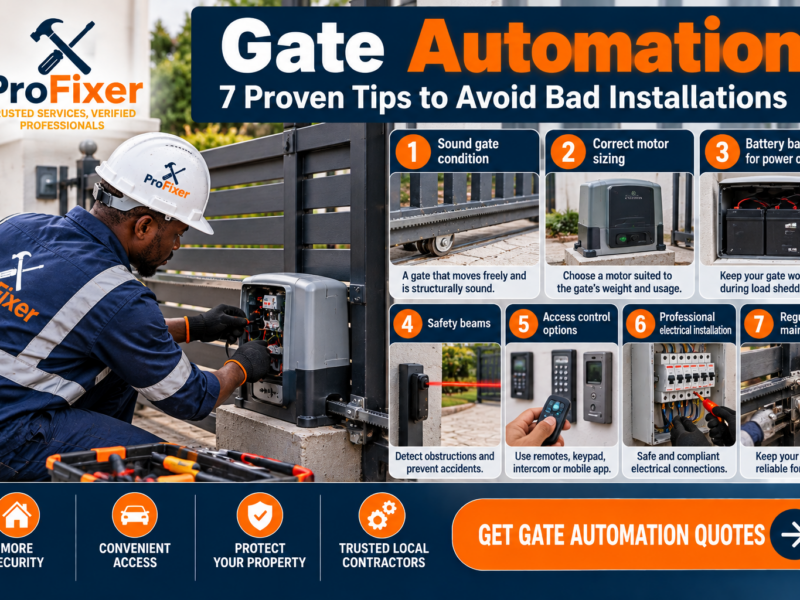
Gate Automation: 7 Proven Tips to Avoid Bad Installations
A gate that sticks, needs lifting by hand or refuses to open during load shedding is more than an inconvenience. It can delay your morning, frustrate tenants and leave a property less secure than it should be. Gate automation gives homes, complexes and business premises controlled vehicle access at the press of a remote, keypad or mobile app.
The right system depends on the type and weight of your gate, how often it is used, your security requirements and the condition of the existing structure. A good installation starts with these practical details, not simply choosing the cheapest motor.
Table of Contents
What gate automation can do for your property
An automated gate removes the need to leave your vehicle to open and close an entrance manually. That matters on busy roads, in bad weather and when arriving home after dark. For commercial sites, it can also help manage staff, visitor and delivery access without leaving an entrance unattended.
Most systems use a motor to move a sliding or swinging gate. The motor receives a signal from a remote control, keypad, intercom, access tag or compatible mobile phone-based system. Safety beams detect obstructions and tell the gate to stop or reverse, while battery backup keeps the system operating when the mains power is off.
Automation is useful, but it is not a replacement for a sound gate, good lighting, fencing or other security measures. If the gate frame is bent, the track is damaged or the hinges are worn, fitting a motor first can lead to repeated faults and unnecessary repair costs.
Sliding or swing gate automation?
The first choice is usually determined by how your gate opens and the available space around the entrance.
Sliding gate motors
Sliding gates move sideways along a track or cantilever system. They are a common choice for driveways with limited space behind the gate, as the gate does not swing into the driveway or pavement. They can work well for wider entrances and properties with sloping driveways, provided the track and wheels are correctly installed.
A sliding gate needs enough clear space along the fence line for the full gate to travel. The motor must also be matched to the gate’s weight and expected daily use. A heavy steel gate used dozens of times a day needs a more capable motor than a lightweight residential gate opened a few times each morning and evening.
Swing gate motors
Swing gates open inward or outward on hinges. They can suit properties where there is no room for a sliding gate to travel along a boundary wall. Single-leaf and double-leaf options are available, with motors mounted on the gate posts or underground in some higher-end installations.
The ground must be level enough for the gate to move freely, and there must be adequate clearance for the leaves to open. Outward-opening gates can create safety and access issues if they move towards a public pavement or road, so an installer should assess the layout before recommending a system.
The features worth paying for
Not every gate needs every available feature. The aim is reliable, safe access that suits how people use the property.
Battery backup is one of the most valuable additions for many South African properties. Without it, a motor may stop working during a power outage, leaving you to use the manual release. The size and condition of the battery affect how many cycles the gate can complete before power is restored, so ask what backup capacity is included.
Safety beams are also essential. They create an invisible line across the entrance and prevent the gate from closing onto a vehicle, person or pet. This is particularly important at homes with children, blocks of flats, schools and busy business premises.
Access control can be as simple as remotes for family members or staff. For properties with more frequent visitors, a keypad, GSM intercom, tag reader or video intercom can offer better control. A landlord or property manager may prefer a system that allows individual access credentials to be added or removed without collecting remotes from every tenant.
Other useful additions include a pedestrian gate lock, loop detectors for vehicles, warning lights and surge protection. These are not always necessary, but they can improve daily operation and protect the motor in areas prone to electrical surges.
What affects the cost of gate automation?
The cost is not only the motor. Your quote should account for the gate itself, structural repairs, electrical work, safety devices and the complexity of access control.
A straightforward replacement motor on an existing, well-maintained sliding gate is usually less expensive than automating a new gate from scratch. Costs rise when a gate needs welding, new rollers, a track, stronger posts, cabling from the distribution board or civil work to create a suitable foundation.
Usage also affects the equipment required. A private home may need a standard residential motor, while a block of flats, warehouse, office park or retail site may require a heavy-duty commercial unit designed for frequent cycles. Choosing a light-duty motor for a busy entrance may reduce the initial price but can result in early wear, downtime and higher maintenance costs.
When comparing quotes, check whether the price includes installation, battery backup, remotes, safety beams, electrical connections, programming and a warranty. A low quote can be misleading if key components have been left out.
Prepare your gate before installation
Reliable gate automation starts with a gate that moves freely and is correctly aligned. A motor should not be expected to compensate for damaged wheels, worn hinges, a bent frame or a poorly installed track.
Automation works best when the gate moves smoothly by hand. Before installation, the contractor should inspect the gate’s alignment, wheels, track, hinges, stops and supporting posts. A sliding gate that drags or catches places strain on the motor. A swing gate with loose hinges can move unevenly and fail to close correctly.
The installation area should also be secure and weather-resistant. Motors need firm mounting points, suitable cable routing and protection from standing water. Electrical connections should be completed safely by a qualified professional, especially where new power supplies, isolators or distribution-board work are required.
If you are building a new wall, driveway or gate, plan automation early. It is easier and more affordable to allow for conduits, power points, intercom cabling and motor foundations during construction than to break up finished paving later.
Gate automation safety and maintenance
Regular gate automation maintenance can also help identify weakening batteries, worn mechanical parts and alignment problems before they leave the entrance unusable or insecure.
An automated gate is powerful machinery, not just a convenience feature. It should be installed with correctly positioned safety devices and tested before use. Never rely on the motor’s force setting alone to protect people or vehicles. Safety beams, well-set travel limits and a properly maintained gate all play a part.
Keep remotes away from children, and make sure household members or staff know how to use the manual release in an emergency. If the motor has to be disengaged during an outage or fault, secure the gate again afterwards. A gate left unlocked can undermine the security the system was installed to provide.
Routine maintenance helps avoid call-outs at the worst possible time. Tracks should be kept clear of stones, leaves and dirt. Wheels, hinges and moving parts may need cleaning, adjustment or lubrication where appropriate. The battery should be checked periodically, especially if the gate struggles during outages. Do not force a gate that is moving slowly or making unusual noises – arrange an inspection before a minor problem damages the motor.
Choosing a gate automation installer
A reliable installer will inspect the site before giving a final recommendation. They should ask about the gate type, approximate weight, daily use, power supply, backup requirements and how you want visitors to gain access. They should also be clear about what is included in the quote and what may require additional work.
It is sensible to compare more than one quote, particularly where the job involves a new gate, electrical work or access control. Look beyond the headline price. Consider the proposed motor capacity, safety equipment, warranty terms, expected installation time and whether the contractor can provide future repairs or maintenance.
With Profixer, you can post your gate automation project free and connect with local contractors interested in quoting for the work. Explain whether you have a sliding or swing gate, whether you need a new motor or repair, how frequently the gate is used, and whether you require battery backup, safety beams, intercoms or access control so contractors can better understand the job.
A well-chosen automated gate should make arriving and leaving feel simple, while giving you better control over who enters your property. Start with a gate that is structurally sound, choose equipment suited to real usage, and use an experienced local installer who is prepared to assess the full job rather than only fit a motor.
GET GATE AUTOMATION QUOTESGood gate automation should make access easier without compromising safety or reliability. Start with a structurally sound gate, choose a motor suited to its weight and daily usage, include appropriate safety and backup features, and compare experienced local installers who assess the complete entrance rather than simply fitting a motor.