
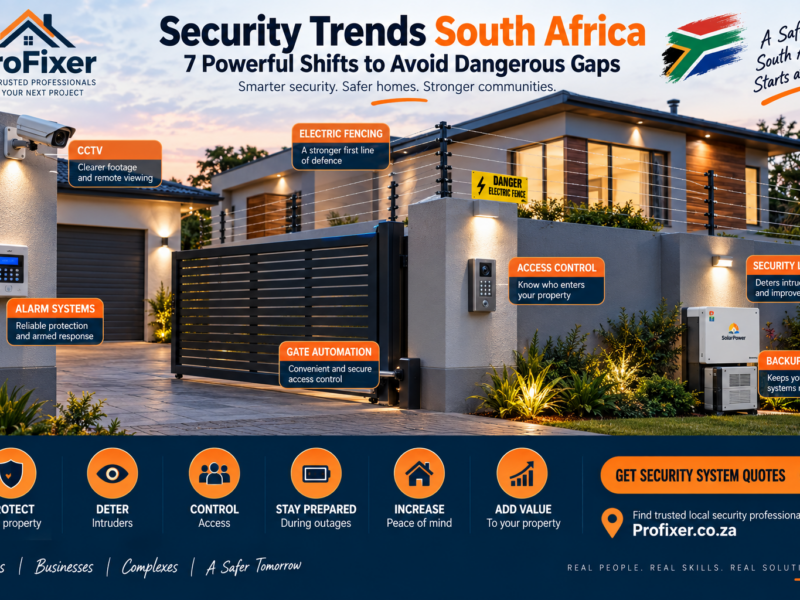
Security Trends South Africa: 7 Powerful Shifts to Avoid Dangerous Gaps
A gate that will not close properly, a camera with a blind spot or an alarm that fails during a power cut can turn a small weakness into a serious concern. The latest security trends South Africa property owners are considering are therefore less about buying the newest device and more about creating dependable protection that works when it is needed.
For homeowners, landlords, body corporates and businesses, the right approach depends on the property, surrounding risks, budget and how quickly help can respond. A townhouse complex needs different measures from a freestanding home, warehouse or retail premises. The common thread is a move towards layered security: combining physical barriers, detection, visibility and a clear response plan.
Table of Contents
Security trends moving beyond standalone alarms
Traditional alarm systems remain a practical starting point, especially when they are professionally installed and linked to a reliable armed response provider. What is changing is how alarm systems work with other equipment. Instead of separate devices that are difficult to manage, property owners increasingly want alarms, cameras, electric fencing, gates and access control to support one another.
For example, an outdoor beam can trigger a notification and direct a camera towards the affected area. A gate motor can be paired with an intercom or access-control system, giving residents or staff a safer way to confirm who is entering. This does not mean every property needs an expensive fully integrated system. It means planning installations so that future upgrades remain possible.
A good security installer should assess entry points, sight lines, lighting, electrical supply and daily use of the property before recommending equipment. Installing more devices without addressing weak fencing, poor gate locks or dark corners can waste money.
CCTV is becoming more useful, not just more visible
Visible CCTV still acts as a deterrent, but customers now expect cameras to provide clear, usable footage. Higher-resolution cameras, better night vision and remote viewing on a mobile phone have made it easier to check a property while at work, travelling or managing a rental from another area.
The practical value lies in camera placement. A camera mounted too high may show movement but not provide a useful view of a face, vehicle or number plate. Glare from security lights, trees moving in the wind and poor Wi-Fi coverage can also affect results. An experienced CCTV installer will identify the key routes into and around the property, then position cameras to cover them without creating unnecessary blind spots.
Smart camera features can flag people, vehicles or movement in selected zones. They can reduce the number of irrelevant alerts, but they are not perfect. Rain, animals, shadows and busy pavements can still trigger notifications. Use alerts to support awareness, rather than assuming a mobile phone notification is a substitute for an alarm response plan.
Privacy also matters. Cameras should focus on your own boundary, entrances and shared areas where appropriate. For complexes and commercial sites, clear policies on who can view recordings, how long footage is retained and how it is shared can prevent disputes.
Power resilience is now part of property security
One of the most important security trends South Africa property owners should consider is resilience during power outages. Cameras, alarms, electric fencing, routers, access control and automated gates all depend on reliable power to remain useful.
South Africans know that security equipment is only as useful as its power supply. Load shedding, outages, damaged cables and flat batteries can leave gates, electric fences, routers and cameras vulnerable at the same time.
This has pushed backup power higher up the list of security priorities. Battery backups for alarm panels and gate motors are common, while solar and inverter systems can help keep selected security circuits running for longer. The right solution depends on how much equipment must remain active, how long outages usually last and whether the property has enough safe space for batteries and related equipment.
It is worth checking the whole chain, not just the main alarm. A camera may have backup power, but remote viewing will not work if the router is off. An electric fence may be powered, but an ageing battery or damaged energiser can reduce its effectiveness. Regular testing is the difference between having backup equipment and knowing it will work.
For commercial properties, power planning may include emergency lighting, controlled access points and generator integration. These systems need proper electrical installation and maintenance. Cutting corners on wiring or using unsuitable batteries can create both security and safety risks.
Better perimeter protection and controlled entry
Many incidents begin at the boundary of a property, which is why gates, fencing, wall topping, intercoms and outdoor lighting remain central to modern security plans. The trend is towards making entry more difficult while keeping everyday access convenient for residents, tenants, visitors and deliveries.
Automated gates are widely used, but their reliability depends on the motor, track or hinges, remote controls, safety features and backup power. A damaged sliding gate or unsecured pedestrian gate can undermine a much larger security investment. Regular gate repairs and maintenance are often more valuable than replacing equipment that is still suitable.
Access control is also expanding beyond office buildings. Keypads, tags, remotes and app-based systems can help landlords, small businesses and complexes manage who enters a property. They are especially useful where keys are regularly lost, staff change frequently or several contractors need temporary access.
There is a trade-off. More advanced access control can improve records and convenience, but it also needs reliable administration. Someone must remove old users, change codes when necessary and keep backup access options available during faults or outages.
Lighting is a simple trend with a strong return
Security lighting is not new, but it is often overlooked. Well-placed exterior lighting makes entrances, driveways, walkways and boundary areas easier to monitor. It can also make residents and visitors feel safer when arriving after dark.
Motion sensors can save electricity and draw attention to movement, while fixed lighting may suit busy entrances and commercial yards. Avoid aiming bright lights directly at neighbours or cameras, as this can cause glare and reduce visibility. A contractor can help position fittings for useful coverage rather than simply adding more lights.
Security trends for rental and commercial properties
Landlords and property managers are increasingly looking for systems that protect a property without making it difficult to manage. Remote gate access, camera viewing and alarm notifications can help when the owner is not on site. However, tenants need clear information about what equipment is installed, who maintains it and what happens when a fault occurs.
For shops, offices, workshops and warehouses, the focus is often on access management, staff safety and protecting stock or equipment after hours. A small retail business may benefit most from visible cameras, panic buttons, secure shutters and reliable lighting. A larger site may need zone-based CCTV, controlled vehicle access, perimeter beams and a monitored alarm system.
The best solution is rarely a single product. It is a plan based on where people enter, where valuable items are kept, when the premises are unattended and how a response will be handled. Security needs can also change after a renovation, new tenant, layout change or expansion of operating hours.
Choosing the right local security contractor
Understanding security trends South Africa is useful, but the right installation still depends on the risks, layout and daily operation of the individual property rather than simply following the latest technology.
Security work often involves several trades. A CCTV installation may require electrical work, network setup and suitable mounting points. A new gate can involve steelwork, automation and access control. An electric fence may need repairs to the fence line as well as the energiser itself.

Ask prospective contractors what they recommend for your property and why. A useful quote should explain the equipment, installation scope, power requirements, warranty terms and any ongoing maintenance needs. Compare like for like: the lowest price may exclude cabling, backup batteries, configuration or call-out support.
It is also sensible to ask how the system will be demonstrated after installation. You should know how to arm and disarm it, view footage, test backups, add or remove users, and request help when something goes wrong. Security equipment that nobody understands can quickly become equipment that nobody uses.
With Profixer, you can post your security project free and connect with local security contractors interested in quoting for the work. Whether you need CCTV, an alarm system, electric fencing, access control, gate automation or security lighting, include clear details and photographs so contractors can better understand the property and proposed scope.
The strongest security upgrade is the one that fits your property, remains easy to use and is maintained before a fault becomes an emergency. Start with the risks you can see, ask the right questions, and choose qualified local help that gives you confidence in the work.
The most useful security trends South Africa property owners can follow are the ones that improve reliability, visibility, controlled access and response without making the system unnecessarily complicated. Start with the weaknesses around your own property, plan for power outages and future expansion, and compare qualified local contractors before investing in new equipment.
GET SECURITY SYSTEM QUOTES