
Commercial Property Maintenance Checklist: 7 Essential Checks
A failed air conditioner in a busy office, a loose handrail outside a shop, or a slow leak above a tenant’s ceiling can quickly become more than a small repair. It can interrupt trading, create a safety risk and lead to expensive damage. A commercial property maintenance checklist gives property managers and business owners a clear way to spot issues early, schedule the right work and keep premises operating properly.
The best checklist is not a stack of paperwork that nobody reviews. It is a working plan based on your building, how it is used and the risks that matter most. A retail centre, warehouse, office block and rental complex will not need exactly the same checks. However, every commercial site benefits from clear responsibilities, recorded inspections and reliable local contractors when a problem needs specialist attention.
Table of Contents
How to Build a Commercial Property Maintenance Checklist
Start by dividing the property into practical zones: the exterior, common areas, plant rooms, offices or units, plumbing and electrical systems, security equipment, and outdoor spaces. This makes inspections easier to assign and helps ensure smaller areas are not missed.
Next, give each task a frequency. Some faults need attention immediately, while others can be checked weekly, monthly or seasonally. Keep the schedule realistic. If your facilities team cannot complete every item daily, focus daily checks on safety, access, water leaks, alarms and anything that could disrupt occupants or customers.
Record what was inspected, what was found, who is responsible and the deadline for repair. Photographs are useful for cracked paving, roof damage, damp, faulty gates and other visible issues. Good records also help when you need to explain costs to owners, tenants or insurers.
A workable maintenance programme usually follows this rhythm:
- Daily checks cover hazards, access points, lighting in public areas, leaks, toilets and visible damage.
- Weekly checks look at waste areas, grounds, gates, basic security equipment and recurring plumbing or electrical faults.
- Monthly checks include fire equipment, air conditioning filters, drainage, emergency lighting and building fabric.
- Quarterly and annual inspections cover specialist systems, roof condition, electrical testing, pest control, deep cleaning and planned repairs.
The timing may change depending on the property. A restaurant or medical practice, for example, may require more frequent cleaning, plumbing and ventilation checks than a low-traffic office.
Safety, Access and Building Condition
Safety issues should be at the top of every inspection. Walk the site as a visitor would, from the car park or pavement through to reception, corridors, stairwells and shared facilities. Look for trip hazards, damaged paving, loose tiles, broken handrails, poor lighting and blocked escape routes. Deal with these promptly rather than waiting for the next planned maintenance visit.
Check doors, locks, roller shutters, gates and access-control points. A sticking fire door or unreliable automated gate can affect safety and security at the same time. Test that entrance doors close correctly, hinges are secure and emergency exits open as intended. Where a lock, gate motor or shutter needs repair, use a specialist who can assess whether a temporary repair is enough or whether replacement parts will save repeat call-out costs.
The exterior deserves regular attention, particularly after heavy rain, wind or storms. Inspect roofs, gutters, downpipes, flashing, exterior paintwork, walls and signage for damage. Clear leaves and debris from drainage points before they cause water to overflow into ceilings or foundations. Small roof defects are usually cheaper to repair before the next rainy period than after water has reached electrical fittings, stock or tenant spaces.
Include These Building Checks
Your checklist should cover cracks that appear to be spreading, damp patches, peeling paint, damaged ceilings, broken windows, worn floor surfaces and signs of pests. Note the exact location and whether the issue is getting worse. A cosmetic crack may only need monitoring, but a crack near a doorway, column or retaining wall needs a professional assessment.
Do not overlook car parks and loading areas. Faded markings, potholes, poor exterior lighting and damaged bollards can create liability risks. Warehouses and industrial premises may also need regular checks on loading bays, dock levellers, safety barriers and high-traffic flooring.
Plumbing, Drainage and Electrical Maintenance
Water damage is one of the most disruptive commercial property problems because the source is not always obvious. During routine inspections, check taps, toilets, basins, kitchen areas, geysers, visible pipework and ceiling voids for drips, corrosion or moisture. Ask cleaners and tenants to report slow drains, low water pressure and toilets that keep running. These are often early warnings of a larger plumbing issue.
Inspect drains, grease traps where relevant, stormwater channels and manholes for blockages or odours. Drainage maintenance is especially valuable before periods of heavy rainfall. If water pools near a building, do not treat it as only a landscaping issue. It may indicate poor grading, blocked drainage or a damaged pipe below ground.
Electrical faults require a more cautious approach. Staff can check for flickering lights, damaged plugs, loose faceplates, tripping circuits and overheating equipment, but repair work and testing should be handled by a qualified electrician. Keep an eye on distribution boards, emergency lighting, backup power equipment and exterior lights. A dark walkway or failed security light can affect both customer confidence and site safety.
For properties with generators, solar systems or battery backup, schedule servicing according to the installer’s recommendations. These systems can reduce disruption during power outages, but only if batteries, inverters, changeover equipment and connections are properly maintained.
Fire Protection, Security and Compliance
Fire and security systems should not be checked only after an incident. Confirm that extinguishers are visible, accessible and within their service dates. Check fire signage, escape routes, alarm panels, smoke detectors and emergency lights. Larger or higher-risk sites may have additional legal, insurance or industry requirements, so use appropriately qualified service providers and retain their certificates and reports.
Security maintenance should include CCTV cameras, alarm systems, intercoms, electric fencing, perimeter lighting, gates and access-control readers. Clean camera lenses and check whether trees, signage or new structures are blocking their view. Review footage quality at night as well as during the day. A camera that records a clear image in daylight may be ineffective after dark.
There is a balance to strike with compliance work. The cheapest quote is not always the best option if it excludes testing, certification, replacement parts or follow-up support. When comparing quotes, ask what is included, whether call-out charges apply and what documentation you will receive after the job is complete.
Cleaning, Grounds and Shared Areas
Clean premises protect the building as well as its appearance. Set standards for common-area cleaning, waste removal, washrooms, windows, carpets, kitchens and high-touch surfaces. In multi-tenant properties, be clear about where the landlord’s responsibility ends and the tenant’s begins. Unclear expectations often lead to neglected corridors, overflowing bins or disputes over repair costs.
Outdoor maintenance should cover lawns, trees, hedges, irrigation, walkways and refuse areas. Trim vegetation away from buildings, boundary walls and security cameras. Check for branches near power lines, roots lifting paving and irrigation leaks that are wasting water or causing damp around foundations.
Air conditioning and ventilation also affect occupant comfort and operating costs. Dirty filters, blocked drains and poorly maintained units can lead to odours, water leaks and poor indoor air quality. Arrange routine servicing before peak heating or cooling periods, especially in customer-facing premises where an uncomfortable environment can affect business.
Turn Findings Into Action
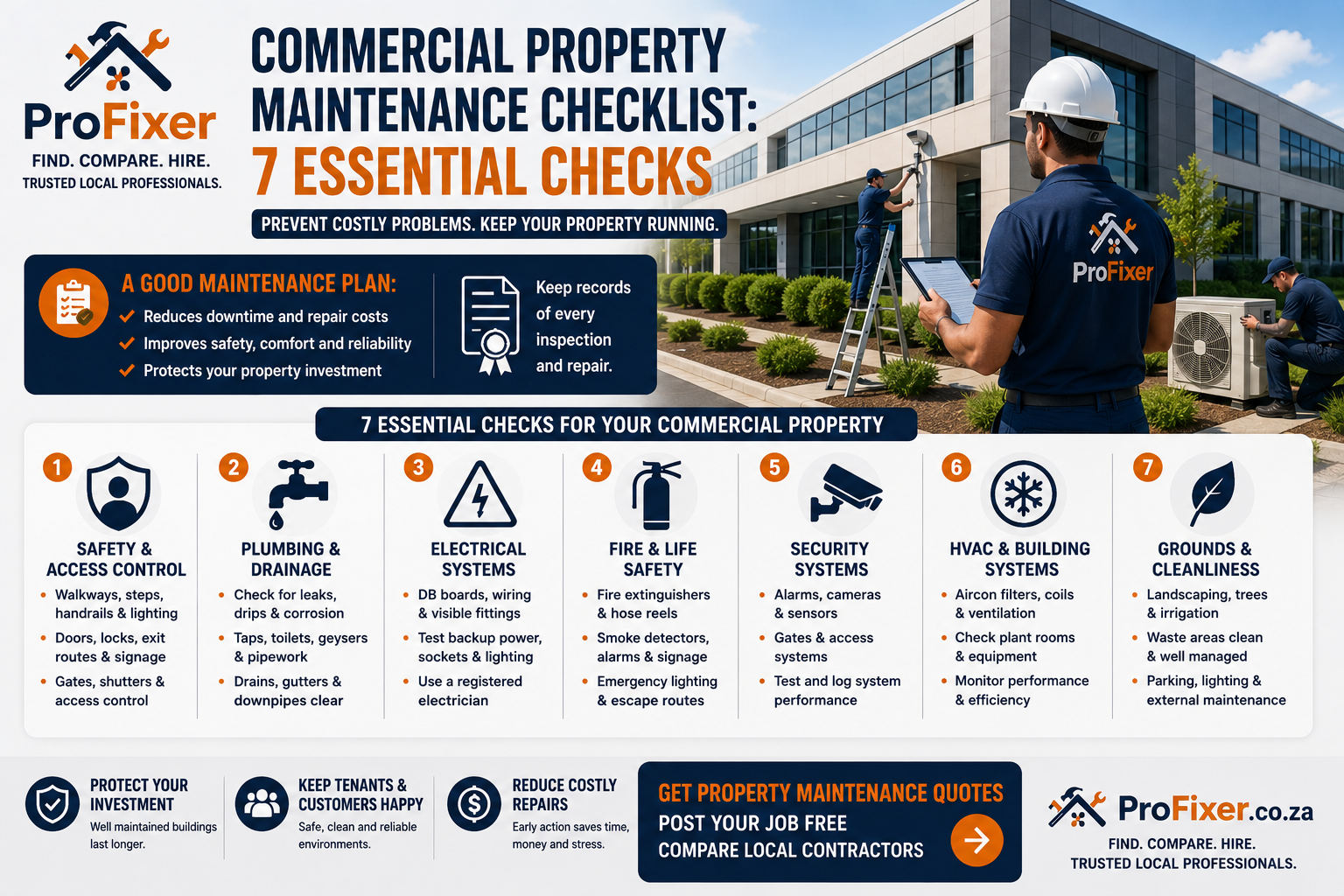
A practical commercial property maintenance checklist should turn every inspection finding into a clear action, responsible person and realistic completion date.
A checklist only adds value when each issue has an owner and a deadline. Classify faults as urgent, planned or monitor-only. Urgent items include exposed wiring, active leaks, failed fire equipment, insecure access points and hazards that could injure someone. Planned work includes repainting, gutter cleaning, resealing paving and servicing equipment that is still operating but due for attention.
For larger repairs, get a clear scope of work before comparing prices. State the property location, access restrictions, photos, preferred timing and whether the contractor must work around tenants or trading hours. This gives you more useful quotes and reduces the chance of unexpected extras later.
If you need help finding the right professional, ProFixer can connect you with local contractors so you can compare up to three free quotes for maintenance, repairs, cleaning, security or specialist work. The right maintenance partner should communicate clearly, arrive when agreed and provide a scope that makes it easy to approve the job.
A well-kept commercial property does not happen through one major annual project. It comes from noticing the small faults, acting before they spread and having dependable people ready when the job calls for specialist skills.
GET PROPERTY MAINTENANCE QUOTESWith Profixer, property managers and business owners can post a commercial maintenance job free and connect with local contractors interested in quoting for the work. Compare the proposed scope, availability, maintenance approach, documentation and price before choosing a provider.