
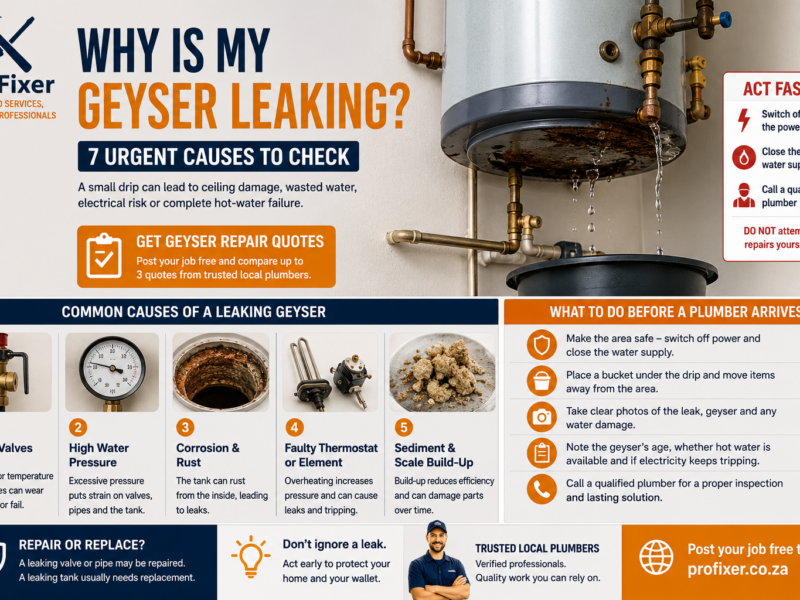
Why Is My Geyser Leaking? 7 Urgent Causes to Check
A wet patch beneath a geyser is never something to ignore. If you are asking, why is my geyser leaking, act early: a small drip can turn into ceiling damage, wasted water, electrical risk, or a complete hot-water failure. The right next step depends on exactly where the water is coming from.
Start by switching off the geyser at the electrical isolator or distribution board if water is close to electrical connections. Then close the cold-water supply valve if the leak is steady or worsening. Avoid removing covers, loosening valves, or working on live electrical components yourself. A qualified plumber can identify the source quickly and advise whether a repair is safe or replacement is the better value.
Table of Contents
Why Is My Geyser Leaking? Start With the Leak Location
Water does not always come from the geyser tank itself. It can travel along pipes, collect around fittings, or drip from the overflow pipe outside. Dry the area carefully, then look for fresh water after a short period. The location gives a plumber useful clues and can help you explain the problem when requesting quotes.
A leak from a pipe or fitting above the geyser may be a relatively contained plumbing repair. Water emerging from the body of the cylinder, however, can indicate internal corrosion and is usually more serious. If your geyser is installed in the roof space, check the ceiling below for stains, sagging boards, bubbling paint, or a musty smell. These signs often mean the leak has been present longer than expected.
A dripping overflow pipe
The overflow pipe is designed to release water when pressure or temperature becomes excessive. Occasional discharge while the geyser heats can happen, but constant dripping is not normal. Common causes include a faulty pressure control valve, a failing temperature and pressure safety valve, excessive incoming water pressure, or an expansion issue.
Do not block or cap an overflow pipe to stop the water. It is a safety outlet, not an inconvenience to be sealed. A plumber can test the valves, assess water pressure, and replace the faulty component where needed.
Water around the inlet or outlet pipes
Leaks around the cold-water inlet, hot-water outlet, vacuum breakers, or nearby joints can result from worn seals, loose connections, corrosion, or ageing pipework. These repairs may not require a new geyser, but they still need proper attention. Overtightening a corroded fitting can make the problem worse or damage the pipe.
If the pipework is concealed above a ceiling, arrange an inspection promptly. Even a slow leak can soak insulation and timber before it becomes visible in the room below.
Water from the geyser’s casing or bottom
Water leaking from the cylinder itself is often the clearest warning sign of a damaged tank. Over time, sediment, mineral build-up and corrosion can weaken the inner lining. Once the tank has rusted through, patching the outside rarely provides a dependable long-term repair.
A plumber will check whether the leak is truly from the tank rather than a valve above it. If the cylinder has failed, geyser replacement is normally the practical option. The contractor can also assess the drip tray, safety valves and connections so the new installation is properly protected.
The Most Common Causes of a Leaking Geyser
If you are still asking why is my geyser leaking, the answer is often found in one of four areas: failed valves, excessive pressure, damaged pipework or corrosion inside the cylinder.
Geysers work under heat and pressure, so several parts must operate correctly at the same time. The cause is not always visible, particularly when the unit sits in a ceiling void or cupboard.
Failed safety or pressure valves are among the most common reasons for ongoing dripping. Valves can wear out, become blocked by debris, or struggle when household water pressure is too high. Replacing a valve is often more affordable than replacing the geyser, provided the tank remains sound.
Excessive water pressure places unnecessary strain on valves, pipes and the cylinder. This can be more noticeable at certain times of day. A plumber may recommend testing the pressure and fitting or servicing the correct pressure-reducing components.
Corrosion inside the tank is more likely as a geyser ages. The sacrificial anode is designed to corrode before the tank does, but it has a limited lifespan. In some cases, replacing the anode and servicing the system can extend the geyser’s life. If corrosion has already created a hole in the tank, replacement is usually unavoidable.
Sediment and scale build-up can also contribute to overheating, reduced efficiency and early component failure. This is particularly relevant where water contains more minerals. A noisy geyser, inconsistent hot water, or higher electricity use alongside a leak deserves a professional assessment.
A faulty thermostat or element can cause overheating, which increases pressure inside the system. You may notice water that is unusually hot, a tripping circuit breaker, or steam around the outlet. Switch off the electricity and call a qualified professional without delay. Electrical and plumbing faults can overlap at a geyser, so the repair must be handled safely.
What to Do Before a Plumber Arrives
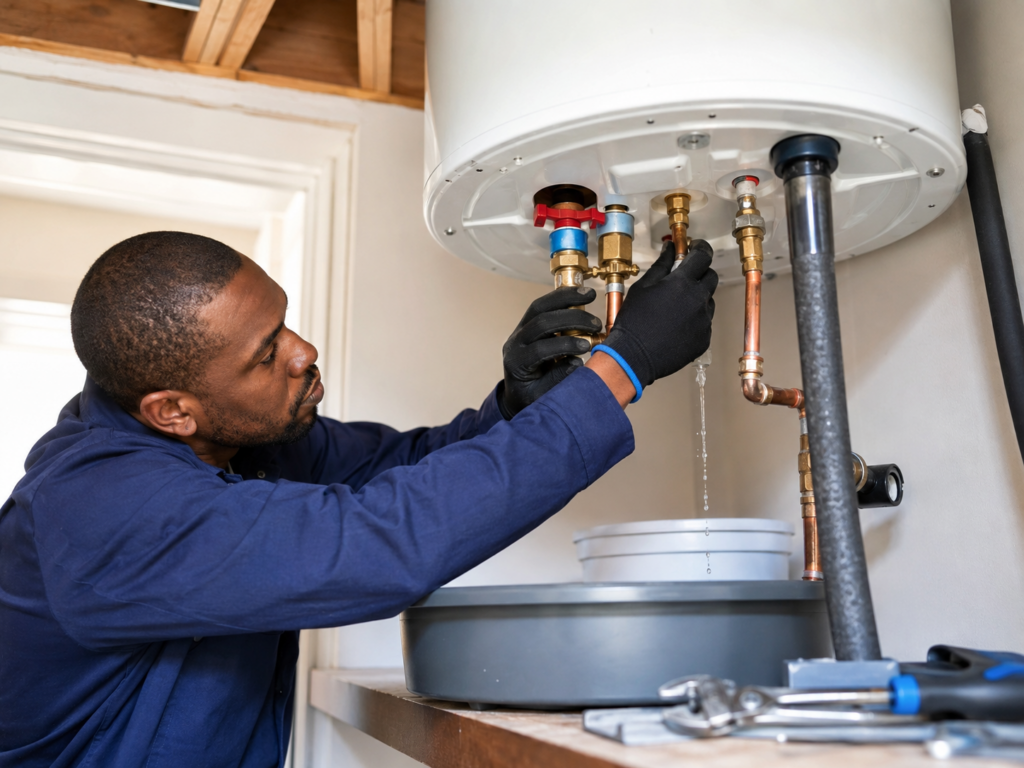
Once you have made the area safe, take a few practical steps that can limit damage and speed up diagnosis. Place a bucket beneath an accessible drip, but do not rely on it as a permanent solution. Move stored items, furniture and electronics away from the affected area. If water has reached a ceiling, avoid standing beneath a bulging section because wet ceiling boards can collapse.
Take clear photographs of the leak, the geyser, any water damage, and the outside overflow pipe. Note whether the dripping is constant or only happens while the water heats. Also mention the geyser’s approximate age, whether hot water is still available, and whether your electricity keeps tripping. These details make it easier for a contractor to arrive prepared.
For tenants, report the leak to your landlord or managing agent in writing as soon as possible. For landlords and property managers, a fast response protects the property and helps prevent a small maintenance call from becoming an insurance claim.
Repair or Replace: Which Option Makes Sense?
Understanding why is my geyser leaking is the first step in deciding whether a simple component repair is enough or whether the cylinder has reached the end of its useful life.
The answer depends on the source of the leak, the age of the geyser, and the condition of its components. A leaking valve, pipe joint or pressure-control device can often be repaired at a sensible cost. A cylinder leaking through its casing is different: spending money on repeated temporary fixes may delay, rather than prevent, replacement.
Ask the plumber to explain the fault and quote separately for repair and replacement where both are possible. Compare the expected lifespan of the repair, warranty terms, labour, replacement parts and any work needed to repair ceilings or pipework. The cheapest quote is not always the lowest overall cost if it leaves the underlying pressure or corrosion problem unresolved.
For a replacement, confirm the geyser size suits the household or premises. A larger unit may support higher demand, but it can cost more to buy and heat. An installer can also advise on placement, drip trays, insulation, compliant valves, and whether a heat pump or solar hot-water option may suit your longer-term running costs.
When a Leaking Geyser Is an Emergency
Call for urgent help if water is pouring from the geyser or ceiling, if the ceiling is sagging, if electrical circuits are tripping, or if you smell burning near the unit. The same applies if the water is extremely hot or steam is visible. Turn off power to the geyser only if it is safe to do so, isolate the water supply where possible, and keep people away from the area.
A slow drip is less dramatic, but it should still be booked quickly. Water damage develops quietly in roof spaces, cupboards and wall cavities. Waiting for the geyser to fail completely can leave a home, flat, shop or office without hot water at the worst possible time.
Find the Right Help Without Guesswork
A leaking geyser needs a qualified plumber who can inspect the full system, not just stop the visible drip. With Profixer, you can post your geyser repair job free and connect with local plumbers interested in quoting for the work. Describe where the water is coming from, add photographs where possible and state whether the issue is urgent.
The best time to deal with a geyser leak is while it is still a manageable repair. Make the area safe, arrange a proper inspection, and choose a solution that protects both your hot water supply and your property.
If you are wondering why is my geyser leaking, do not wait for the problem to get worse. Make the area safe, arrange a proper inspection and compare local plumber quotes before choosing the repair or replacement option that best protects your property.
GET GEYSER REPAIR QUOTES