
Find Trusted Paving Contractors Near You

Professionally installed paving can improve access, drainage, appearance and the overall value of a property. Whether you need a new driveway, patio, walkway, pool surround or commercial parking area, experienced paving contractors can prepare the ground correctly and install a durable surface suited to the expected traffic and conditions.
If you are searching for paving contractors near me or paving installers near me, ProFixer makes it easier to connect with local specialists across South Africa. Post your paving job free and compare up to three no-obligation quotes from contractors serving your area.
Describe the area, upload photographs and explain the type of paving you prefer. You can then compare ground preparation, paving materials, drainage, timeframe, warranties and the total quoted price before choosing a suitable contractor.
Table of Contents
Why Hire Professional Paving Contractors?
Good paving depends on much more than laying bricks or slabs on the ground. The soil must be excavated to the correct depth, compacted properly and prepared with a stable base. Poor preparation can cause paving to sink, shift, crack or collect water.
Professional paving contractors may assist with:
- measuring and planning the area
- removing old paving or soil
- excavating to the correct depth
- compacting the ground
- installing suitable sub-base material
- creating drainage falls
- laying bricks, blocks or slabs
- installing edging and kerbs
- cutting around drains and structures
- compacting and filling paving joints
- removing rubble and cleaning the site
A reliable contractor should explain the full ground-preparation process rather than quoting only for the visible paving surface.
How to Find Paving Installers Near Me
Searching for paving installers near me, paving contractors near me or paving companies near me can produce many options, but quotations may differ significantly depending on the amount of ground preparation, paving materials, drainage and edging included.
When requesting paving quotes, provide:
- your suburb, town or city
- the type of property
- the approximate size of the area
- the intended use of the paving
- photographs of the existing ground
- whether old paving must be removed
- the type and colour of paving preferred
- known drainage problems
- access for vehicles and machinery
- your preferred completion date
Clear information helps local paving contractors determine whether they can provide an initial estimate or need to inspect the site first.
ProFixer helps homeowners, landlords, property managers and businesses find paving contractors in towns and cities across South Africa. Include your suburb, town or city when posting your paving job so contractors serving your area can determine whether they are available to assist.
Driveway Paving Contractors
Professional driveway paving contractors can install new driveways, extensions, parking areas and entrances designed to withstand regular vehicle traffic. Proper excavation, compaction, drainage and edge restraint are essential because driveway paving carries much heavier loads than patios or pedestrian paths.
Driveway paving projects may include:
- new residential driveways
- driveway extensions
- parking bays
- entrance paving
- vehicle turning areas
- carport floors
- garage approach paving
- shared complex driveways
The contractor should assess the soil, vehicle loads, slope and drainage before recommending the base depth and paving type.
Preparing the Base for Driveway Paving
The strength of a driveway depends largely on what is beneath the paving. A thin or poorly compacted base may allow paving blocks to move under vehicle weight.
Driveway preparation may include:
- removing topsoil and organic material
- excavating to the required depth
- compacting the natural ground
- installing suitable sub-base material
- compacting the base in layers
- adding a bedding layer
- creating falls towards drainage points
- installing strong edge restraints
Ask the contractor to specify the excavation depth, base material and compaction method in the quotation.
Patio Paving Contractors
Professional patio paving contractors can create outdoor areas for seating, dining, entertaining and braai facilities.
Patio paving may be installed around:
- covered patios
- braai areas
- outdoor kitchens
- pergolas
- garden seating areas
- entertainment spaces
- verandas
- courtyards
Outdoor paving should have suitable drainage and enough slope to prevent rainwater from flowing towards doors or walls.
Walkways and Garden Paths
Paved walkways can provide safer and cleaner access around a property while protecting gardens and lawns from regular foot traffic.
Walkway paving may be used for:
- paths from gates to entrances
- side passages
- garden paths
- routes to washing lines
- paths between buildings
- access around pools
- routes to outbuildings
- commercial pedestrian areas
The contractor should consider the path width, slope, edging and how the paving will connect with steps, doors and existing surfaces.
Pool-Surround Paving
Paving around a swimming pool should provide suitable grip, drainage and resistance to moisture, sunlight and pool chemicals.
Pool-surround paving considerations include:
- slip resistance
- surface temperature in sunlight
- drainage away from the pool
- movement joints
- safe edging around the pool
- compatibility with coping
- resistance to staining
- ease of cleaning
Ask whether the contractor has experience working near swimming pools and protecting the pool structure during installation. For work involving the swimming pool itself, you can also find contractors through our pool installation and repair services page.
Courtyard Paving
Courtyards can be improved with paving that creates a practical, low-maintenance surface between buildings or garden areas.
Courtyard paving may include:
- removing old concrete or paving
- improving drainage
- installing decorative patterns
- creating planter borders
- adding pathways
- installing paving around drains
- matching existing buildings
Small enclosed courtyards require careful drainage because water may have limited routes to escape.
Brick Paving Services
Professional brick paving services can be used for driveways, patios, paths, parking areas and commercial entrances.
Common paving options may include:
- concrete paving blocks
- clay bricks
- interlocking pavers
- bevelled paving blocks
- cobble-style pavers
- large concrete slabs
- textured paving
- permeable paving systems
The contractor should explain which products are suitable for vehicles, pedestrians, pool areas or decorative use.
Concrete Block Paving
Concrete paving blocks are commonly used because they are available in different shapes, colours and strengths.
Concrete block paving may be suitable for:
- residential driveways
- parking bays
- patios
- walkways
- courtyards
- commercial entrances
- complex common areas
Ask about the block strength, thickness, colour variation and whether replacement blocks will remain available in the future.
Clay Brick Paving
Clay paving bricks can provide a traditional appearance and may retain their natural colour well over time.
Clay paving may be used for:
- driveways
- entrance paths
- patios
- garden walkways
- courtyards
- heritage-style properties
Installation requirements will depend on the product, expected load and ground conditions.
Cobble Paving
Cobble-style paving can create a decorative finish for entrances, driveways and outdoor entertainment areas.
Cobble paving may be suitable for:
- feature driveways
- entrance sections
- path borders
- courtyard features
- patio edges
- landscaped gardens
The irregular appearance of cobbles requires careful alignment, joint filling and edge restraint.
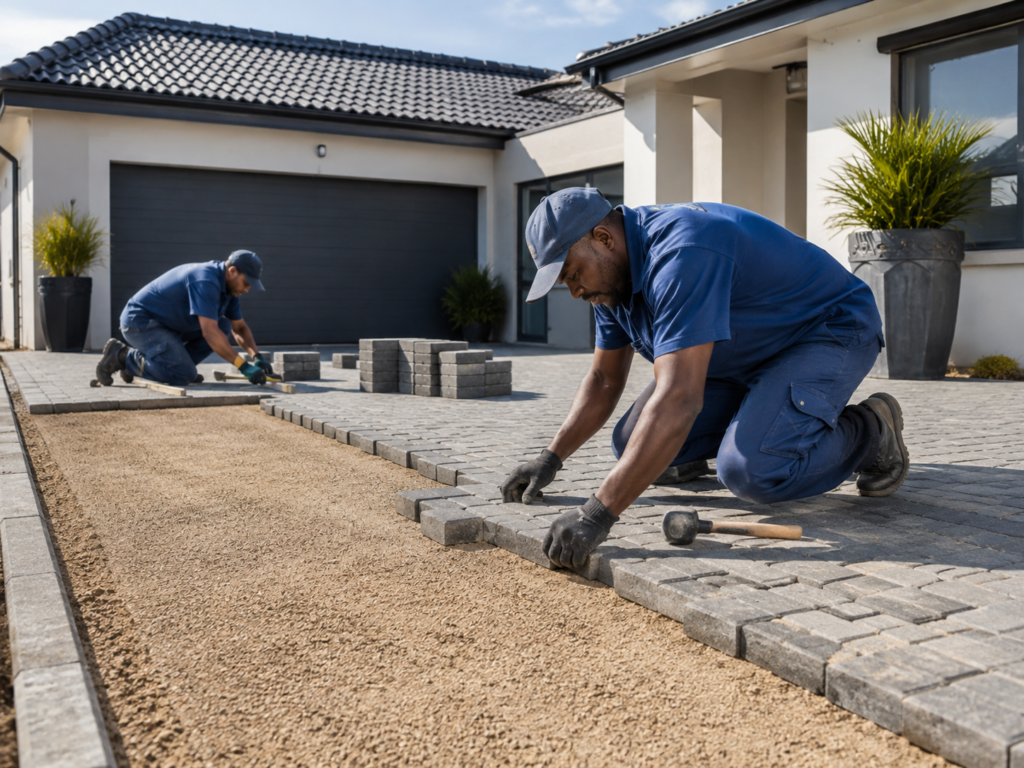
Paving Patterns and Layouts
The paving pattern affects both appearance and performance. Some patterns provide better resistance to vehicle movement, while others are mainly decorative.
Common layouts may include:
- herringbone patterns
- basket-weave patterns
- stretcher bond
- stack bond
- circular features
- contrasting borders
- mixed-colour designs
- random slab layouts
Ask the contractor to show the planned pattern and border arrangement before installation begins.
Ground Preparation for Paving
Ground preparation is one of the most important parts of the paving project. The correct method depends on the soil, slope, drainage and expected traffic.
Preparation may include:
- clearing vegetation
- removing topsoil
- excavating soft material
- compacting the natural ground
- installing a sub-base
- adding a bedding layer
- setting levels and falls
- installing edge restraints
Soft, wet or unstable ground may require additional excavation or stabilisation before paving can begin.
Paving Compaction
Proper compaction helps prevent sinking and uneven surfaces. The ground and base should normally be compacted in suitable layers rather than as one thick layer.
Compaction may involve:
- compacting the natural soil
- compacting sub-base layers
- checking levels between layers
- compacting paving after installation
- adding jointing sand
- recompacting the final surface
Ask whether mechanical compaction equipment is included in the quotation.
Drainage and Paving Slopes
Paving must be installed with enough fall to direct rainwater away from buildings and prevent standing water.
Drainage planning may include:
- sloping paving away from walls
- directing water towards gardens
- installing channel drains
- connecting to existing stormwater systems
- raising or adjusting drain covers
- creating drainage gaps
- protecting entrances and garage doors
Water should not be redirected towards neighbouring properties or areas where it may cause erosion or damp.
Channel Drains and Stormwater Control
Channel drains may be installed across driveways, garage entrances, courtyards or patios where surface water needs to be collected.
The work may include:
- excavating drainage channels
- installing drain bodies and covers
- setting correct levels
- connecting outlet pipes
- forming paving around the drains
- testing water flow
Confirm where collected water will discharge before the paving is installed.
Paving Edging and Kerbs
Edge restraints help prevent paving blocks from spreading or moving under traffic.
Edging options may include:
- concrete kerbs
- brick-on-edge borders
- concrete edge beams
- metal edging
- timber edging for light paths
- raised garden borders
Driveways and parking areas normally require stronger edge restraints than pedestrian paths.
Removing and Replacing Old Paving
Old paving may need to be removed because it is damaged, badly laid, outdated or affected by drainage problems.
Replacement work may include:
- lifting old paving blocks
- removing failed bedding material
- repairing the base
- improving drainage falls
- installing new edging
- relaying reusable paving
- supplying replacement blocks
- removing rubble
Some old paving may be reusable if the blocks remain in good condition.
Relaying Existing Paving
Sunken or uneven paving can sometimes be lifted and relaid without replacing the entire paved area.
Relaying may involve:
- lifting affected blocks
- repairing the base beneath them
- replacing missing bedding material
- resetting levels and falls
- reinstalling paving
- replacing damaged blocks
- adding new jointing sand
The contractor should determine why the paving moved before carrying out the repair.
Repairing Sunken Paving
Paving may sink because of poor compaction, water erosion, leaking pipes, tree roots or vehicle loads.
Repair work may include:
- lifting the sunken section
- identifying soft areas
- replacing damaged base material
- compacting the repaired base
- resetting the paving
- correcting drainage problems
Simply adding sand beneath sunken blocks may not provide a lasting repair if the underlying base has failed.
Paving Repairs Around Tree Roots
Growing tree roots can lift paving and create trip hazards.
Possible solutions may include:
- lifting affected paving
- assessing the root position
- altering the paving layout
- installing flexible borders
- creating a larger tree opening
- relaying surrounding blocks
Major root removal should be discussed with a suitable tree specialist because damaging important roots may affect the tree’s stability. If tree removal or root management may be required, you can also compare specialists through our tree-felling services page.
Commercial Paving Contractors
Commercial paving contractors work on offices, retail centres, schools, apartment complexes, warehouses and industrial properties.
Commercial paving may include:
- parking areas
- delivery zones
- pedestrian walkways
- business entrances
- courtyards
- apartment common areas
- loading areas
- school walkways
- restaurant outdoor areas
- industrial yards
Commercial sites may require phased work, traffic control, strong paving products and installation outside normal operating hours.
Parking-Area Paving
Parking areas must withstand repeated vehicle loads and allow clear drainage.
The project may include:
- excavation and base preparation
- heavy-duty paving blocks
- kerbs and edge restraints
- stormwater drainage
- pedestrian walkways
- wheel stops
- line marking
- access ramps
The contractor should confirm whether the design is suitable for cars, delivery vehicles or heavier traffic.
Complex and Estate Paving
Residential complexes and estates may require paving for driveways, visitor parking, walkways and communal areas.
Complex paving projects may include:
- shared driveways
- visitor parking bays
- entrance areas
- pedestrian paths
- refuse areas
- pool surrounds
- clubhouse patios
- repairing sunken sections
The contractor should plan the work to maintain safe access for residents wherever possible.
Paving for New Builds
Paving is often completed towards the end of a new building project so that heavy construction vehicles do not damage the finished surface.
New-build paving may include:
- driveways
- entrance paths
- carport areas
- patios
- courtyards
- pool surrounds
- service paths
- boundary walkways
Finished floor levels, drainage and landscaping should be coordinated before paving begins. For larger construction projects, visit our building and construction contractors page.
Paving and Landscaping
If your paving project forms part of a larger garden upgrade, you can also compare contractors through our landscaping contractors page. Paving should connect naturally with lawns, garden beds, walls and outdoor structures.
Landscape-related paving may include:
- garden paths
- raised planter borders
- seating areas
- stepping-stone routes
- paving around water features
- courtyards
- edging around lawns
- access to garden buildings
Discuss the final garden levels so soil and mulch do not wash onto the paved surface.
Cleaning and Sealing Paving
Some paving surfaces may benefit from cleaning or sealing, depending on the product and location.
Maintenance may include:
- pressure cleaning
- removing surface dirt
- treating selected stains
- replacing jointing sand
- applying suitable sealers
- repairing loose edge blocks
Ask whether the proposed sealer is suitable for the specific paving product and whether it may change the colour or surface appearance.
Common Paving Problems
Problems can develop when paving is installed without suitable preparation or drainage.
Common warning signs include:
- sunken areas
- loose paving blocks
- standing water
- wide joints
- weeds growing through joints
- broken edge restraints
- paving moving under vehicles
- water flowing towards buildings
- uneven steps or entrances
Early repairs may prevent the affected area from becoming larger.
What Affects Paving Costs?
The cost of hiring paving contractors depends on the size of the area, the selected paving and the amount of preparation required.
Paving costs may be affected by:
- the total square metres
- excavation depth
- soil and ground conditions
- sub-base materials
- paving product and thickness
- patterns and decorative borders
- cutting around structures
- drainage channels
- steps and level changes
- removal of old paving
- access for machinery
- rubble removal
A cheaper quotation may exclude sufficient excavation, compaction, drainage or edging. Compare the complete scope rather than the paving price alone.
What Should a Paving Quote Include?
A detailed quotation from professional paving contractors should state:
- the approximate paved area
- excavation and removal work
- ground preparation
- sub-base materials and depth
- paving type, colour and thickness
- pattern and borders
- edge restraints
- drainage work
- labour and materials
- rubble removal
- the estimated duration
- workmanship warranties
- whether VAT is included
Ask how unexpected soft ground or drainage problems will be assessed and priced.
Questions to Ask Paving Contractors
Before appointing a contractor, ask:
- Have you completed similar paving projects?
- How deep will the area be excavated?
- Which base material will be used?
- How will the base be compacted?
- How will rainwater be controlled?
- Which paving product do you recommend?
- Are edging and kerbs included?
- Will old paving and rubble be removed?
- How long will the paving take?
- When can vehicles use the finished surface?
- What warranty is provided?
- What could increase the final price?
Clear written answers help you compare quotations fairly and reduce misunderstandings during the project.
Compare Paving Contractors Through ProFixer
Finding reliable paving contractors can take time, especially when quotations include different base preparation, materials and drainage solutions.
ProFixer allows you to post one request and compare responses from local contractors. Include clear photographs, approximate measurements and details about how the area will be used.
Compare:
- relevant paving experience
- ground-preparation method
- paving products
- drainage solution
- edge restraints
- project duration
- warranties
- total price
FAQ
How do I find paving contractors near me?
Post your paving job on ProFixer with your location, approximate measurements, photographs and the type of paving required. Local contractors can respond so you can compare quotations, preparation methods and availability.
How much does paving cost in South Africa?
Paving costs vary depending on the size of the area, excavation required, ground conditions, paving material, drainage, edging and labour. Comparing detailed quotes helps you understand what is included.
What type of paving is best for a driveway?
Driveways usually require paving designed for vehicle loads together with a properly prepared and compacted base. A contractor should recommend the paving thickness and base specification according to the expected traffic.
Can existing paving be lifted and relaid?
Yes, in some cases existing blocks can be reused. The contractor should first determine why the paving sank or moved and repair the underlying base or drainage problem before relaying it.
How long does paving installation take?
The timeframe depends on the size of the area, excavation, preparation, drainage and paving design. A small patio may take much less time than a large driveway or commercial parking area.
Post Your Paving Job Free
Whether you need experienced driveway paving contractors, reliable paving installers near me, professional brick paving services or skilled patio paving contractors, ProFixer can help you connect with suitable local specialists.
Post your paving job free and compare up to three no-obligation quotes. You can also learn more about how ProFixer works or browse our complete range of home and property services.
Find trusted paving contractors near you and get a properly prepared, well-drained and professionally installed paved surface.
POST MY PAVING JOB FREE