
Find Trusted Intercom Installers Near You
A reliable intercom system allows you to communicate with visitors before opening a door, pedestrian gate or vehicle entrance. Professional intercom installers can help you choose a system that improves security, convenience and control at your home, complex, office or commercial property.
Whether you need a basic audio intercom, a video intercom with an indoor monitor, a GSM system that calls your mobile phone or an intercom integrated with access control and gate automation, ProFixer makes it easier to find local specialists. Post your intercom job for free and compare up to three no-obligation quotes before choosing a contractor.
Table of Contents
Why Use Professional Intercom Installers?
An intercom installation includes more than fitting a call button at the entrance. The system may require an outdoor station, indoor handset or monitor, power supply, cabling, network connection, gate release relay and backup power.
Experienced intercom installers assess how the entrance is used before recommending equipment. They consider the distance between the gate and building, the number of users, available cabling, internet coverage, mobile signal and whether the system must release a door or automatic gate.
A professionally installed intercom system can help you:
- communicate with visitors before allowing entry
- view visitors through a video intercom camera
- release a pedestrian gate or controlled door remotely
- improve security at homes and businesses
- manage visitors at apartment blocks and complexes
- reduce unnecessary trips to the entrance
- integrate visitor communication with access control
- keep a clearer separation between public and secure areas
The contractor should explain how the proposed system works, what happens during a power failure and whether the equipment can be expanded later.
Intercom Installers for Homes
Home intercom systems allow residents to identify visitors before opening the gate or front entrance. They are particularly useful at properties where the main gate is some distance from the house.
A typical home intercom installation may include an outdoor call station at the gate and an indoor handset or video monitor inside the house. The outdoor unit normally includes a call button, speaker and microphone. A video model may also contain a camera, while the viewing screen is usually installed inside the property or accessed through a mobile application.
Homeowners may use an intercom for:
- pedestrian gates
- driveway entrances
- front doors
- secondary dwellings
- home offices
- staff entrances
- rental properties
- shared family entrances
Some systems allow residents to answer visitors from more than one handset or monitor. Others can send calls directly to a mobile phone, which is useful when nobody is inside the house.
Video Intercom Installers
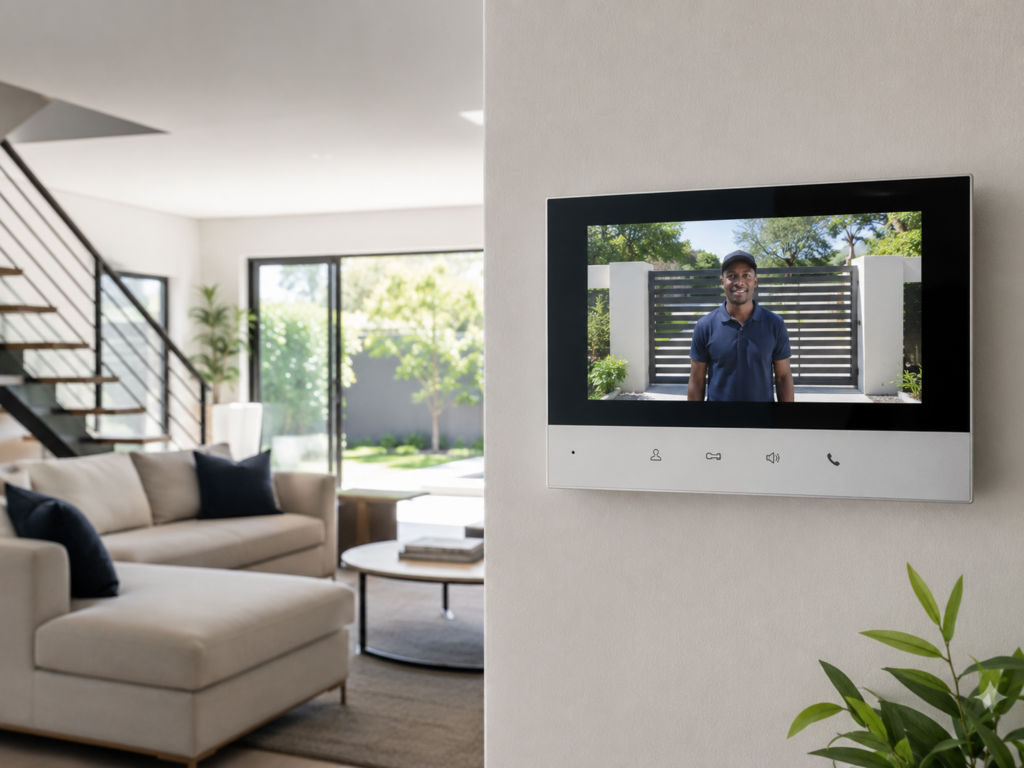
Video intercom systems allow users to see and speak to visitors before granting access. The outdoor station normally contains a camera, microphone, speaker and call button. The indoor unit may be a wall-mounted monitor, desk station or mobile application.
Professional video intercom installers should position the outdoor camera at a suitable height and angle so that visitors can be seen clearly. They should also consider lighting, weather exposure and whether the camera needs night-vision capability.
Video intercom systems may offer features such as:
- live video and two-way communication
- indoor touchscreen monitors
- mobile application access
- visitor image capture
- multiple indoor stations
- door or gate release controls
- connection to more than one entrance
- integration with CCTV or access control
Ask whether mobile access, image storage or cloud services require a subscription. The installer should also explain which features will continue working if the internet connection fails.
Gate Intercom Systems
Gate intercom systems are widely used at South African homes, estates, offices and commercial properties. They allow a visitor to call the occupant or security officer from the entrance before the gate is opened.
The intercom may be connected to a sliding gate motor, swing gate motor, pedestrian gate or electric lock. When access is approved, the user can press a release button on the handset, monitor or mobile application.
A gate intercom installation may require:
- an outdoor call station
- protective housing or weather shielding
- cabling between the entrance and building
- a power supply and backup battery
- a relay connection to the gate motor
- an indoor handset or video monitor
- mobile or GSM communication equipment
- surge and electrical protection
If the automatic gate also needs installation or repair, you can compare quotes through our gate motor installer service.
Intercom Systems for Complexes and Apartment Buildings
Residential complexes and apartment buildings often need an intercom system that connects visitors at the main entrance with individual units. Depending on the property, visitors may select a flat number, resident name or assigned code before starting the call.
Systems for shared residential properties may include:
- multi-apartment audio intercoms
- multi-apartment video intercoms
- visitor calling directories
- GSM calling to residents’ mobile phones
- pedestrian gate release
- vehicle gate integration
- security guard communication
- access cards, tags or PIN codes for residents
Reliable intercom installers should consider how residents will be added or removed from the system. This is particularly important for rental properties, sectional-title complexes and developments where occupants change regularly.
The installer should also explain who will manage user information, update telephone numbers and provide support when a resident experiences a problem.
Commercial Intercom Installers
Businesses use intercom systems to control communication between public entrances, reception areas, loading zones, security points and restricted departments. Professional commercial intercom installers can design systems for properties with one entrance or multiple communication points.
Commercial intercoms are commonly installed in:
- offices and business parks
- warehouses and distribution centres
- factories and workshops
- schools and training centres
- medical practices and healthcare facilities
- hotels and guesthouses
- retail stores
- residential estates
- parking areas and loading bays
- security control rooms
A commercial system may allow reception staff or security officers to communicate with visitors, drivers and contractors before releasing a gate, boom barrier or controlled door.
For larger properties, the intercom can be integrated with CCTV so that staff can view the entrance while speaking to the visitor. It may also work with an access control system that records authorised entry.
Types of Intercom Systems
Different properties require different communication methods. The best option depends on the number of entrances, users, buildings and features required.
Audio Intercom Systems
Audio intercoms allow voice communication between the entrance and an indoor handset or desk station. They are often suitable where users need a simple and cost-effective way to speak to visitors.
An audio system can still be connected to an electric lock or gate motor so that access can be released from inside the property.
Video Intercom Systems
Video intercoms add a camera and viewing monitor to the communication system. They provide additional visual verification and are commonly used at homes, complexes, offices and secure entrances.
The camera is generally located in the outdoor station, while the screen is normally located inside the building or available through a compatible mobile application.
Wired Intercom Systems
Wired systems use physical cabling between the outdoor station, indoor units and associated equipment. When correctly installed, they can provide stable communication without depending entirely on wireless coverage.
The cost and difficulty of installation may depend on the distance between the gate and building, the available cable routes and whether paving, walls or ceilings need to be accessed.
Wireless Intercom Systems
Wireless intercoms can reduce the amount of new cabling required, but their performance depends on the distance, building construction and wireless environment.
Before recommending a wireless system, the installer should test or assess whether the signal will be reliable at the intended locations. Thick walls, metal gates and long distances can affect performance.
GSM and Mobile Intercom Systems
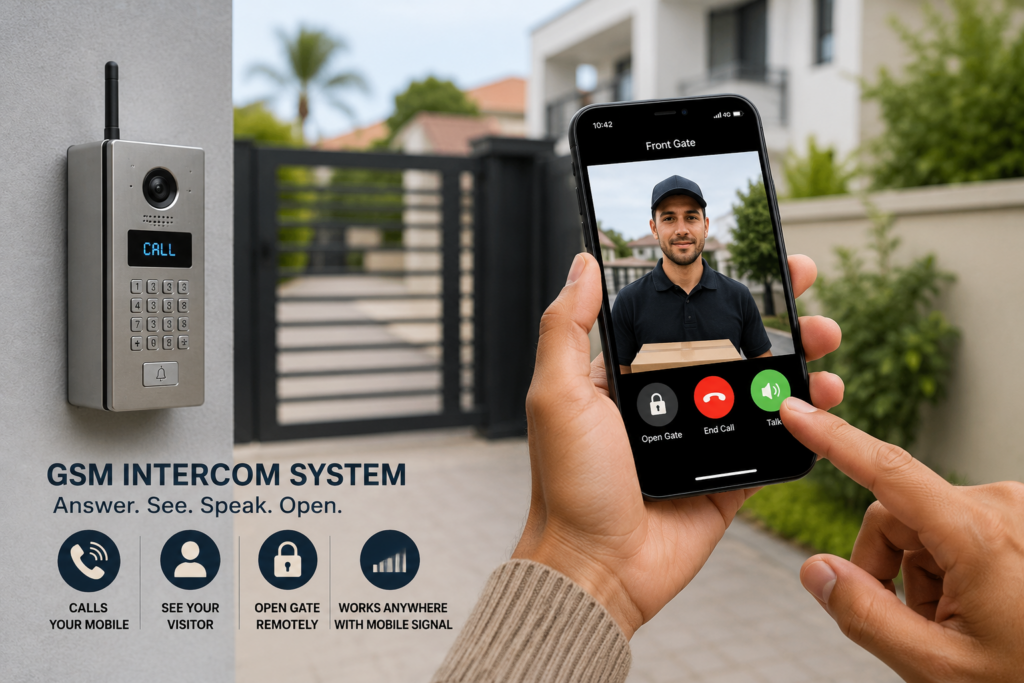
A GSM intercom uses a mobile network to call programmed telephone numbers when a visitor presses the call button. The resident or staff member can speak to the visitor and, where supported, release the entrance using the phone.
These systems can be useful when the entrance is far from the building or where occupants want to answer visitors while away from the property.
Ask whether the system requires a SIM card, mobile airtime, data, monthly service fee or specific network coverage.
IP and Network Intercom Systems
IP intercoms use a data network to communicate between entrances, monitors, mobile applications and management software. They may be suitable for larger homes, modern offices and multi-building properties.
A network-based system should be planned with the property’s IT infrastructure, security requirements and internet availability in mind.
Intercom Integration with Access Control
Intercom and access control systems often work together. The intercom provides communication with the visitor, while the access control equipment manages the locking and release of the entrance.
An integrated system may connect:
- video intercom stations
- card and tag readers
- PIN code keypads
- biometric readers
- electric strikes
- magnetic locks
- automatic gates
- boom gates
- turnstiles
- CCTV cameras
For a complete controlled-entry solution, you can also find local specialists through our access control installer service.
Your contractor should confirm which systems are compatible before installation begins. Not every intercom can connect directly to every gate motor, lock, access controller or mobile platform.
Intercom Repairs and Maintenance
Existing intercom systems may develop faults because of damaged cables, water ingress, power problems, worn buttons, failed handsets or communication issues.
Common intercom faults include:
- the outdoor station not calling the indoor unit
- no sound in one or both directions
- a distorted or very quiet voice connection
- the video screen displaying no image
- the gate or door release not operating
- the system restarting or losing power
- mobile notifications not being received
- damaged call buttons or keypads
- water entering the outdoor station
- intermittent communication
Professional intercom installers should test the power supply, wiring, outdoor station, indoor unit and release connection before recommending replacement equipment.
A failed gate release may be caused by the intercom, relay, cabling, electric lock or gate motor. Correct fault-finding helps prevent unnecessary replacement of working components.
What Happens During an Intercom Installation?
A good installation begins with a site assessment. The contractor should inspect the entrance, proposed indoor-unit locations, power availability, cable routes and any gate or door equipment that needs to be controlled.
The installation process may include:
- confirming the number of entrances and users
- selecting audio, video, GSM or IP equipment
- planning cables, wireless links or network connections
- installing the outdoor call station
- fitting indoor handsets or video monitors
- connecting the gate motor or electric lock
- programming mobile numbers or user accounts
- testing communication and entrance release
- showing the owner or administrator how to operate the system
Ask whether the quote includes cabling, power supplies, backup batteries, programming, gate integration and user training.
What Affects Intercom Installation Costs?
There is no single price for an intercom installation because the cost depends on the type of system and the property layout.
The quotation may be affected by:
- audio or video equipment
- the number of entrances
- the number of indoor monitors or handsets
- the distance between the entrance and building
- new cabling and installation access
- GSM, network or mobile application requirements
- connection to a gate motor or electric lock
- backup power requirements
- integration with access control or CCTV
- repairs to existing equipment
- software licences or subscription charges
A detailed written quote should identify the equipment, labour, cabling, programming and any additional fees. This makes it easier to compare contractors fairly.
Questions to Ask Intercom Installers
Before accepting a quotation, ask the contractor:
- Which intercom system is suitable for my property?
- Should I choose audio, video, GSM or IP equipment?
- Is the outdoor station weather-resistant?
- Can I answer calls from my mobile phone?
- Will the system open my gate or controlled door?
- Does the quote include all cabling and power supplies?
- What happens during a power or internet failure?
- Are backup batteries included?
- Can additional monitors or users be added later?
- Are mobile services or subscriptions required?
- What warranty applies to the equipment and installation?
- Do you provide future repairs and maintenance?
The contractor should be able to explain the system in clear language and show exactly what is included in the quotation.
Compare Intercom Installers Through ProFixer
Calling several contractors and comparing different technologies can take time. ProFixer allows you to post one request and receive responses from local intercom installers.
When posting your job, include:
- your town, suburb or area
- the type of property
- whether the entrance is a door, pedestrian gate or vehicle gate
- the approximate distance between the entrance and building
- whether you prefer audio, video or mobile communication
- whether the system must release a gate or electric lock
- whether an existing system needs repair or replacement
- photographs of the entrance and existing equipment
Clear information helps contractors understand the job and recommend suitable equipment. You can then compare the system offered, scope of work, warranty, availability and price before choosing who to appoint.
Post Your Intercom Installation Job Free
Whether you need a simple home intercom, a video system for a gate, a multi-apartment solution or a commercial entry system, ProFixer can help you connect with local specialists.
Post your intercom job free and compare up to three no-obligation quotes from local contractors. You can also learn more about how ProFixer works or explore our full list of service categories.
Find intercom installers near you and take the next step towards safer, easier visitor access for your home or business.
POST MY INTERCOM JOB FREE