

Roof Insulation Buying Guide: 7 Proven Tips to Avoid Bad Choices
A hot roof space can turn an otherwise comfortable home, flat or office into an expensive place to cool. This roof insulation buying guide helps South African property owners choose a solution that suits their building, climate and budget before comparing installation quotes.
Roof insulation is not one-size-fits-all. A home in Johannesburg may need better protection against cold winter nights as well as summer heat, while a coastal property in Durban or Cape Town must also account for humidity, wind-driven rain and corrosion. The right product depends on where the insulation will sit, how accessible the ceiling cavity is, and whether there are existing leaks or electrical issues to address first.
Table of Contents
Start by identifying where heat is entering
In most properties, the ceiling is the main barrier between the living space and the roof cavity. When people refer to roof insulation, they usually mean insulation laid across the ceiling, between or over the ceiling joists. This is often the most practical option because it keeps heat out of the rooms below without needing to insulate the entire roof structure.
Insulating along the underside of the roof itself can make sense in certain buildings. It may be suitable for converted loft spaces, homes with exposed rafters, metal roofs, warehouses, or buildings where the ceiling cavity is difficult to access. However, it is normally a more specialised job. Poorly planned roof-level insulation can trap moisture, reduce ventilation or make future repairs harder.
Before buying materials, check whether the problem is truly missing insulation. A leaking roof, gaps around downlights, cracked ceilings, damaged ventilation or unsealed roof hatches can all reduce performance. Insulation should support a sound roof, not hide a maintenance issue.
What to look for in roof insulation
The key measure is the insulation’s R-value, which indicates how well it resists heat flow. Higher values generally provide better thermal resistance, but the most suitable target depends on the product, thickness, climate and building design. Ask an installer to explain the quoted R-value and thickness in plain terms, rather than comparing prices by roll size alone.
Thickness matters because thin insulation may not provide enough protection during peak summer heat or winter cold. Yet thicker is not always automatically better if it compresses around cables, blocks required ventilation, or does not fit safely beneath roof timbers. The product needs to be installed at its intended depth and without large gaps.
Also consider the following practical factors before choosing a material:
- Fire performance: Ask whether the insulation is suitable for use around electrical wiring, downlights and roof structures. Recessed lights may require clearances or protective covers.
- Moisture resistance: In humid or coastal areas, products that retain moisture can lose effectiveness or contribute to mould if roof leaks are not resolved.
- Sound reduction: Some insulation materials can reduce noise from rain on metal roofing, traffic and nearby properties. This can be a worthwhile extra benefit.
- Access and maintenance: If electricians, alarm installers or solar technicians need to work in the roof space later, the insulation should not make safe access impossible.
A reputable contractor should inspect the roof cavity before recommending a product. This is especially useful in older homes, rental properties and commercial buildings where previous alterations may not be obvious.
Comparing common insulation materials
This roof insulation buying guide compares common materials by thermal performance, installation requirements, moisture behaviour and suitability for different roof spaces rather than price alone.
Glass wool and polyester blanket insulation
Blanket or roll insulation is widely used in ceiling cavities. Glass wool is usually cost-effective and can offer good thermal and acoustic performance when fitted correctly. It needs careful handling during installation, and the ceiling void should be dry and well maintained.
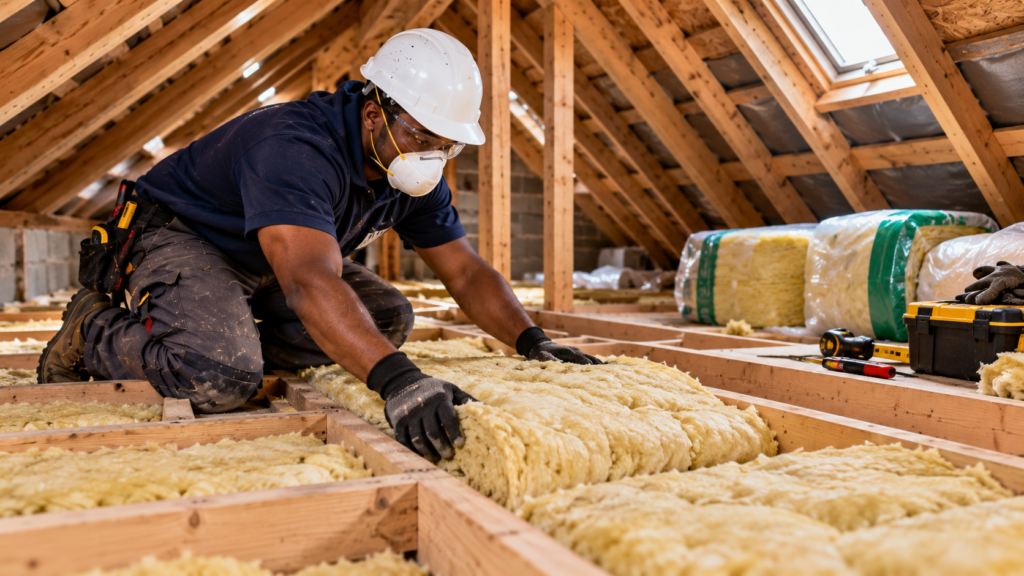
Polyester insulation is often chosen by customers who prefer a soft, non-itch material. It can be easier to handle and is available in options made with recycled content. It may cost more than some glass wool products, so compare the stated thermal performance rather than assuming similar-looking rolls offer the same result.
Both options work best when they cover the ceiling evenly, including awkward corners. Insulation with gaps, crushed sections or missing areas around fittings will not perform as intended.
Cellulose insulation
Cellulose is a loose-fill product, commonly made from treated recycled paper. It can be useful for topping up irregular ceiling cavities because it settles around obstructions more easily than rigid boards. The installer needs to apply it to the correct depth, and it is essential to check for roof leaks first.
This option can be effective, but it is not ideal for every roof space. If people need regular access above the ceiling, loose-fill insulation can be disturbed. It may also require raised walkways around equipment or access points.
Rigid boards and foil-backed products
Rigid insulation boards are often used where space is limited or where insulation is being fitted to the underside of a roof. They can deliver strong thermal performance for their thickness, but accurate cutting and sealing are vital. Gaps between boards reduce the benefit, and the wrong installation method can create condensation problems.
Reflective foil products can help manage radiant heat, particularly beneath metal roofing, but they should not be viewed as a complete replacement for bulk insulation in every situation. Their performance depends heavily on correct placement and, in many cases, an adjacent air gap. Ask exactly what the quoted system includes.
Spray foam insulation
Spray foam is applied directly to roof surfaces and can seal irregular areas effectively. It is generally more expensive and should only be installed by experienced specialists who understand ventilation, moisture movement and roof maintenance requirements. Once applied, it can make future inspections and repairs more complicated.
For many standard homes with an accessible ceiling cavity, blanket insulation remains the simpler and more budget-conscious choice. Spray foam may be better suited to specific roof designs rather than being the default answer.
Roof insulation buying guide: costs and quotes
The cheapest quote is not always the best value. A low price may exclude preparation, access, removal of damaged material, safety measures or work around downlights and wiring. It may also be based on a thinner product than you expected.
When comparing quotes, make sure each contractor is pricing the same scope of work. The quote should state the insulation type, brand or specification, thickness, thermal rating where available, area to be covered, labour, VAT if applicable and any preparation work. It should also clarify whether the contractor will remove old insulation, seal obvious gaps, protect light fittings or create access boards where needed.
Roof size is only one part of the cost. A simple single-storey home with a clear ceiling cavity may be straightforward, while a property with steep roof pitches, limited access, extensive wiring or a damaged ceiling can require more labour. Commercial premises may need work scheduled around staff, tenants or trading hours.
Be wary of a contractor who recommends a material without looking at the property or asking questions about the roof. A quick site assessment gives you a more reliable price and helps prevent surprises once work starts.
Do not ignore ventilation, leaks and electrics
Insulation controls heat transfer, but it cannot fix trapped moisture or water ingress. If you see water stains, mould, rusted roof sheets or sagging ceilings, arrange repairs before insulating. Covering a damp area can make the damage harder to spot and may lead to costly replacement work later.
Ventilation also needs a balanced approach. Roof cavities should not be sealed thoughtlessly, particularly in humid climates or beneath metal roofs. An experienced installer can assess whether vents need to remain clear and whether the selected insulation system suits the roof construction.
Electrical safety is equally important. Older wiring, junction boxes and recessed fittings deserve attention before insulation is laid. If there is any uncertainty, use a qualified electrician to inspect the installation. This is a small step compared with the risk of overheating, damaged cables or a fire hazard.
Choosing the right installer
A useful roof insulation buying guide should also help you compare installers, because even a good insulation product can perform poorly if it is compressed, installed with gaps or placed incorrectly around wiring and ventilation.
Ask prospective installers about similar properties they have worked on and how they deal with lights, wiring, roof access and old insulation. You should also ask what workmanship cover is offered, how long the work will take, and whether they will leave the site clean afterwards.
With Profixer, you can post your roof insulation project free and connect with local contractors interested in quoting for the work. Include the property type, approximate roof or ceiling area, access conditions, existing insulation and any known leaks or electrical concerns so contractors can recommend suitable materials and provide more useful quotes.
A well-insulated ceiling will not solve every comfort problem, but it can make rooms easier to cool and warm while reducing pressure on air conditioners and heaters. Start with a clear assessment of your roof, choose materials for the conditions they will face, and only accept a quote that explains exactly what you are paying for.
A good roof insulation buying guide should help you choose more than just a product. Compare R-values, thickness, moisture resistance, fire performance, ventilation requirements and installation quality, then choose a contractor who explains exactly what is being installed and why it suits your property.
GET ROOF INSULATION QUOTES