
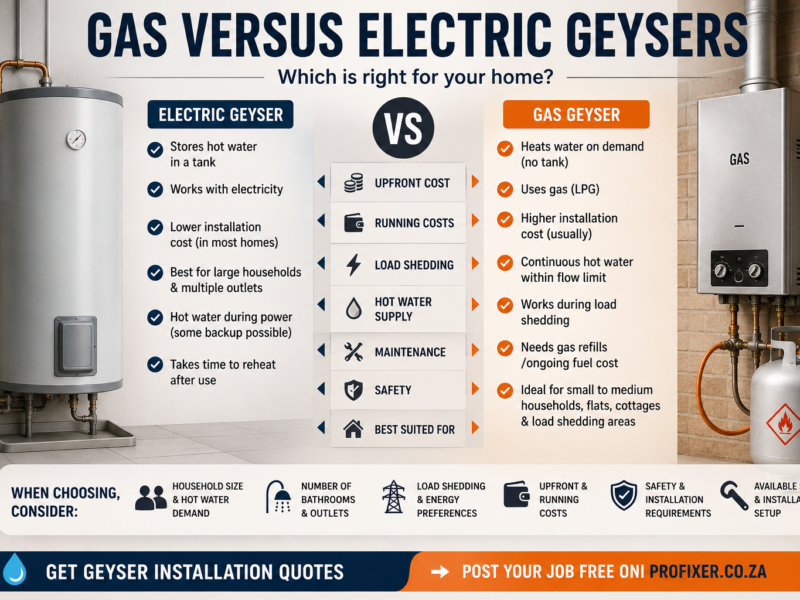
A cold shower during load shedding is usually what starts the gas versus electric geysers conversation. But the right choice is not simply about avoiding cold water. It affects your installation budget, monthly running costs, household routines, available space and the safety requirements for your property.
Before committing, post your geyser installation job free on Profixer and connect with local plumbers, electricians and gas installers interested in quoting for the work. Compare the equipment cost, installation scope, compliance requirements, warranties and any plumbing or electrical upgrades before choosing a provider.
Table of Contents
Gas versus electric geysers: the main difference
An electric geyser stores a set volume of heated water in a tank. It uses an electrical element to heat the water, then cycles on and off to maintain the selected temperature. Most homes already have this arrangement, which makes replacement relatively straightforward where the existing plumbing and electrical connections are in good condition.
A gas geyser, more accurately called a gas water heater, heats water as it flows through the unit. It is often described as an instantaneous or tankless system. When someone opens a hot-water tap, the burner ignites and heats the water on demand. There is no large cylinder holding hot water for later use.
That difference shapes almost every practical consideration. Electric systems are familiar and can supply stored hot water to several outlets, while gas units can provide ongoing hot water without waiting for a tank to reheat, provided the model is correctly sized and the gas supply is adequate.
Upfront cost is more than the unit price
Comparing only the price of the geyser can lead to an expensive surprise. A replacement electric geyser may be the lower-cost installation if the property already has the required tray, valves, pipes, electrical isolator and compliant wiring. The final cost will still depend on tank size, whether pipework needs repair, roof access and any upgrades required to bring the installation up to standard.
A gas geyser installation can cost more upfront because it may require a gas cylinder, regulator, gas piping, isolation valves, a suitable mounting position and approved flue or ventilation arrangements. Indoor installations need particular care. Combustion appliances must be correctly ventilated to prevent dangerous fumes from building up.
A cheaper gas unit is not automatically the best value. A qualified installer should assess the unit’s flow rate, your incoming water pressure, the length of pipe runs and the number of bathrooms or outlets likely to operate at once. An undersized system can leave the shower running lukewarm whenever another tap is opened.
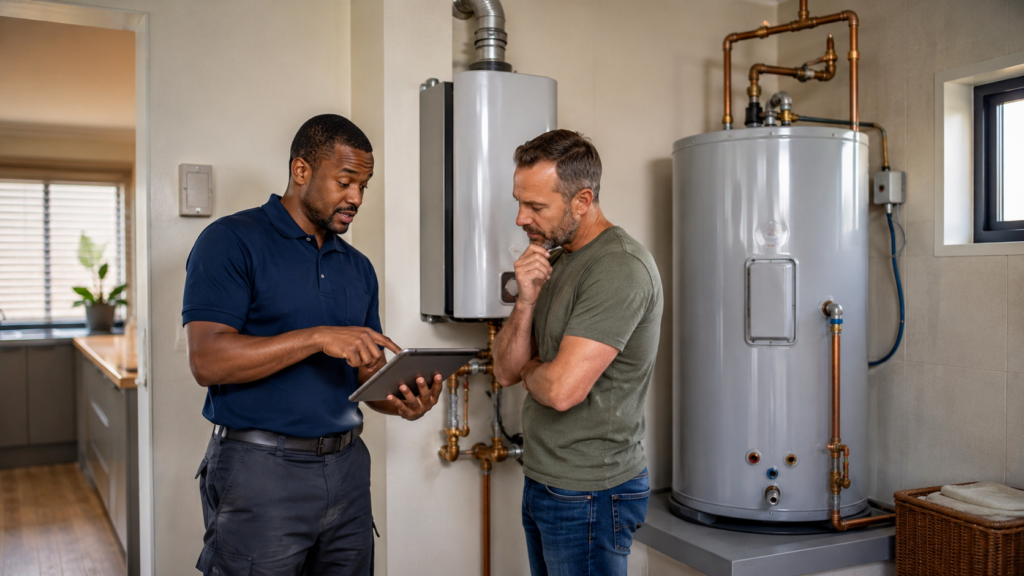
For landlords and property managers, it is also worth considering access for future maintenance. A system that is difficult to reach or poorly located may cost more over its lifetime, even if the first installation quote looks attractive.
Running costs depend on your household habits
When comparing gas versus electric geysers, calculate likely running costs using your actual household size, shower habits and hot-water demand.
Electric geysers use electricity to heat a tank of water, including water that may not be used before it cools down. Good insulation reduces this standing heat loss, but a household with irregular usage can still pay to keep water hot unnecessarily. A timer, smart controller, insulated pipes and sensible temperature settings can help reduce waste.
Gas heaters only use fuel while hot water is being drawn. This can be efficient for smaller households, guest cottages, offices or properties where hot water is needed at unpredictable times. It can also suit homes trying to reduce dependence on the electricity grid.
However, gas is not free from ongoing costs. You will need to budget for refilling or exchanging cylinders, and prices can vary by supplier and area. A household with long showers, frequent baths or several people using hot water back-to-back may use a meaningful amount of gas. The better option is therefore based on consumption, not just the tariff on a single bill.
Ask contractors to estimate likely operating costs based on your household size and habits. Be clear about the number of occupants, bathrooms, showers, basins, kitchen points and appliances that use hot water. This gives you a more useful comparison than a generic promise that one system is always cheaper.
Load shedding and power outages
For many South African homes, the strongest case for gas is hot water during load shedding. A properly installed gas water heater can continue operating during an electricity outage, although some electronic ignition models may need batteries or a small power source. Confirm this before buying, especially if backup hot water is a priority.
A conventional electric geyser can retain hot water for some time during an outage, particularly if the tank is well insulated. But once that stored water is used, it will not reheat until power returns. Reheating a depleted tank after an outage can also create a high electricity demand when supply is restored.
There are ways to improve electric geyser resilience. Solar geysers, heat pumps and solar-compatible electric systems can reduce grid use, while correctly specified inverter or backup solutions may support certain controls. These options need a site-specific assessment. A standard electric geyser element draws substantial power and should not be added to an existing backup system without an electrician confirming that it is safe and correctly sized.
Hot-water pressure, flow and simultaneous use
A tank electric geyser can deliver hot water to more than one outlet until its stored supply is exhausted. A larger tank gives more capacity, but it takes longer and costs more to heat. This can work well for a family that has a predictable morning and evening shower routine.
A gas unit supplies water continuously, but only within its rated flow capacity. Flow rate matters more than many buyers realise. A smaller unit may work perfectly for one shower in a compact flat, yet struggle with two showers, a kitchen tap and a washing machine running at the same time.
Water pressure also matters. Some gas units need a minimum water pressure to activate reliably. Properties with low municipal pressure, pressure-reducing valves, borehole systems or inconsistent supply may need additional checks before installation. A plumber can assess this and recommend a suitable model rather than relying on assumptions.
Safety and compliance should guide the decision
Both systems should be installed by competent, qualified professionals. Electric geysers combine water and high electrical loads, so compliant wiring, earthing, temperature and pressure valves, drainage and safe positioning are essential. A leaking valve or failed thermostat should never be ignored.
Gas installations have their own non-negotiables. The appliance, piping, joints, regulator, cylinder location and ventilation must meet the relevant requirements. Gas combustion can produce carbon monoxide, an odourless gas that is dangerous in enclosed spaces. Never install or alter a gas water heater as a DIY job, and do not accept an installation that lacks the required certification.
If you are replacing an older system, ask the contractor to inspect the surrounding pipework and safety components as well. Reusing worn parts to save a small amount upfront can create leaks, poor performance or a costly call-out later.
Which geyser suits your property?
An electric geyser may suit you if your home already has a compliant installation, your hot-water demand is high across several outlets, or you want the familiar simplicity of stored hot water. It may also make sense where solar or heat-pump upgrades are being considered as part of a broader energy plan.
A gas geyser may be a strong fit if you need dependable hot water during power cuts, have limited space for a tank, run a smaller household, or want hot water on demand for a cottage, flatlet or office. It is especially useful where waiting for an electric tank to reheat would be inconvenient.
There is no universal winner in gas versus electric geysers. The right unit must match the property, the occupants and the way hot water is used each day.
Before committing, get up to three detailed quotes that separate the equipment cost, installation work, compliance items and any plumbing or electrical upgrades. ProFixer can help you compare trusted local professionals, so you can choose a system that delivers reliable hot water without paying for the wrong setup.
A good installer will not rush you towards the most expensive option. They will ask practical questions, inspect the site and explain what your household genuinely needs – which is the best starting point for warmer showers and fewer surprises.
The choice between gas versus electric geysers should be based on your property, budget, hot-water demand and need for backup during outages. A proper site assessment and clear quotations will help you choose a safe, practical system without paying for unnecessary capacity.
GET GEYSER INSTALLATION QUOTES Save this